Family Reunion Reveals Intensified Surveillance and Penalties in Occupied Tibet’s Capital
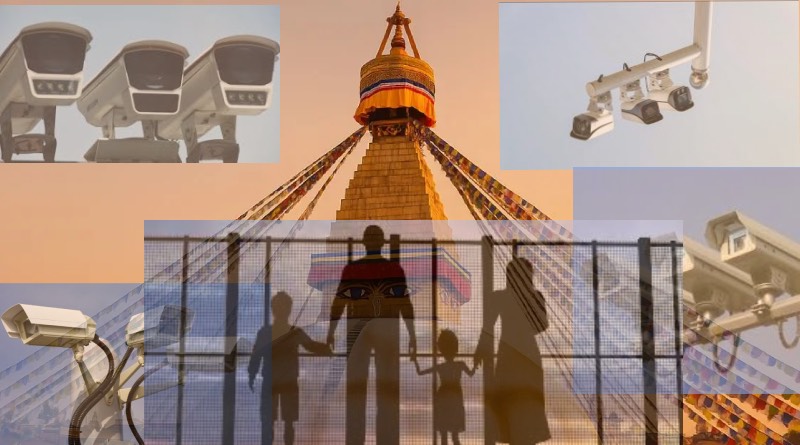
DHARAMSALA, 14 Jan: A Tibetan exile who recently reunited with family members from Lhasa in Nepal has learned of increasingly “harsh restrictions and surveillance measures” imposed in Tibet’s capital, Lhasa and the so-called Tibet Autonomous Region (TAR). Ironically, the reunion itself carried significant risk as Kathmandu recently made it to the headlines with thousands of Chinese-supplied CCTV cameras monitoring streets and public spaces throughout the capital.
During the meeting, the family members from Lhasa, cautioning about the extent of digital monitoring in the capital, revealed that WeChat, the popular messaging platform, is subject to heavy censorship and surveillance by authorities. In a striking indication of the climate of fear, the parents advised against using Tibetan words, such as “Pala” (father) and “Ama-la” (mother), in communications to avoid scrutiny.
The family also disclosed new punitive measures targeting Tibetans serving in Chinese-run government offices. According to the account, employees working in Chinese administrative offices are now barred from visiting Buddhist monasteries even during Buddhist festivals, a restriction that strikes at the heart of Tibetan cultural and religious practice and violates religious freedom.
Additionally, officials, if discovered to have children living in exile outside Tibet, face immediate dismissal from their positions. For retired officials, the consequences are equally severe: all benefits, including pensions, are subject to revocation if authorities determine they have family members in exile.
The account provides a window into the daily realities faced by Tibetans living under Chinese rule in the occupied Tibet, where traditional cultural practices and family relationships increasingly fall under state scrutiny and control. This sheds more light on China’s broader pattern of transnational repression of Tibetans in exile.
The Tibetan exile, whose name is being withheld for security reasons, described the reunion as deeply personal and emotional – beyond words- but added that the CCTVs encircling Boudha left him feeling exposed and under constant watch.
With increased cooperation between China and Nepal, China has not just been able to stem the flow of Tibetan refugees from crossing into Nepal and Tibetan refugees escaping to Nepal risk being extradited. More recently, as Nepal kowtows to Chinese money, thousands of Chinese-supplied CCTV cameras now blanket Kathmandu, many equipped with facial recognition and AI tracking capabilities. The Chinese companies reportedly supplied these cameras for Nepal’s “safe city” project beginning in 2016, raising concerns about the monitoring of Tibetan refugees and their contacts.
This report is based on firsthand accounts from a recent family reunion in Nepal.