
Author: Tibet Express Newsdesk

Empires Wax and Wane: Tibet and the Limits of Beijing’s Assimilation

By Khedroob Thondup
The sweep of history reminds us of a simple truth: no empire, however mighty, is permanent. Rome, the Ottomans, the British Raj—all believed their dominion eternal, only to discover that power is cyclical, not absolute. Today, the Chinese Communist Party (CCP) exercises seemingly unassailable control over the Tibetan Plateau, integrating it through modernization, surveillance, and demographic engineering. Yet the long arc of history suggests that rigid, coercive assimilation strategies ultimately face systemic limits.

Read more

The Reluctant Empire: Why China Will Not Easily Relinquish Tibet

By Khedroob Thondup
For sixty-seven years, Tibet has remained under Chinese occupation—a reality that has reshaped the Himalayan plateau and reverberated across the world. To imagine Beijing voluntarily loosening its grip on Tibet without seismic shifts inside China itself is to misunderstand both the strategic calculus of the Chinese state and the symbolic weight Tibet carries in the Chinese Communist Party’s narrative.

Read more

Nepal Cancels International Tibetan Studies Conference Following Reported Chinese Pressure

By Tenzin Chokyi

DHARAMSALA, 6 August: The Government of Nepal has called off the 17th Seminar of the International Association for Tibetan Studies (IATS), an international academic gathering that was scheduled to take place in Kathmandu from 23 to 29 August 2026. The sudden decision halted nearly four years of preparation for what was slated to be one of the largest gatherings of global Tibetology scholars, coming on the heels of sustained diplomatic pressure from Beijing.

Read more

The Unbreakable Bond: Tibet’s Faith and the Dalai Lama

By Khedroob Thondup

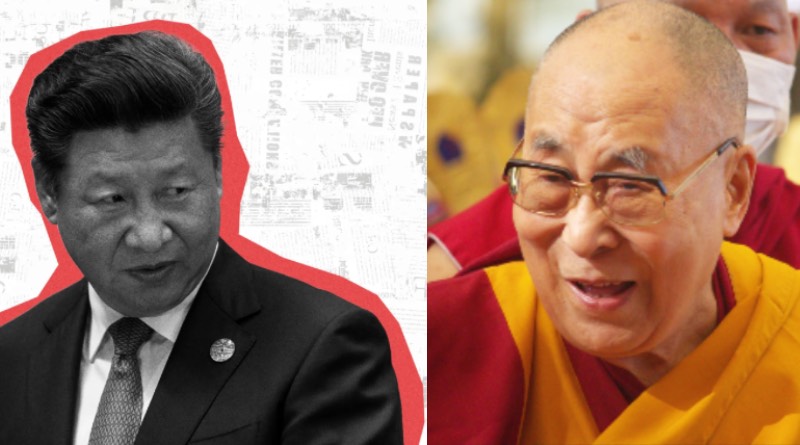
In the long arc of Tibetan history, the Chinese Communist Party has sought to erode the spiritual foundations of Tibetan identity. Yet, despite decades of repression, the Tibetan people’s devotion to His Holiness the Dalai Lama and their deep-rooted belief in religion remain unshaken. These are not fragile sentiments that can be legislated away; they are enduring strengths that continue to define Tibet’s resilience.

Read more