
Other News

Why the CCP’s Ethnic Cleansing in Tibet Will Fail

By Khedroob Thondup

For sixty-seven years, the Chinese Communist Party (CCP) has occupied Tibet, attempting to transform a nation with its own language, culture, and spiritual traditions into a compliant appendage of Beijing. Today, the CCP has reached a chilling pinnacle: it appears to believe that erasing the Tibetan race itself—through mass ethnic cleansing and forced Sinicization—is the only way to secure control. Yet history, identity, and resilience all point to why these measures will ultimately fail.

Read more

Environmental Risks of China’s Yarlung Tsangpo Mega-Dam

By Khedroob Thondup

China’s proposed mega-dam on the Yarlung Tsangpo River, located approximately 50 miles from the Indian border, represents one of the most consequential hydropower projects in the Himalayas. While Beijing frames the dam as a renewable energy initiative, the project carries severe environmental, ecological, and geopolitical risks for downstream nations—particularly India and Bangladesh. This brief outlines the potential consequences, regional security implications, and policy recommendations for mitigating the risks.

Read more

The Avalanche and the Silence

By Khedroob Thondup

When a glacier avalanche struck Tibet recently, the devastation was immediate and profound. Entire communities were left in shock, families torn apart, and countless lives disrupted. Yet what stands out most is not the natural disaster itself, but the deafening silence from the Chinese authorities. No official tally of the missing, no acknowledgment of the dead — only a void filled with rumor, grief, and suspicion.

Read more

The Avalanche They Won’t Speak Of: China’s Silence on Tibet’s Glacier Collapse

By Khedroob Thondup
When a glacier high above the Langtang Lirung peak sheared away and plummeted more than two kilometres into the valley below, the earth itself shuddered. The ice avalanche released seismic energy equivalent to a 5.2 magnitude earthquake, unleashing flash floods that tore through villages along the Nepal–Tibet border. Yet inside Tibet, the catastrophe exists only in whispers. Beijing’s censors have ensured that no official bulletin, no local report, no acknowledgement of the devastation has reached the public. This silence is not accidental. It is policy.

Read more

Dams on the Tsangpo: A Geopolitical Gamble in a Fragile Land

By Khedroob Thondup

The Tibetan Plateau is often called the “Third Pole” for its vast reserves of freshwater locked in glaciers and rivers. Yet beneath this image of abundance lies a fragile geological reality: active fault lines, frequent earthquakes, and erosion‑prone soils. Building mega‑dams across the Yarlung Tsangpo River—China’s proposed hydropower projects—ignores this instability and risks cascading disasters far beyond Tibet’s borders.

Read more

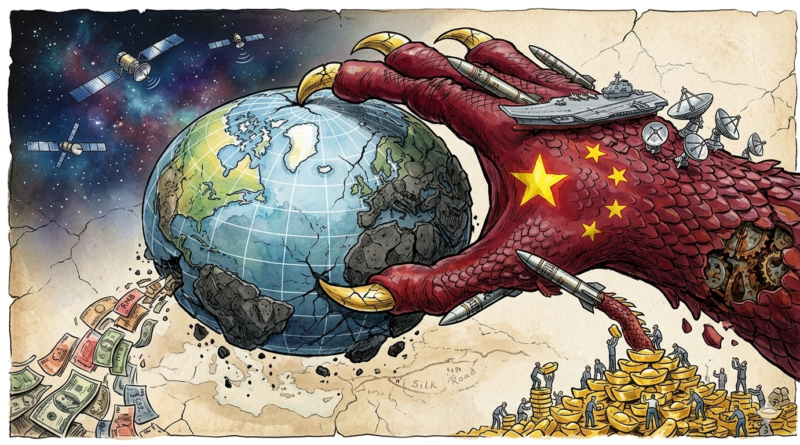
The Contaformation Strategy — A Holistic Framework for Countering China

By Khedroob Thondup
The rise of the People’s Republic of China (PRC) under the Chinese Communist Party (CCP) has forced the world to confront a paradox: a nation that has achieved extraordinary economic success while simultaneously tightening autocratic control and projecting coercive power abroad. To meet this challenge, democracies must adopt a holistic framework that does more than react piecemeal. The “Contaformation” strategy offers such a framework, built on three hierarchical goals: Contain and Weaken, Deter War, and Positive-Sum Transformation.

Read more

Unity Beyond Regional Lines: Amdo, Kham, and U‑Tsang

By Khedroob Thondup

The Tibetan nation has always been a mosaic of regions, dialects, and traditions. Amdo, Kham, and U‑Tsang each carry their own histories, cultural richness, and local pride. Yet in exile, and especially in the diaspora, these distinctions must never become divisions. If anything, they should be the threads that weave together a stronger fabric of resistance against China’s ongoing campaign to erase Tibetan identity.

Read more

Why the Global Tibetan Diaspora Must Keep Tibet Alive

By Khedroob Thondup
The Tibetan struggle is not a relic of the past. It is a living, breathing issue that demands vigilance, creativity, and persistence. For more than six decades, Tibetans in exile have carried the torch of their nation, ensuring that the world does not forget a people whose homeland remains under occupation. The responsibility of the global Tibetan diaspora today is not simply to preserve memory, but to actively shape the narrative so that Tibet remains relevant in international discourse.

Read more