Sacks Instead of Ballot Boxes: Tibetan MPs Flag Election Integrity Concerns in Nepal
By Tenzin Chokyi
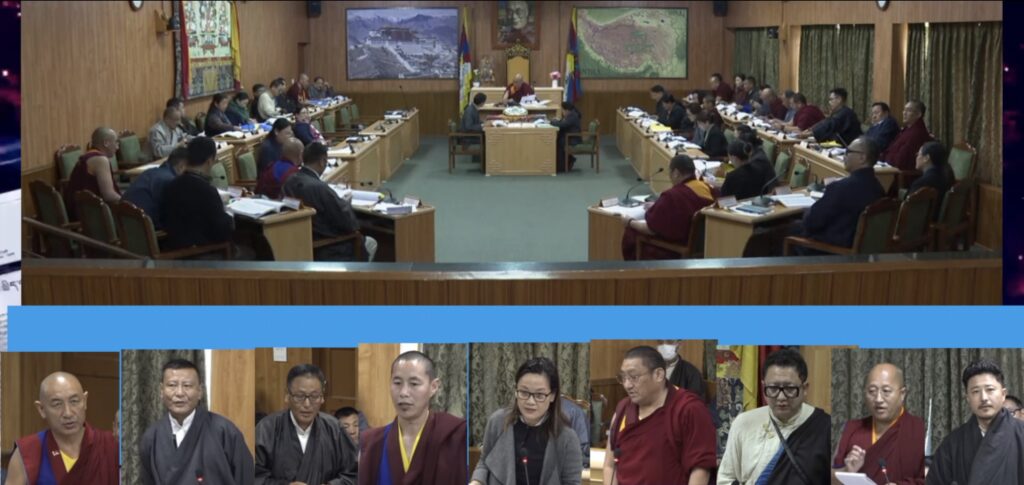
DHARAMSALA, 23 March: The Tibetan parliament on Monday raised serious concerns over alleged voting irregularities in Nepal, including the reported use of cloth sacks in place of standard lockable ballot boxes during the preliminary election, and warned of potential impact on both the results and the upcoming final round of the 2026 Tibetan General Election.
These issues were raised as the House deliberated on the budget appropriation for the Tibetan Election Commission (EC) on the seventh day of the 11th session of the 17th Tibetan Parliament-in-Exile. The concerns follow an 18 March statement by the EC confirming that an investigation is underway into the voting process in Nepal, where formal complaints supported by evidence have been submitted and are being reviewed.
The Speaker informed the House that the EC told him that not all ballots cast across Nepal have yet been received, and that investigations are ongoing — information the Commission already disclosed to the publication at the 18 March press conference.
In a broader context, the Parliament acknowledged the longstanding and complex nature of election-related challenges in Nepal. The members noted that Chinese interference has historically imposed unique constraints on the Tibetan community there. As a result, regional election commissions have often had to adapt to local conditions, including bringing polls forward. MPs also recalled past restrictions by the Nepalese government under Chinese influence, barring exiled Tibetans in Nepal from holding key events, such as celebrations of the Dalai Lama’s birthday, as well as the reported seizure of ballot boxes in 2010.
Acknowledging these constraints, some MPs warned that such conditions may facilitate electoral malpractice, potentially skewing results and undermining the credibility of the democratic process.
Concerns were raised over the alleged use of cloth bags or sacks instead of standard lockable ballot boxes in Nepal, prompting questions about the security and integrity of the voting system. Several members maintained that if free and fair elections cannot be ensured, it would be preferable not to conduct polls in Nepal rather than risk compromising democratic principles.
At the same time, MP Sonam Norbu Ratsa emphasised the need to consider the safety and security of Tibetans residing in Nepal when addressing politically sensitive issues. The MP, who resides in Nepal, noted that while conducting elections there is more challenging than in other countries, the process was largely conducted satisfactorily, with some minor issues observed. He cautioned against the politicisation of the matter and urged Parliamentarians to remain mindful of local sensitivities, while also advocating for the introduction of an online voting system in the future.
The House further highlighted reports of voting irregularities in other locations, based on MPs’ first-hand observations and reports from polling stations. Concerns included the presence of multiple individuals inside a single voting booth as well as the absence of standard lockable ballot boxes.
MP Youdon Aukatsang recounted witnessing several individuals inside the polling booths in Bodh Gaya, a situation she said persisted despite her urging the concerned authorities to intervene. Similarly, MP Geshe Monlam Tharchin reported concerns over the absence of standard lockable ballot boxes in France.
The MPs also sought clarification from the EC on the total number of complaints received regarding voting irregularities. They requested detailed data on vote counts and their ratios, and questioned how the reported irregularities in Nepal’s preliminary election—where results have already been announced—might affect both the outcome and the upcoming final election.
Members particularly asked how the EC intends to address these concerns moving forward, especially in relation to the final round of voting in Nepal.
The EC is expected to present its clarification to the House through the Kashag (Cabinet) in the upcoming sessions. Meanwhile, the House today approved a total budget of ₹50,683,337 for the Election Commission.