From a British Officer’s Personal Archive to Tibet Museum, Rare 1948 Documents Reaffirm Tibet’s Sovereign Status
By Tenzin Chokyi
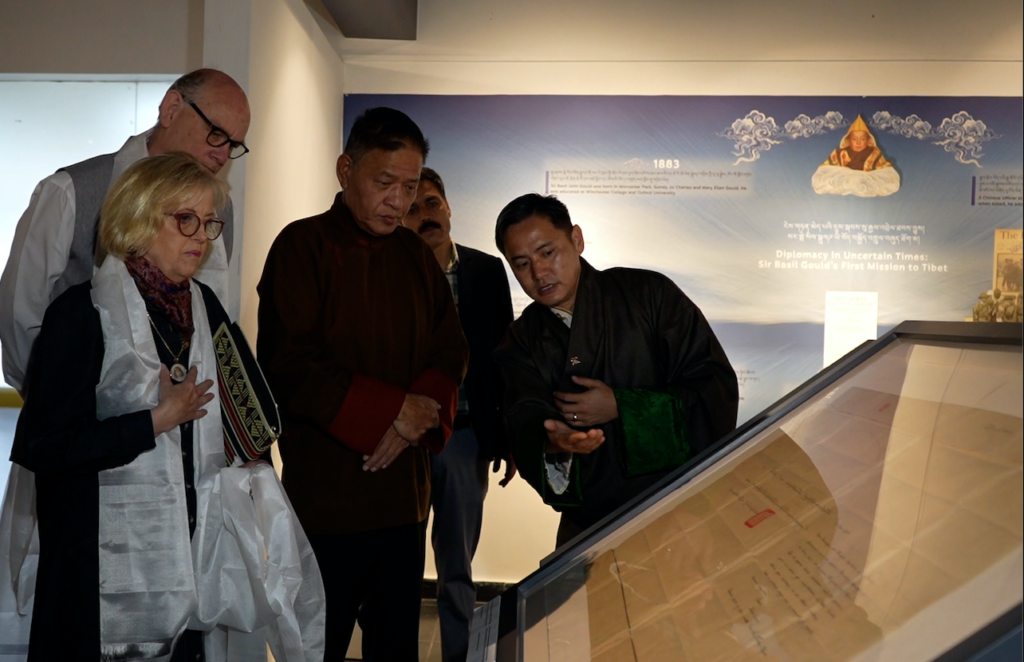
DHARAMSALA, 3 April: The Tibet Museum of the Department of Information and International Relations (DIIR), Central Tibetan Administration (CTA) today launched a temporary exhibition titled “Frontier Diplomacy: Britain, Tibet and Sir Basil Gould.”
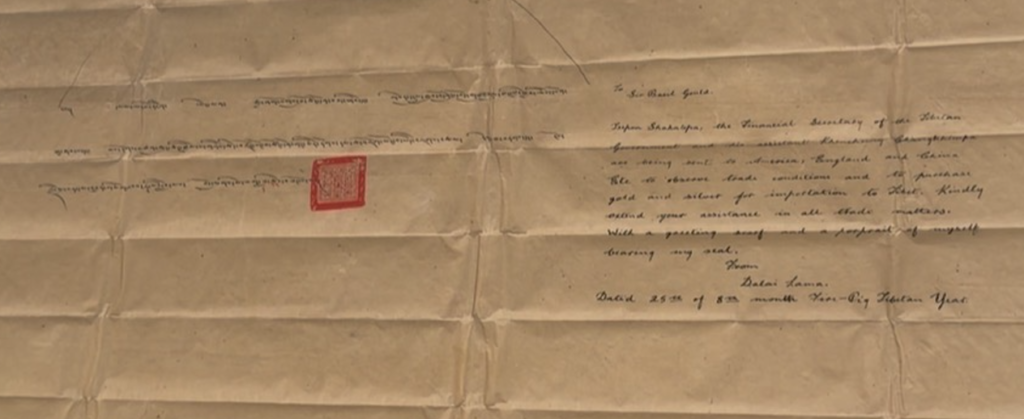
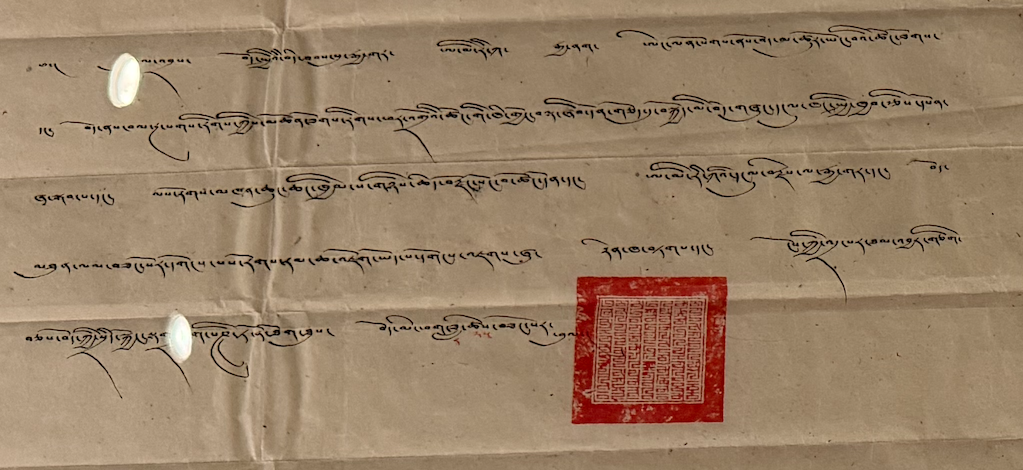
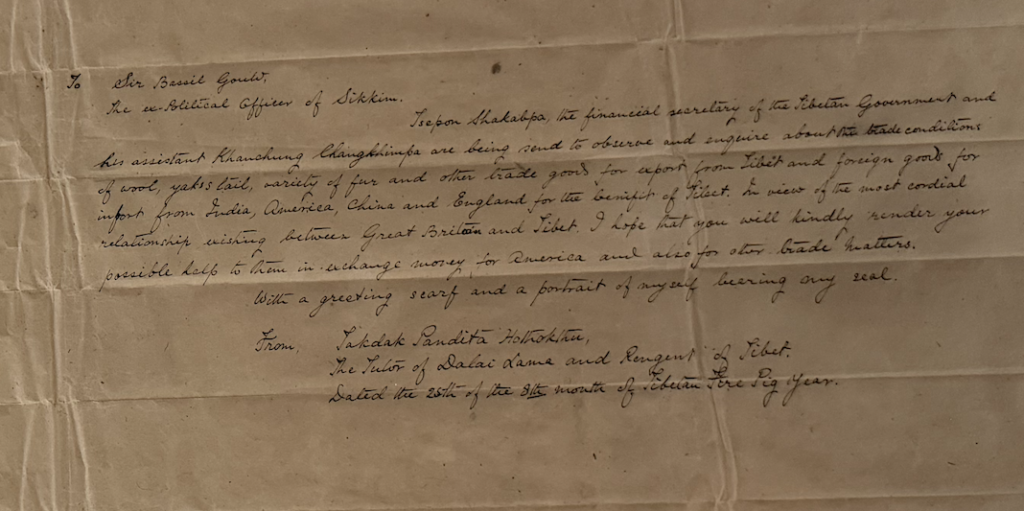
The exhibition centres on two significant historical documents sent in 1948 to Sir Basil Gould, the British Political Officer in Tibet, Sikkim, and Bhutan (1935–1945) by the Tibetan government. These documents were part of an effort by the Tibetan government to seek British assistance for its trade mission abroad in the same year.
The documents consist of official communications from the 14th Dalai Lama and the Regent Takda Pandita (Taktra Rinpoche), addressed to the British authorities. They were conveyed through a Tibetan trade mission led by Finance Minister Shakapa Wangchuk Deden, along with his assistant Khanchung Changkhimpa and submitted to the British authorities on 3rd December 1948.
These materials, part of Sir Basil Goul’s personal collection, were handed over to the CTA, -Tibetan government-in-exile- by Francis C. Cutler, his granddaughter, in London in July last year. The documents are presented as evidence of Tibet’s historical assertions of independence and its diplomatic engagement with foreign powers during that period.
“It is absolutely wonderful to see them exhibited here, where they should be, demonstrating that in 1947 both the United States and Britain considered Tibet to be an independent sovereign state,” said Francis C. Cutler, who attended the launch ceremony to inaugurate the exhibition.
Though officially described as a trade delegation, it marked both the culmination of Tibet’s forward policy and its first official outreach to the West after half a century of close contact with Britain. Emerging after the fall of the Qing dynasty, when Tibet exercised full control over its internal and external affairs, the mission sought not only to expand trade and secure economic independence but also to establish direct diplomatic relations with foreign powers.
“The documents are not just archival records but a voice from a pivotal moment in history amidst changing international landscape,” said Tenzin Topdhen, Director of the Tibet Museum, during the ceremony.
Tracing the long-standing relationship between Tibet and British India back to 1774, with the visit of George Bogle, a Scottish envoy of the British East India Company, President Penpa Tsering said that efforts are being made to engage more actively with the United Kingdom than with other European countries.
He noted that engagement within the European Union largely operates through frameworks of human rights and religious freedom, which often do not extend to addressing more sensitive political issues surrounding nationality and independence. He added that the documents exhibited today, and their historical significance, play an important role in strengthening contemporary engagement with the United Kingdom.
The permanent significance of the 1948 mission remains its role as a primary legal precedent for Tibetan sovereignty. While China’s diplomatic pressure successfully blocked formal recognition at the time, the delegation’s use of Tibetan passports—officially stamped by numerous Western nations—provided tangible evidence of Tibet’s de facto independence. The recent donation of Sir Basil Gould’s personal archive to the Tibet Museum in Dharamsala further illuminates this history, offering a rare look at the direct diplomatic correspondence between the 14th Dalai Lama and British officials.
For the Tibetan government in exile, these recovered documents serve as critical historical records that continue to bolster Tibet’s modern quest for international legitimacy and direct engagement with global powers. The temporary exhibition will be on display for four months.