Sowa Rigpa at a Crossroads: Fewer Tibetan Students, Fewer Jobs
By Tenzin Chokyi
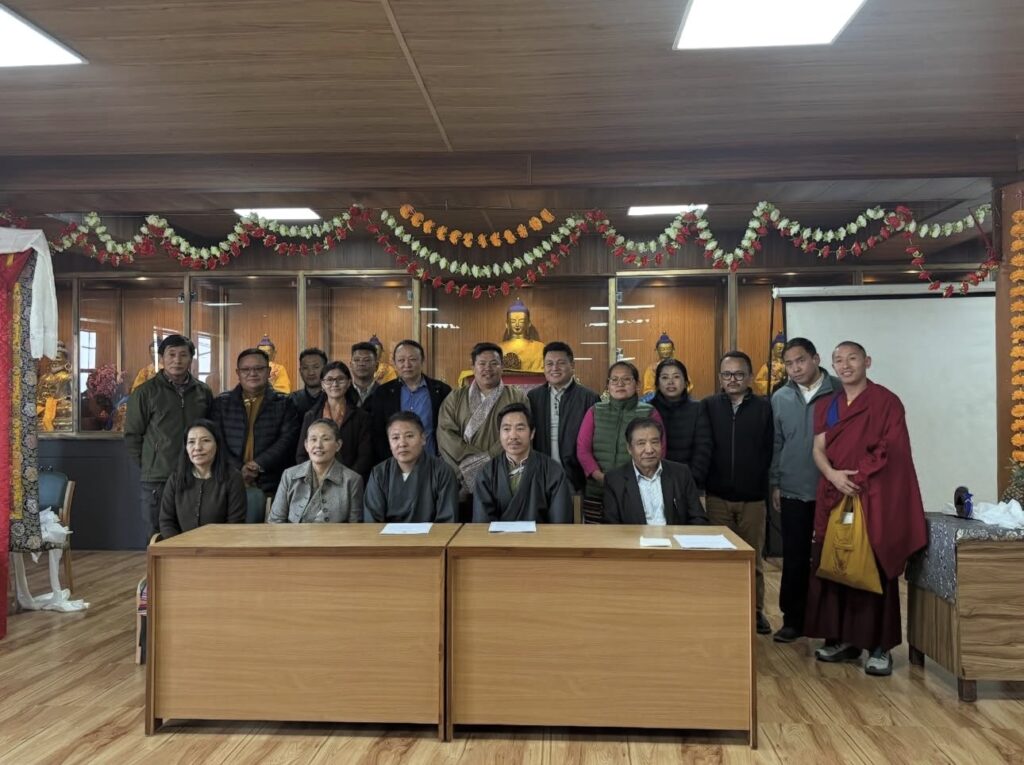
DHARAMSALA, 4 March: Dr Dorjee Damdul, Associate Professor in the Department of Sowa Rigpa at the Central Institute of Higher Tibetan Studies, was honoured with the Yuthok Award by the Central Council of Tibetan Medicine (CCTM) today. The award was presented at the Mentsekhang College Hall in recognition of his dedicated service and significant academic contributions toward the preservation and continuity of the Sowa Rigpa tradition.
“The award was established to recognise individuals, organisations, and Tibetan traditional physicians who have made a lasting and significant contribution to the Sowa Rigpa tradition. It is conferred once every three years. The selection process is carried out by a committee appointed by CCTM, which nominates potential candidates, from whom the council selects the final awardee”, stated Dr Dorjee Damdul.
Dr Damdul, who is the outgoing President of the Council, further explained, “This year, the Council decided to confer the award on me, even though I was serving as its President. I felt this might be inappropriate and offered to resign. However, the rules and regulations did not allow it”.
Reflecting on the current state of Tibetan medicine and recent institutional changes, he expressed concern about the declining number of Tibetan students entering the field.
“There are 100 seats across the seven Tibetan medical institutes recognised under India’s Ministry of AYUSH. However, enrolment has fallen short of this number, with many seats remaining unfilled. In the past, there was far greater interest and participation.”
He also noted that Indians unfamiliar with the Tibetan languages are increasingly showing more interest now,” Dr Damdul added.
He stated that, starting with the 2021–2022 academic session, Tibetan students have been required to appear for the NCISM NEET‑SR UG entrance exam to enrol in Sowa Rigpa studies, in line with regulatory requirements under the Ministry of AYUSH. Following this change, the number of Tibetan students entering the field has been steadily declining.
He explained that several factors contribute to this trend: the large-scale migration of Tibetans to the West, the relatively small Tibetan population remaining in India, and a limited awareness of and exposure to Sowa Rigpa in schools and within the broader Tibetan community—particularly among youth.
While migration and lack of awareness have largely contributed to the decline in interest and participation, Tibetan students in these institutions now face an immediate and ongoing challenge: limited career scope and employment opportunities. This issue was exacerbated by the 2022 decision of Men-Tsee-Khang, one of the largest Sowa Rigpa and Tibetan astrology institutes, to suspend job placement for its students in an effort to address its “financial and liquidity issues,” as reported by Phayul in the feature story, “Is Men-Tsee-Khang’s revamp going as per plan?”
In this context, Dr Damdul noted that the absence of guaranteed placement has likely played a role, as students need assurance of a position and space to practice after completing their studies. “This is not only the case at Mentsekhang but across all other institutions as well; they do not provide job placement,” he explained.
The challenges described by Dr Damdul are reflected in the experiences of those who were students at the time of the 2022 decision. One graduate from Mentsekhang, speaking on condition of anonymity, shared how it impacted them.
“The 2022 decision, which was made while we were still students, caused many of us to question our life choices. It was indeed a difficult blow, casting a shadow of uncertainty over our futures. Having a job is essential to survive in the modern world, though preserving tradition remains very important. But for some students, it’s not just about personal choice—they have to support their families and manage many other responsibilities”.
The graduate further explained that, although they could now open their own private clinic with an Indian government-recognised certificate and registration, doing so is a path accessible to only a few, given the financial and practical demands involved.
Today, the Tibetan Sowa‑Rigpa tradition faces several challenges. Fewer students and limited job opportunities make it harder to keep the tradition alive. India’s recognition of Sowa‑Rigpa under AYUSH has provided support, training, and formal pathways, helping to preserve the system. At the same time, bringing the tradition under India’s regulatory framework risks undermining the Tibetan community’s control over its own heritage. Coupled with China’s claims and international recognition debates, Tibetans find themselves in a delicate position as they strive to maintain both the practice and ownership of their own tradition.