
Oracle-Based Allegations Against MPs Go Unchecked as EC Backtracks on Media Engagement
By Tenzin Chokyi
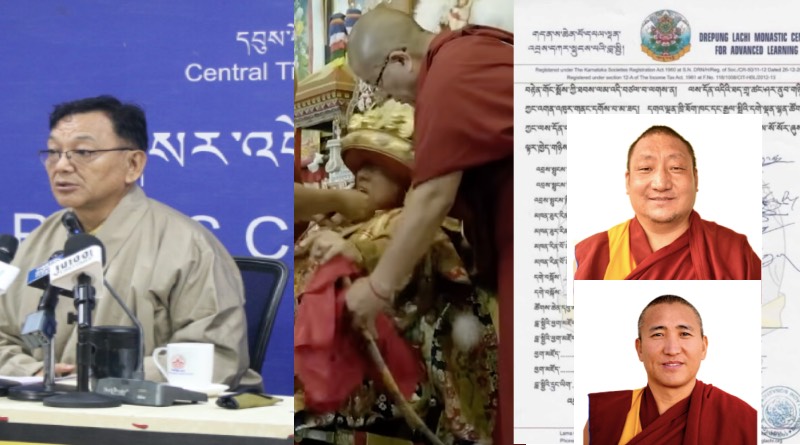
DHARAMSALA, 12 Jan: As Drepung Lachi’s ultimatum to two Gelug MPs raises questions about potential violations of electoral conduct rules – including prohibitions against unfounded accusations and religious-based intimidation- the Tibetan Election Commission backtracked on its commitment to media engagement, stating it will no longer comment until after preliminary polls are completed.
Drepung Lachi, one of the foremost Gelug monastic authorities, issued an ultimatum to two incumbent Gelug MPs of the Tibetan Parliament-in-Exile, Geshe Lharampa Gowo Lobsang Phende of Drepung Loseling monastery and Geshe Lharampa Atuk Tseten of Drepung Gomang monastery, warning that the monastery will withdraw recognition of their status unless they issue a public apology over allegations linked to a pronouncement attributed to the Nechung Oracle on Friday.
The letter issued by Drepung Lachi and signed by 15 senior religious heads accuses the two MPs of “misconduct influenced by evil spirit,” prioritising “regional politics over the common good,” engaging in the “defamation of the Tibetan spiritual leader, the 14th Dalai Lama,” and “vilification of monks among the public due to their misconduct.”
The allegations reportedly stem from a pronouncement attributed to the Nechung Oracle—the state oracle of the former Gaden Phodrang government of Tibet—delivered on 27 December. The letter warns that failure to issue a public apology will result in the monastery no longer recognising the two individuals as Gelug Members of Parliament.
When approached by the publication today, Chief Election Commissioner Lobsang Yeshi declined to comment on whether the Drepung letter violates Article 24(3)—which prohibits unfounded accusations and religious-based division—or Article 24(2), which prohibits intimidation of elected representatives.
The Commissioner said the EC has “no comment” on the matter, adding that the Commission had decided to refrain from giving media interviews until after the preliminary election. This revokes its earlier decision to engage with the press on election-related matters, as announced during an EC press conference on 23 December.
Meanwhile, the MPs have been instructed to report to the Drepung monastery by 19 January to participate in an apology ceremony scheduled for 20 January, coinciding with a Nechung Oracle deity day. The letter further requires the MPs to pledge before the oracle that they will not repeat the alleged misconduct.
The development spiralled from the initial oracle pronouncement delivered on 27 November at Drepung Gomang Monastery, which does not identify the two MPs by name. It refers only to “two spokespersons of the Gelug tradition” and does not specify the actions, timing, or context of the alleged misconduct. Nor does it explicitly state that the alleged defamation constitutes direct harm to the Dalai Lama.
However, in a subsequent video clarification, Geshe Dorjee, the Nechung Oracle’s translator—who translates what is believed to be divine speech into human language—stated that the reference to “two Gelug spokesmen” was made because the oracle pronouncement occurred at a Gelug monastery. He added that the message should apply broadly to all religious MPs and leaders engaged in similar “misconduct.”
According to the translator, such “misconduct” includes a lack of “belief” and “trust” in the established policy of the Tibetan government-in-exile—namely, the Middle Way Approach—particularly when MPs openly “oppose or disagree with it in the name of democracy and freedom”. He linked such opposition to defying the vision and advice of the Dalai Lama, asserting that rejecting the Middle Way policy inherently amounts to going against the Dalai Lama’s guidance.
“Even if the Dalai Lama’s name is not explicitly mentioned, opposing the policy naturally means opposing his advice,” the translator said. He further stated that those in positions of governmental authority, as well as members of the public who support the Middle Way policy, are not obliged to conform to those who reject it. “The Nechung Oracle will never say to fight for full independence by going against the Dalai Lama’s advice,” he added.
The translator also claimed that oracle pronouncements addressing parliament are not unprecedented and have occurred on several occasions, warning legislators of their responsibility not to disturb the Dalai Lama’s vision, lest urgent social issues arise within Tibetan society.
He further suggested that the Kashag, the executive branch of the Tibetan government-in-exile, is sincerely fulfilling its duties, which he cited as the reason for the absence of oracle pronouncements directed at the executive. In contrast, he criticised parliamentarians who advocate Rangzen (complete independence), stating that rejecting the Middle Way policy within an established parliamentary framework constitutes irresponsibility.
Despite these explanations, the specific statements, timing, and actions attributed to the accused MPs remain unclear. Based on the translator’s interpretation, anyone who disagrees with or rejects the Middle Way policy could be deemed complicit in defaming the Tibetan spiritual leader and harming Tibetan unity—a position that raises concerns within a democratic context.
Given the lack of specificity, some observers have noted that the oracle pronouncement could be interpreted as an unsubstantiated allegation against the two MPs.
But as the democratic institution responsible for overseeing the election code of conduct has distanced itself from intervening in what can be characterised as a politico-religious matter, the Nechung Oracle, or a supra- human authority, continues to function as a defining force in this unfolding controversy.


The accusations by Nechung Dorje are politically motivated! They have no truth whatsoever! It’s another attempt to muzzle free speech and gagging independence advocates!