China Claimed a Tibetan AI First, Exiled Tibetans Say: Not First, Not Free, Not Tibetan
By Tenzin Chokyi
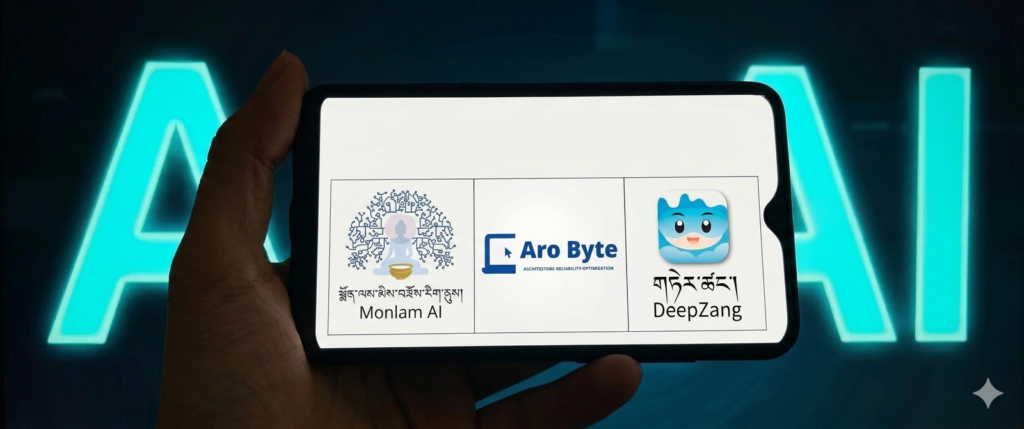
DHARAMSALA, 20 March: China’s unveiling of its Tibetan large language model, DeepZang, in Lhasa earlier this week has drawn pushback from the Tibetan exile community, which disputes Beijing’s claim that the system is the “world’s first” of its kind.
Promoted in Chinese state media as the “world’s first Tibetan large language model,” DeepZang has been presented as a major step in advancing artificial intelligence for “minority languages” in China. The designation was also endorsed by the World Record Certification Agency (WRCA), a London-based private body that verifies record claims under its own criteria.
Developed by CHOKNOR Information Technology Co., Ltd., DeepZang is described as a multilingual AI system capable of translation, text generation, and voice interaction, with support for more than 80 languages. Its founder, Tenzin Norbu, said the platform is intended to provide what he described as an “authentic” channel for global users to engage with Tibetan culture and to address gaps in indigenous-language AI. He added that the model is expected to expand into sectors such as education, healthcare, and ecology supporting services for government and enterprise users in the future.
However, these claims are being challenged by researchers in the Tibetan exile community, who point to earlier developments in Tibetan-language AI outside China and its occupied regions. The Dharamsala-based Monlam Tibetan IT Research Centre released its Tibetan large language model, Monlam AI, in 2023, followed by further advancements in 2025, including the platform Melong.ai.
According to the centre, Melong.ai demonstrates strong performance in Tibetan-language generation and comprehension, with developers claiming it outperforms several leading global models in Tibetan-specific tasks, including Gemini, Claude, and DeepSeek. The system is multilingual and multimodal, supporting more than 140 languages and accepting both text and image inputs.
The Monlam initiative also includes tools such as “Monlam Think,” designed to enhance deep linguistic analysis of Tibetan texts. Developers say their broader aim is to ensure that Tibetan language and knowledge systems are preserved and represented through a distinctly Tibetan perspective.
Arobytee, an AI and web development company launched by Lobsang Tashi, an exiled Tibetan AI Engineer at IBM in February 2025, also predates DeepZang’s arrival, further undermining Beijing’s claim to have pioneered Tibetan-language artificial intelligence.
Observers note that the disagreement extends beyond technical timelines, reflecting broader questions about ownership, legitimacy, and narrative control in emerging technologies. Competing claims over what constitutes the “first” Tibetan AI model highlight how innovation can intersect with political priorities and cultural identity.
The International Campaign for Tibet (ICT), in its report, highlights limitations in how the system handles politically sensitive topics. It notes that the AI’s responses appear to align closely with official state narratives, presenting Tibet as an inseparable part of China and restricting discussion on issues such as Tibetan independence, the Dalai Lama, and self-immolation protests. In such cases, the system reportedly directs users toward content that complies with Chinese legal and regulatory frameworks.
The ICT further stated that “in reality, DeepZang serves as a vehicle to position Chinese state-controlled AI as an authoritative voice, reinforcing and entrenching China’s narrative on Tibet.” The organisation also pointed out that the name “DeepZang” reflects the Chinese term “Zang” for Tibet, rather than the Tibetan term “Bod,” suggesting a framing consistent with official Chinese terminology.