Tibet, Taiwan Sign First MoU to Boost Mandarin Education in Tibetan Schools
By Tenzin Chokyi
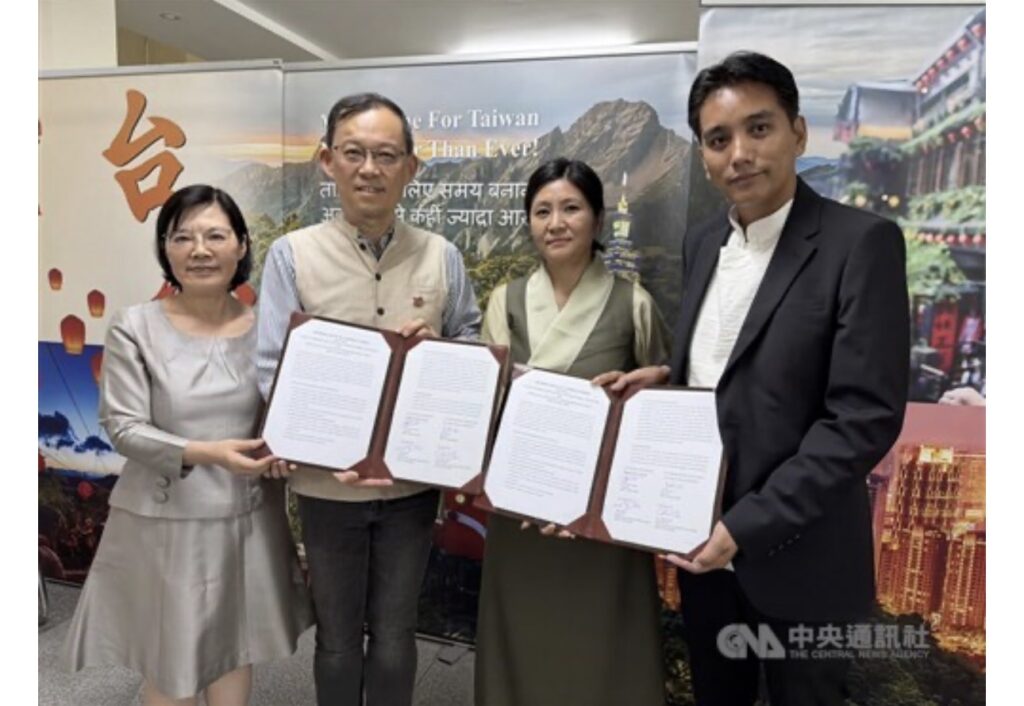
DHARAMSALA, 26 March: In a significant step toward expanding educational opportunities for Tibetan students in India, the Dalai Lama Institute for Higher Education in Bangalore, on Wednesday, signed a memorandum of understanding (MoU) with Taiwan to enhance Mandarin language teaching in Tibetan schools.
The agreement was signed with the education division of the Taipei Economic and Cultural Centre (TECC) in New Delhi, marking the first formal higher education collaboration between Taiwan and the exiled Tibetan community in India, according to Focus Taiwan.
Under the MoU, Taiwanese Mandarin teachers will be recruited and placed in Tibetan educational institutions, improving the quality of instruction that has so far largely relied on locally trained Tibetan teachers. The initiative is expected to deepen cultural exchange and mutual understanding, while equipping Tibetan students with stronger Chinese-language proficiency to engage more effectively with Chinese-speaking counterparts in the context of their freedom struggle.
According to Tenzin Passang, Principal of the institute, Mandarin courses have been part of the curriculum since the institute’s establishment in 2008. However, the new partnership will allow students to benefit from native-speaking instructors, enhancing both teaching quality and language fluency.
The agreement is also seen as a reflection of shared values in education and democratic principles between Taiwan and the Tibetan community, and is expected to contribute toward stronger bilateral relations.
Dr Chen Mu-min, Taiwan’s representative to India, emphasised the significance of the MoU, stating that the Taiwan Education Centre is one of Taiwan’s key initiatives for higher education cooperation with India. He said it will greatly expand relations between Taiwan and Tibet and inspire Tibetans by showcasing Taiwan’s advancements in democracy, technology, and higher education.
Jigmey Tsultrim, Chief Representative of the Central Tibetan Administration (CTA) settlement in southern India, said the MoU “reflects the shared values in education, ideas, and democracy between the two sides and will strengthen bilateral ties,” as reported by Focus Taiwan.
The partnership comes as Taiwan continues to promote Mandarin education globally through initiatives led by its Overseas Community Affairs Council, positioning its programs as open and culturally inclusive alternatives for international Mandarin learners, in what they describe as “Promoting Mandarin Teaching with Taiwanese characteristics.”