Gelug MPs Apologise Under Ultimatum But Deny Core Allegation of Defaming Dalai Lama
By Tenzin Chokyi
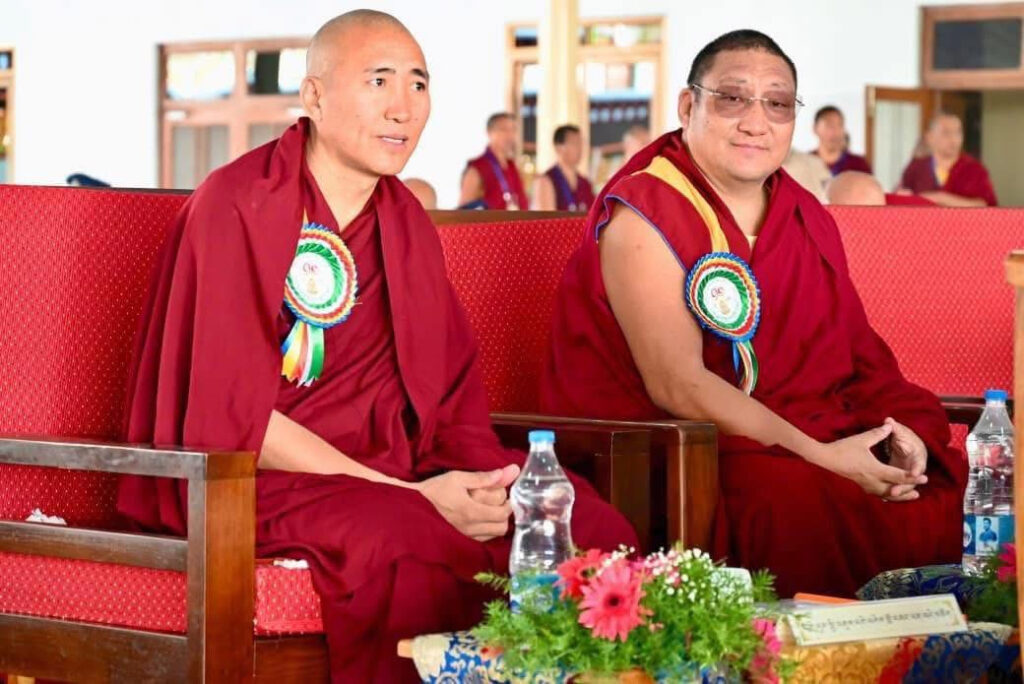
DHARAMSALA, 21 January: In an unprecedented ceremony marked by contradiction, the Gelug MPs of Tibetan Parliament-in-Exile (TPiE) appeared for a mandated apology ceremony on Tuesday. While expressing remorse as instructed by the Nechung Oracle’s pronouncement, the MPs explicitly stated that they have never uttered ‘a single word’ of defamation against the Dalai Lama and never will, even at the cost of their lives.
Gelug MPs, Geshe Lharampa Gowo Lobsang Phende and Geshe Lharampa Atuk Tseten, participated in an apology ceremony on 20 January at Drepung Monastery after receiving an ultimatum warning that the monastery would withdraw recognition of their status unless they publicly expressed remorse.
The directive, issued by Drepung Lachi, one of the foremost Gelug monastic authorities and signed by 15 senior religious heads, was based on allegations linked to the oracle pronouncement that accused the two MPs of “misconduct influenced by evil spirits,” prioritising “regional politics over the common good,” engaging in the “defamation of the Tibetan spiritual leader, the 14th Dalai Lama,” and “vilification of monks among the public due to their misconduct.”
In a joint statement issued after the ceremony, the MPs said they had expressed remorse and pledged not to repeat any actions as instructed by the Nechung Oracle’s pronouncement. At the same time, they maintained that they had never uttered a single word of insult and defamation against their spiritual leader, the 14th Dalai Lama, and vowed never to engage in such conduct in the future, “even if faced with death itself.”
While the MPs explicitly denied ever defaming the Dalai Lama, the ceremony and accompanying statements did not clarify their position on the other allegations.
According to a letter issued by the Lachi administrative body following the ceremony, the two MPs showed remorse and pledged not to repeat the alleged misconduct in accordance with the oracle’s pronouncement. This framing could be interpreted as implying that the MPs acknowledged the allegations outlined in the oracle’s pronouncement, despite their explicit denial of defaming the Dalai Lama .
Additionally, Geshe Lobsang Gyaltsen, former Khenpo of Gomang Monastery and one of the 15 monastic heads who signed the ultimatum, said in a public statement that the ultimatum would remain in effect should the MPs fail to comply with their pledge in the future. He made the comments to Tibet Radio in his personal capacity as a former Khenpo, and not as a representative of Drepung Lachi.
Given the discrepancies in statements from various actors, The Tibet Express reached out to the MPs to confirm the authenticity of the joint letter and to seek their response on the remaining allegations. While the MPs confirmed that the letter had been signed and issued by them, they declined to comment on its content or on related matters.
The publication also contacted three of the 15 monastic leaders who signed the ultimatum—Khensur Gyaltsen, Khenpo Jigme Gyatso of Gomang Monastery, and Khensur Lobsang Samten—to ask where, when, and how the alleged misconduct referenced in the oracle pronouncement was committed by the two MPs. The calls went unanswered.
A written query sent to Khensur Gyaltsen, who has previously engaged with the media, is still awaiting a response
The ambiguity surrounding the allegations was reflected in the reception the MPs received after the ceremony. Visuals showing hundreds of monks gathered outside Drepung Lachi, offering ceremonial scarves and paying their respects to the two MPs, were widely circulated across social media platforms.
While Khensur Gyaltsen, in his conversation with Tibet Radio, framed the gathering as an expression of appreciation in keeping with Lachi’s monastic tradition for the MPs’ “repentance for their misconduct” in compliance with the oracle’s pronouncement, several attendees told this publication, speaking on condition of anonymity, that their presence was intended to show support for the MPs rather than to endorse the allegations against them.
“There has been no precedent of repentance imposed under a decision of Drepung Lachi until now. If anyone claims such a tradition exists, it is a misinterpretation,” said a monk from Drepung Monastery who attended the reception and has lived at the monastery for over 20 years. “Around 1,000 monks offered ceremonial scarves to the MPs to express disagreement with the Nechung Oracle translator Dorjee’s interpretation, and more importantly, to show support for the truth they believe stands behind the two MPs.”
Several other monks who had initially agreed to speak about their presence at the reception later declined to be named in the article, saying that speaking openly was difficult within a monastic setting where senior religious leaders are held in high esteem by their teachers.
These accounts highlight two key realities: the MPs have explicitly rejected one of the allegations against them, and the ultimatum issued by Drepung Lachi does not necessarily reflect the views of the broader monastic community.
Meanwhile, the Election Commission, the democratic institution responsible for overseeing matters that could affect the electoral process, continues to remain silent, offering neither clarity nor accountability. This lack of intervention leaves the controversy unresolved at a critical moment, just weeks before the 2026 preliminary elections for both Sikyong and 18th members of the TPiE scheduled for 1 February.
As the episode concludes with ritual compliance but unresolved allegations, the controversy continues to centre not on verifiable acts but on interpretation, authority, and silence, raising broader questions about accountability, consent, and the role of religious authority within a democratic electoral framework.