Tibetans Mark 67th Uprising Day with Dharamsala March, Leaders Largely Absent from Streets
By Tenzin Chokyi
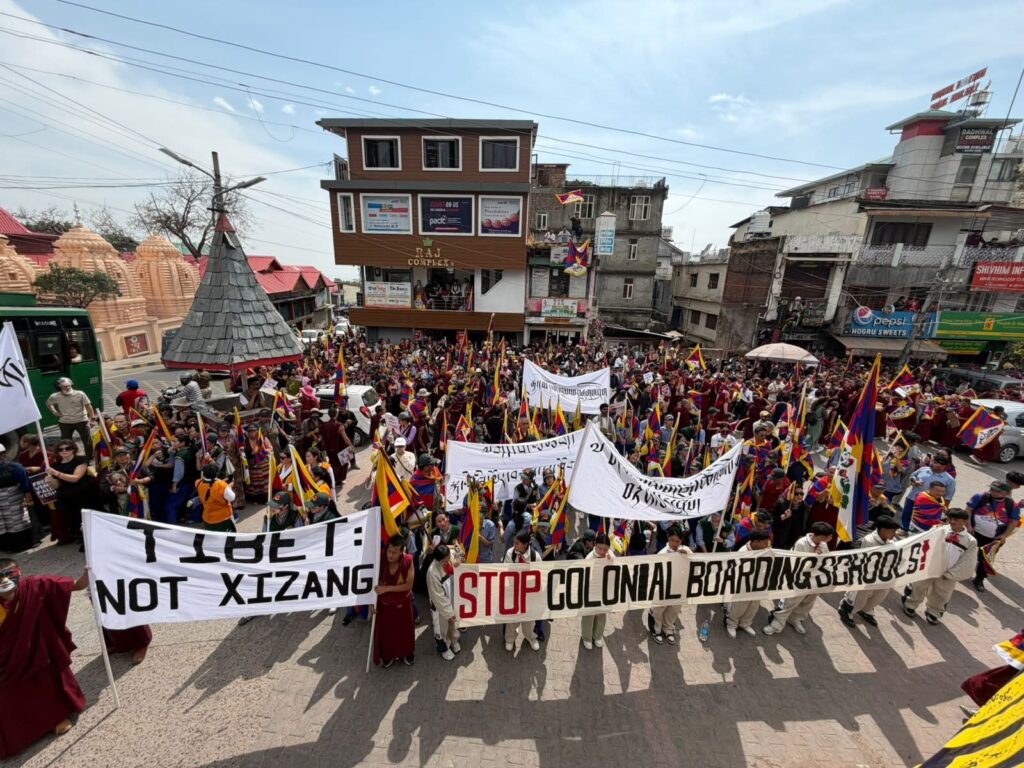
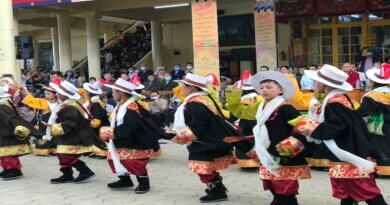
DHARAMSALA, 10 March: Hundreds of Tibetan refugees took to the streets of Dharamsala on Monday, raising the Tibetan national flag and chanting slogans of “Azadi” to mark the 67th anniversary of the 1959 Tibetan National Uprising Day against China’s colonial occupation of Tibet. The march, which flowed through the Himalayan town home to the Tibetan government-in-exile, was both a remembrance of the uprising and an act of defiance, as Tibetans in exile continue to denounce what they describe as decades of colonial domination by Beijing.
Yet amid this sweeping display of collective memory and resilience, only a handful of Tibetan Political and religious leaders and bureaucrats joined the march, highlighting a striking contrast between the people-led spirit of the uprising and the presence of leadership on the streets.
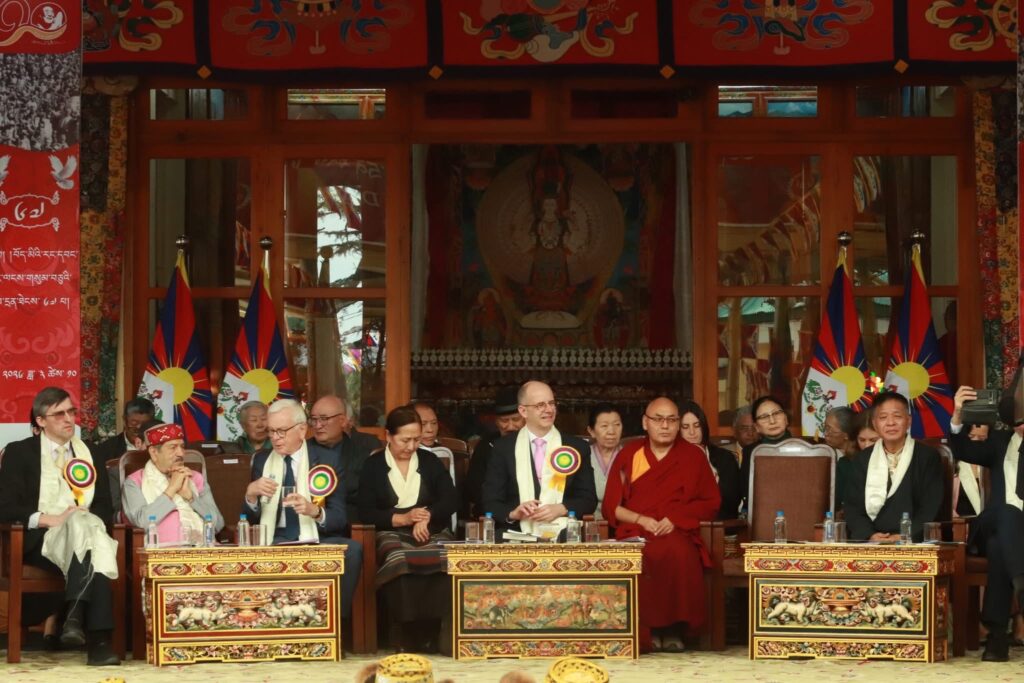
Tenzin Namsel, a Tibetan youth waiting for the rally to begin outside the Tsuglakhang temple complex—where the official ceremony of the Central Tibetan Administration (CTA) was underway in the presence of nearly every Tibetan political leader and friends of Tibet from around the world—said that Tibetan political leaders must take to the streets alongside ordinary people, noting that the day stands as a testament to an uprising that was inherently initiated by the Tibetan public themselves.
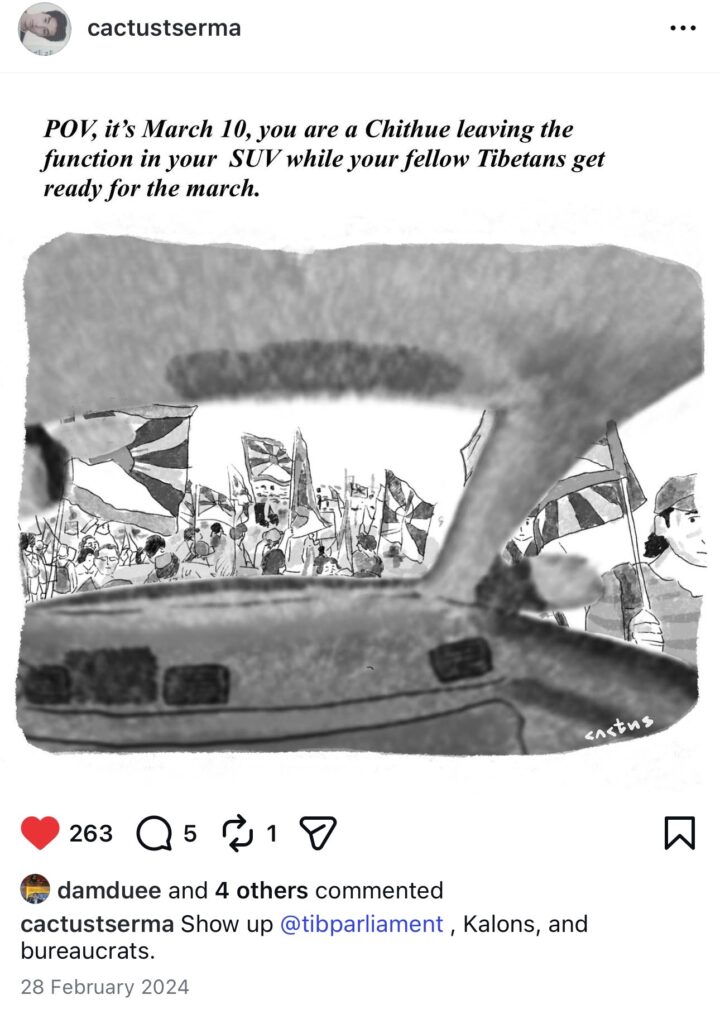
Namsel added that it reminded him of a cartoon by the Tibetan artist known as Cactustserma, in which leaders drive away after the official function. At the same time, ordinary Tibetans begin preparing for the rally. “It’s a powerful depiction, and I think leaders must take this initiative—it shows they empathise with the sentiments of the common people,” he said, reflecting on the minimal engagement of leaders in rallies over the years.
The limited engagement of Tibetan leadership in rallies and protests is often seen as a consequence of past efforts by the CTA and other leaders to create a conducive atmosphere for Tibet-China dialogue between 2002 and 2009—a period when the Tibetan leadership sought to negotiate with Beijing on Tibet’s future while advocating genuine autonomy under the “Middle Way” approach. At the same time, some observers argue that campaigns can be both highly visible and integrated with organised events, like those routinely arranged by the CTA.
Tashi Targyal, vice president of the Tibetan Youth Congress, one of the Tibetan NGOs organising the rally, said he sees no reason why leaders should not participate when viewed from a broader perspective.
“We encourage every Tibetan, including our dignitaries, to take part in rallies. I saw some parliamentarians and personnel from other NGOs here today, and it is very refreshing,” he said.
When asked about the limited engagement of political leaders and CTA officials, Targyal said frankly that it is largely because the CTA represents the Middle Way policy, while organisations such as SFT, TYC, and NDPD, on the organising committee, advocate for Tibetan independence.
He said that they had experienced this hesitation in regular campaigns, where CTA personnel often exercised caution in giving their signatures. “10th March is a day for all of us Tibetans, a day when we resisted Chinese occupation. The three main slogans of the day—‘Long live His Holiness, ‘Tibet is an independent country,’ and ‘China out of Tibet’—are still the same ones we stand by today. I therefore would encourage every Tibetan to show up on this day,” he added.
It should be noted that the Tibetan Charter does not prohibit individuals working under the CTA—including the Sikyong, ministers, and parliamentarians—from participating in rallies.
Tenzin Lekshay, spokesperson for the CTA, clarified in a recent interview with Tibet Express that no legal restrictions are preventing CTA personnel from taking part in protests or public demonstrations. However, he emphasised that, in accordance with the official Middle Way policy, CTA representatives cannot advocate for independence.
Youdon Aukatsang, a current member of the Tibetan Parliament who was present at the rally, said that, both as a Tibetan and as a parliamentarian, it is her responsibility to participate, especially on a day of significance like 10 March 10. However, she noted that campaigns can be both highly visible and integrated with organised events, such as the recent Special International Tibet Support Group meeting organised by the CTA.
She added that if CTA personnel are not occupied with other commitments, they should take up the responsibility to show up.
While the minimal engagement of leaders may seem concerning, MP Lhagyari Namgyal Dolkar noted that in recent years, participation in the rallies by parliamentarians has been increasing—a development she considers encouraging, as it reflects progress compared with the past.
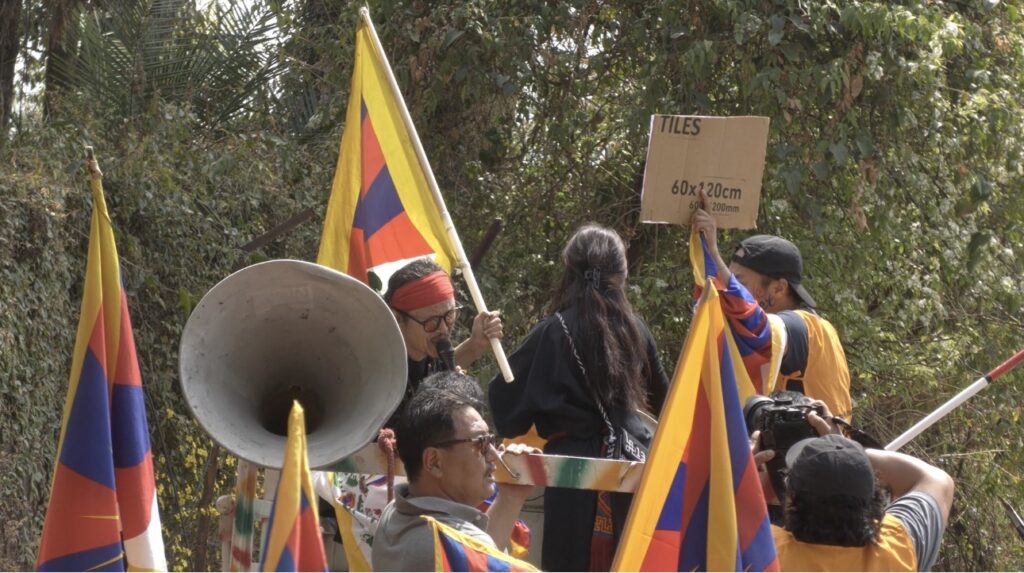
Tibetan activist Tenzin Tsuendue, a longtime leader in the Tibetan freedom movement, recalled the 10 March 2003 rally, when fewer than 100 Tibetans took part in the protest. He noted that participation had declined after the Tibetan leadership began in 2002, with efforts to create a “conducive atmosphere” for Tibet-China dialogue. He said participation increased the following year slightly, but it was only in 2006, following the Nangpa La Pass shooting, that large-scale Protests drew significant crowds.
He said that once China successfully hosted the 2008 Beijing Olympics, Beijing no longer felt the same pressure to engage with Tibetan concerns as it had in the years leading up to the Games.
According to him, the Tibetan leadership at the time believed that maintaining a restrained atmosphere would help create favourable conditions for dialogue with Beijing. However, after the Games concluded, the dialogue gradually lost momentum, and the envoys involved in the talks eventually resigned.
He added that the Dalai Lama later indicated that there appeared to be no clear path forward under those circumstances, stating that Tibetans would have to decide their own way forward. Since then, he said, the broader policy landscape has remained largely unchanged.