Tibetan Parliament Opens Final Session With ₹3,407.42 Million Budget on the Table
By Tenzin Chokyi
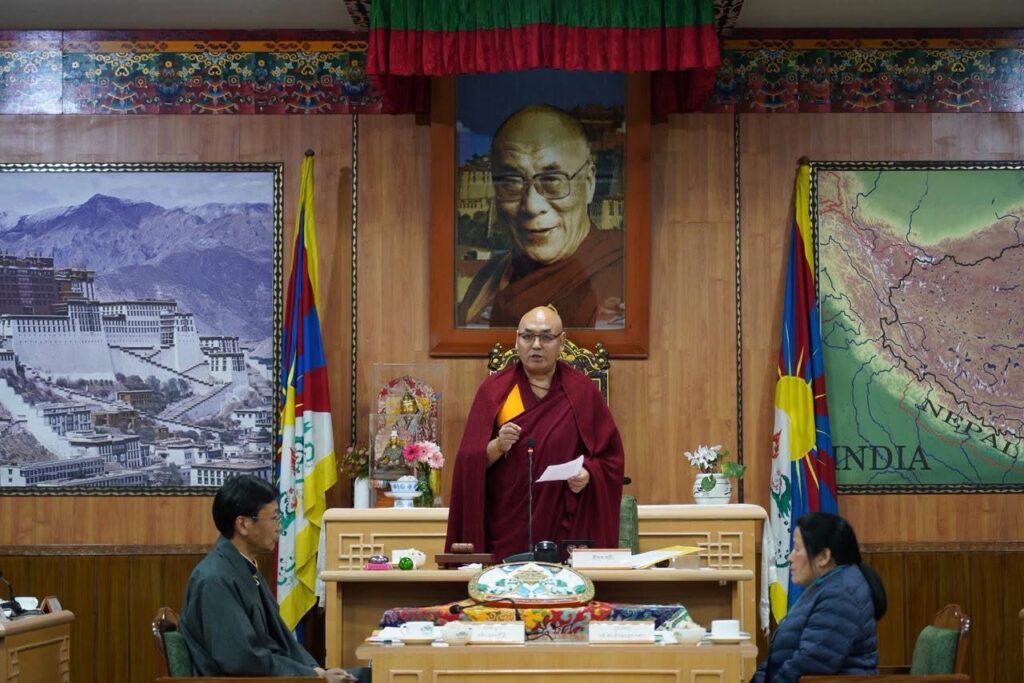
DHARAMSALA, 16 March: The final session of the 17th Tibetan Parliament-in-Exile(TPiE) began today, with lawmakers set to debate and finalise the Central Tibetan Administration’s (CTA) proposed consolidated budget of ₹3,407.42 million for the 2026–2027 fiscal year.
Opening the 11th session, Speaker Khenpo Sonam Tenphel noted that March holds special significance as the month of the Tibetan National Uprising Day and as a period of heightened Chinese repression in occupied Tibet.
Reflecting on 67 years of exile, he credited the vision of His Holiness the Dalai Lama, India’s support, and the sacrifices of the older generation for preserving Tibetan religion, culture, and language. He added, with pride, that the Tibetan cause continues to command attention in legislatures worldwide despite China’s growing power.
He raised particular concern over China’s newly passed ethnic unity law, warning that its provisions mandating Mandarin primacy from early childhood pose a direct and deliberate threat to the Tibetan language, and stressed that preserving that language is both the right and the responsibility of every Tibetan.
The Speaker noted that while advancing the Tibetan freedom movement and the welfare of exile Tibetans remain the Cabinet’s core responsibilities, different administrations have had different priorities and cited the Kashag before the present one’s focus on education, and the one preceding it on the three basic needs.
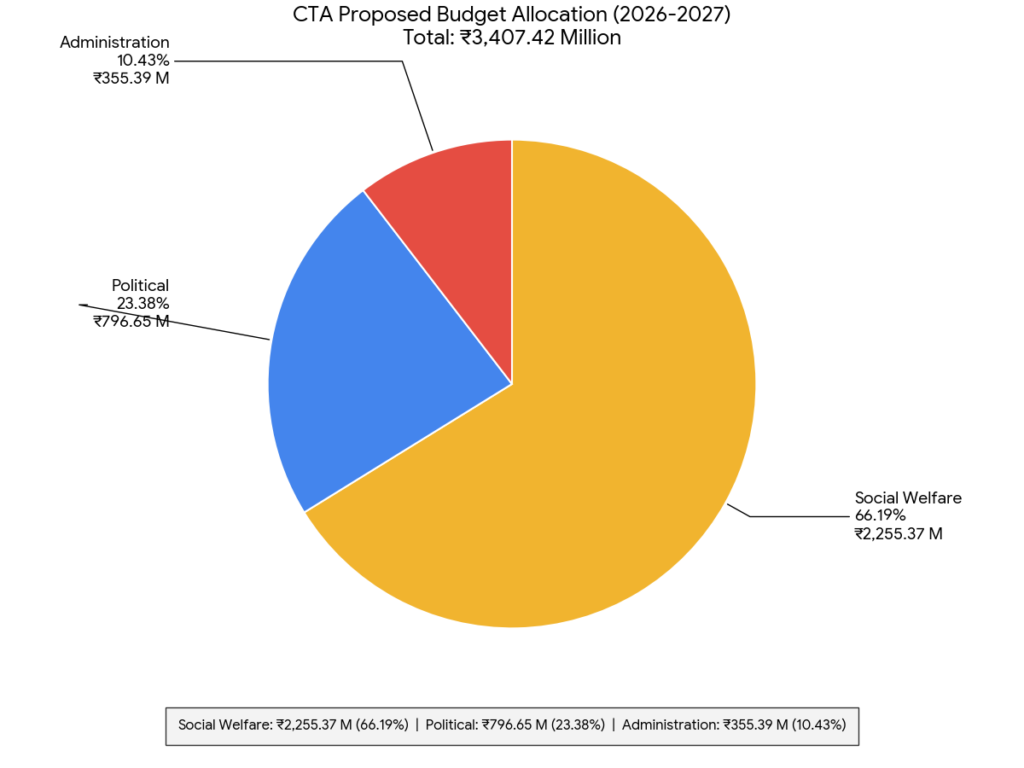
The proposed budget outlines the administration’s spending priorities across sectors. Social welfare is set to receive the largest share at ₹2,255.23 million (66.19%), followed by political activities, allocated ₹796.69 million (23.38%), while administrative expenses account for ₹355.30 million (10.43%) of the proposed total budget.
According to the Budget Estimate Committee, 37.77% of the total budget is expected to come from the administration’s reserve funds, while 62.23% will be drawn from earmarked funding sources.
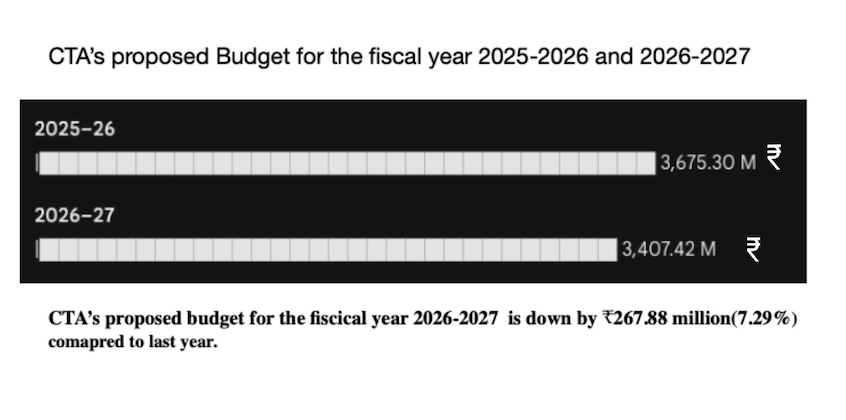
The proposed budget for this year is ₹3,407.42 million, a 3.13% increase over last year’s approved budget of ₹3,304.02 million. However, it remains 7.29% below the ₹3,675.30 million that was originally proposed last year.
Compared to last year, the budget allocation for political activities has increased from 21.53% to 23.38%. Meanwhile, the share allocated to administrative work has decreased by 1.62 percentage points, from 12.05% to 10.43%. The budget for social welfare has also seen a slight decrease, moving from 66.42% to 66.19%.
Despite the increase in allocation for political activities, several MPs raised concerns about the wide gap between the budgets for social welfare and political activities. They argued that more funds should be directed toward the political work of the CTA, which centres on the Tibetan freedom struggle against China’s colonial occupation of Tibet.
Many emphasised that the core responsibility of the CTA is to pursue a political solution to the Tibetan issue, rather than prioritising social development, including infrastructure projects in Tibetan exile settlements, which they noted have already developed considerably.
However, some MPs argued that social welfare for the Tibetan exile community is equally important in building a stronger and more engaged society that can ultimately contribute to the political struggle. They maintained that the budget allocation should be viewed from a broader societal perspective, where political activity alone is not the sole defining aspect of a functioning society.
MPs further stressed the importance of CTA’s financial self-reliance in light of recent funding cuts from the US and the fact that nearly 90% of the CTA’s funding depends on foreign aid. Lawmakers questioned what alternative sources of funding the administration is exploring to address this vulnerability.
MP Lhagyari Namgyal Dolkar, who is a member of the Budget Estimate Committee, stated that the budget makes little to no mention of alternative funding sources, despite the financial uncertainty faced by the administration during the last fiscal year.
The house also raised questions regarding the recent reference to the CTA as the “Tibetan government-in-exile” in a US congressional bill. Acknowledging the political significance of such recognition, MPs asked the Sikyong how the administration plans to proceed, given that the Tibetan leadership officially refers to the body as an administration rather than a government.
CTA President Penpa Tsering, who also serves as the Finance Minister of the CTA, is scheduled to respond to the house inquiries tomorrow during the second day of the session. The final session of the 17th Tibetan Parliament-in-Exile is scheduled to run from 16 to 30 March.