CTA Rejects China’s Election Criticism, Calls Out China for Crafting Laws Purely for Political Control
By Tenzin Chokyi
DHARAMSALA, 9 April: The Central Tibetan Administration (CTA), also known as the Tibetan government in exile, has rejected China’s critique of the first phase of the 2026 Tibetan general election, emphasising that the criticism overlooks ongoing repression in Tibet and the historical context of Chinese occupation.
In a recent article published by Chinese state media Global Times on Tuesday, the exile polity’s democratic election was labeled “Election without a land, an institutional illusion created by separatist groups in exile.” The article cherry-picked the low voter turnout in the preliminary election to portray the CTA as a foreign-funded separatist organisation lacking institutional legitimacy, while bypassing the fact that Tibetans remain in exile due to China’s colonial occupation of their ancestral homeland.
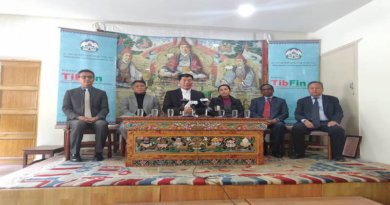
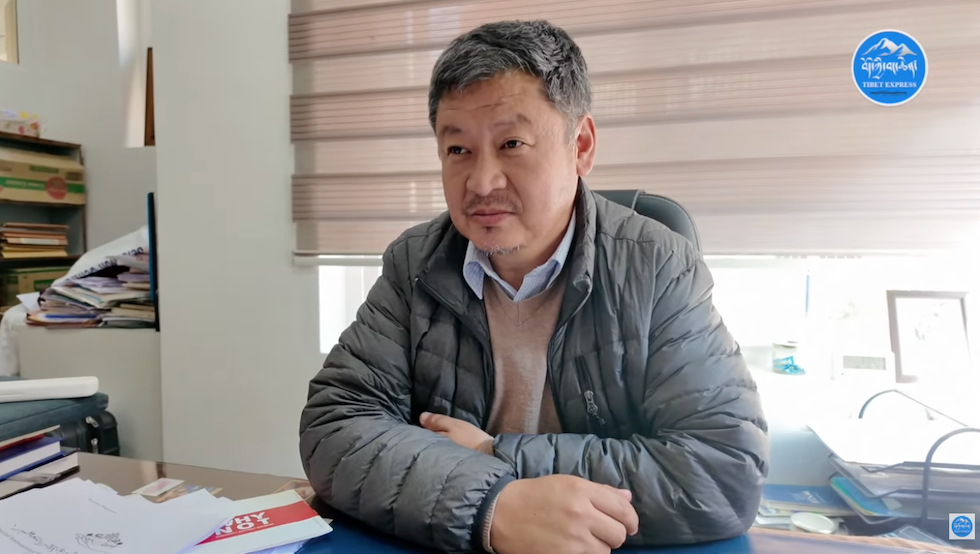
CTA spokesperson Tenzin Lekshay clarified in a media engagement that, under the leadership of the Dalai Lama, Tibetans have been building and sustaining a democratic system in exile for the past 66 years, ever since China’s complete occupation of Tibet in 1959.
He emphasised the futility of merely labeling the polity as “separatist” without engaging in meaningful dialogue, reaffirming the CTA’s political stance under the Middle Way Policy. A policy he described as a mutually beneficial approach aimed at achieving genuine autonomy for all Tibetans — as the only meaningful path to resolving the Tibetan-Chinese problem.
CTA spokesperson Lekshey further emphasized that China could observe and draw lessons from the experience of the Tibetan exile democratic polity to support its own long-term stability and peace.
While the Chinese state media report spoke of development and economic growth in Tibet, Lekshay countered that China has benefited greatly by causing severe damage to Tibet’s natural environment and that this too must be part of the conversation.Expressing concern over the growing repression of Tibetans inside Tibet, he also criticised China for crafting laws solely to serve its own political stability and security, laws that violate both international law and China’s own Constitution.
The spokesperson added that it is evident that whatever laws China makes, they are only further intensifying repression of Tibetans both inside Tibet and in exile. “We categorically reject this.”
The preliminary election of the 2026 Tibetan general election, for the post of Sikyong (the political head of the CTA) and the 18th members of the Tibetan Parliament in Exile, took place on 1 February across Tibetan diasporic communities worldwide. The incumbent Sikyong, Penpa Tsering, secured a decisive victory, receiving more than 60% of the vote—surpassing the threshold to avoid a final round—while the final voting for parliamentary candidates is scheduled for 26 April.
Of the 91,042 registered voters, 51,140 cast their ballots in the preliminary election. During the announcement of the results, the Election Commission of the CTA expressed concern over the relatively low voter turnout, while also acknowledging the seasonal challenges faced by Tibetans.
The commission noted that the election period coincides with the winter months, when many Tibetans are engaged in seasonal livelihood activities, including the sweater trade across India, often far from their Refugee settlements. The commission further noted that the election schedule could be adjusted to accommodate these challenges, though any changes would require broader consensus.