TSJC declines to register Nepal monasteries’ writ petition, says case may proceed through merger with Case No. 22
By Tenzin Chokyi
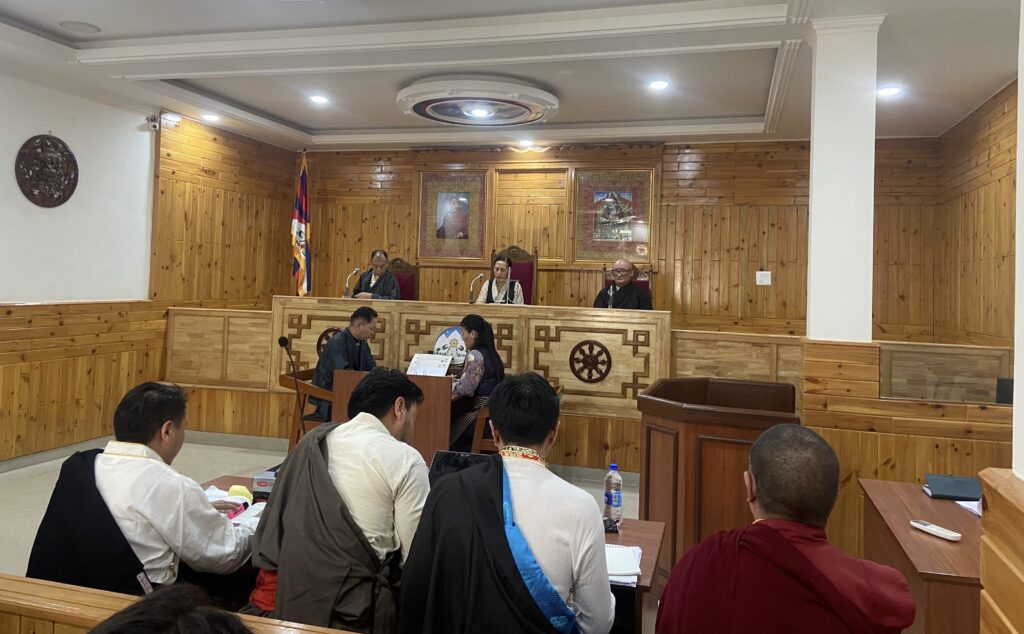
DHARAMSALA 12 June: The Tibetan Supreme Justice Commission (TSJC) has declined to register a writ petition filed by two Nepal-based monasteries seeking protection of their fundamental right to vote, ruling that the matter substantially overlaps with an already pending civil suit and may instead proceed through a merger with Case No. 22.
The petition arose from the Election Commission’s decision to withdraw final-round voting in Choejor constituency during the 2026 Tibetan general election following an investigation into alleged irregularities during the preliminary election. The monasteries argued that the decision deprived their members of the fundamental right to vote guaranteed under Article 11 of the Charter of Tibetans in Exile.
In its ruling today, the TSJC cited Article 19A of the Tibetan Code of Civil Procedure, which allows cases of a similar nature against the same party to be consolidated. The Commission found that the nature of the dispute, the underlying cause of action and the relief sought in the monasteries’ petition were substantially similar to those in Case No. 22, a civil suit already filed by the Choejor Public challenging the EC’s 23 April decision to withdraw the final-round vote.
The court noted that the monasteries fall within the jurisdiction of the Choejor constituency, that their members are included among the constituency’s registered voters, and that the petition arose from the same Election Commission decision that forms the basis of Case No. 22. It further observed that supplementary evidence submitted by the petitioners overlapped with material already presented in the pending case.
The Commission stated that the petition could proceed through a merger with Case No. 22 if the petitioners agreed. Citing Articles 19A and 88 of the Tibetan Code of Civil Procedure, it held that allowing multiple proceedings arising from the same cause could hinder the judicial process and therefore declined to register the writ petition as a separate case.
The ruling drew criticism from the petitioners and their legal counsel from the Tibetan Legal Association (TLA), who argued that the case raises issues of both fundamental rights and natural justice that cannot be adequately addressed through a civil suit alone.
During their post-hearing interaction with the media, TLA argued that the central issue is not whether the Election Commission was ultimately correct or incorrect in finding irregularities during the preliminary election. Rather, they argue that approximately 80 voters from the two monasteries were deprived of their right to vote without being given an opportunity to respond to allegations or present their side before the Commission reached its decision.
They argued that the Election Commission’s decision violated the principles of natural justice, particularly the right to be heard before an adverse decision is taken. They maintained that administrative decisions affecting individuals’ fundamental rights should be preceded by an opportunity for those affected to present their case and argued that decisions reached in violation of natural justice are liable to be set aside.
The lawyers also questioned the Commission’s procedural reasoning, arguing that writ petitions and civil suits are governed by separate legal provisions and should not be treated as interchangeable proceedings. While the Commission relied on Article 19A to justify consolidation, the petitioners maintain that the admissibility of writ petitions is specifically governed by Article 69(b), which permits rejection only where a petition lacks sufficient evidence or where no fundamental or legal right has been violated.
According to the TLA, although the ruling was issued under Article 69(b), the judgment did not directly engage with either of those grounds. Instead, they argued, the Commission’s reasoning focused primarily on the overlap between the writ petition and the pending civil suit, relying on Articles 19A and 88.
The lawyers also questioned the Commission’s reliance on Article 88, which recognizes the court’s inherent powers to make orders necessary to secure the ends of justice and prevent abuse of judicial process. According to the TLA, the provision is intended to ensure that courts facilitate justice and protect litigants’ access to judicial remedies. They argued that, in the present case, Article 88 should have been applied in a manner that enabled consideration of the petitioners’ claims rather than supporting the refusal to register the writ petition as a separate proceeding.
Counsel for the petitioners further stressed the distinction between writ and civil proceedings, arguing that writ petitions are intended to provide a direct and expeditious avenue for addressing alleged violations of fundamental rights. They expressed concern that merging the petition with an existing civil suit could subject the matter to a lengthier litigation process, potentially undermining the timely remedy sought by the petitioners through a writ petition.
The dispute has also raised broader legal questions regarding the relationship between writ petitions and civil suits, particularly whether a petition alleging violations of fundamental rights can be subsumed into an existing civil proceeding when both arise from the same administrative decision.
Following the hearing, reporters sought clarification from the Commission regarding its reliance on Articles 19A, 88 and 69(b). However, the judges declined to comment beyond the contents of the written judgment.