Two Nepal-Based Monasteries Challenge Choejor Voting Suspension in CTA Apex Court
By Tenzin Chokyi
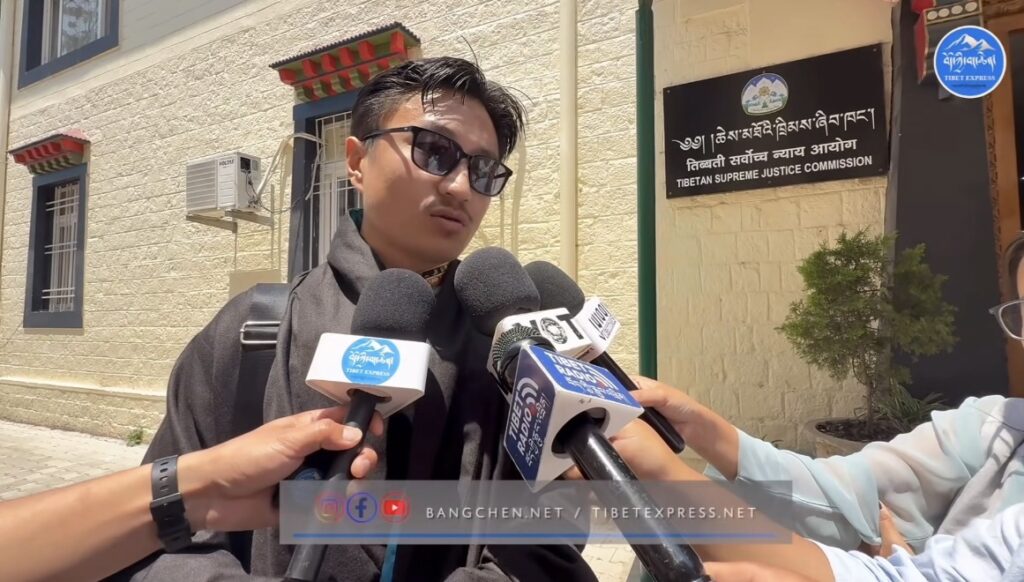
DHARAMSALA 10 June: Two monastic communities from the Choejor Tibetan Refugee Settlement in Nepal have challenged the Tibetan Election Commission’s decision to suspend final-round voting in the constituency, arguing before the Tibetan Supreme Justice Commission (TSJC) that the move violated their fundamental right to vote and amounted to a breach of protections guaranteed under the Charter of Tibetans in Exile, international law, and the Indian Constitution.
The writ petition, filed on 9 June, follows months of controversy surrounding alleged voting irregularities during the preliminary round of the 2026 Tibetan general election. Although the Election Commission later reversed its decision to withdraw final-round voting in Choejor, voting ultimately did not take place, leaving unresolved questions about how the Commission addressed the alleged irregularities and whether voters in the constituency were unfairly disenfranchised.
At Tuesday’s preliminary hearing, counsel for the petitioners argued that the Commission’s decision violated Article 11 of Chapter Two of the Charter of Tibetans in Exile, which guarantees the right to vote as a fundamental right. They questioned the legal basis for cancelling the final round of voting on the grounds of irregularities alleged to have occurred during the preliminary election, arguing that the measure amounted to a preventive action that restricted voting rights before any wrongdoing had been conclusively established.
The petition was filed by Sherab Sengey on behalf of Senge Drak Ngedon Dechen Osel Ling Monastery and Senge Drak Sharbakhang Dhondupling Monastery, with legal representation provided by the Dharamshala-based Tibetan Legal Association (TLA). The petitioners argued that the case concerns the protection of fundamental rights, distinguishing it from the previously registered Case No. 22, which challenges the Commission’s decision to withdraw the final election in the Choejor constituency.
They contended that a decision to curtail a fundamental right such as the right to vote cannot be based on unsubstantiated findings or insufficient evidence, arguing that the Election Commission failed to adequately substantiate several of its conclusions. To support this claim, counsel submitted a pen drive containing statements from a local authority who allegedly denied having been consulted by the Commission, despite its assertion that the decision had been reached following consultations with relevant authorities.
Counsel also challenged the seventh of the eight irregularities cited by the Commission. The finding concerns a Tibetan residing in the United States who allegedly cast a vote in the Choejor constituency. The petitioners argued that the individual had been a registered voter in Choejor during the 2021 election and therefore remained eligible to vote from the constituency in the 2026 election. They contended that this information could have been readily verified through local authorities and that the Commission’s failure to do so raised questions about the thoroughness of its investigation.
The controversy stems from a 23 April letter issued by the Election Commission to the Local Election Commission of Choejor Settlement, in which it announced the withdrawal of the final round of voting in the constituency and outlined eight findings from its investigation into alleged irregularities during the preliminary election. The Commission said the investigation was initiated after receiving both verbal and written complaints supported by evidence.
The Commission cited eight irregularities, including allegations of multiple voting, ballot papers bearing identical handwriting, voting activities conducted outside the prescribed period, and procedural violations involving local election officials, among other alleged irregularities.
The Commission later reversed its decision and announced that voting would proceed in the constituency. However, according to a statement issued to the media on 5 June, the vote could not ultimately be conducted due to “prevailing circumstances and logistical difficulties,” as reported by the local election officer.
However the petitioners argue that the Commission’s initial decision to suspend voting rights contributed directly to the failure to conduct the election. They further contend that the Commission’s subsequent reversal effectively nullified the earlier order and undermined the validity of the eight findings on which the decision had been based.
The Election Commission, however, stated during its 5 June media briefing that it reversed its decision after the Local Election Commission in Choejor agreed to cooperate with the investigation into the alleged irregularities, contrary to what it described as an earlier position of complete rejection.
In its 23 April letter to local election authorities, the Commission also cited a lack of cooperation throughout three rounds of investigation. According to the Commission, the local Additional Election Commissioner rejected the allegations of irregularities, maintaining that no electoral rules had been violated. In response to concerns over similarities in handwriting on ballot papers, the local official reportedly argued that many of the voters were monks studying under the same teacher, which could account for the resemblance.
Despite the completion of the 2026 Tibetan general election process, including the announcement of final results and the swearing-in of the Sikyong and members of the 18th Tibetan Parliament-in-Exile, the Election Commission has yet to publicly clarify how the alleged irregularities identified in the Choejor constituency were ultimately addressed. While the Commission cited those irregularities as grounds for suspending final-round voting in the constituency, it neither disqualified the preliminary votes, annulled the preliminary election results, nor publicly explained how the identified irregularities were factored into the electoral process.
The Commission had previously indicated that it would clarify the matter during the announcement of the final election results on 13 May. However, that clarification did not occur after a separate legal challenge filed by the Choejor constituency against the decision to suspend voting was accepted by the TSJC as Case No. 22.
The TSJC did not enter into the merits of the dispute during Tuesday’s hearing. The question of admissibility will be considered at a later date.