Tibetans Worldwide Protest China’s Ethnic Unity Law as It Takes Effect
By Tenzin Chokyi
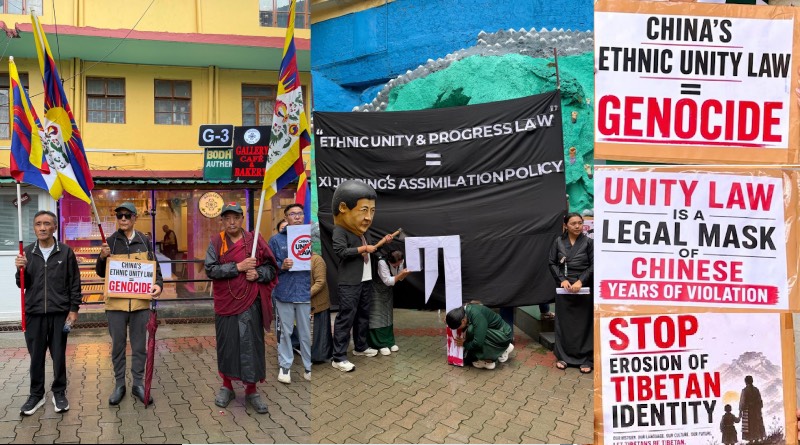
DHARAMSALA, 1 July: Tibetans across the world staged coordinated protests on Wednesday as China’s Law on Promoting Ethnic Unity and Progress came into force, with a coalition of four Tibetan non-governmental organisations leading demonstrations in Dharamsala against what they described as legislation designed to systematically erase Tibetan identity.
The protest, collectively organised by the Tibetan Women’s Association (TWA), National Democratic Party of Tibet (NDPT), Gu Chu Sum Movement Association of Tibet, and Students for a Free Tibet-India (SFT-India), started from the main square in McLeod Ganj and concluded at the Martyrs’ Wall inside the Tsuglagkhang temple complex. Braving steady rain, protesters marched through the town carrying Tibetan national flags and banners while chanting slogans condemning China’s policies in Tibet.
The Dharamsala demonstration was one of a series of protests organised by Tibetan NGOs, advocacy groups and supporters across the world as part of a Global Day of Action marking the law’s implementation on July 1.
In a joint press statement, the four organisations described the legislation as a “devastating turning point” for Tibet, arguing that it legally codifies policies aimed at assimilating Tibetans into a unified Han-centric national identity. They contended that the law institutionalises longstanding measures, including the expansion of state-run boarding schools, promotion of Mandarin over Tibetan in education and public life, and increased state control over social integration.
The organisations also expressed concern over provisions they said extend state authority into family life by requiring parents to educate children to “love the Communist Party of China” while restricting ideas considered harmful to “national unity”. They further claimed the legislation provides legal backing for policies encouraging housing integration, population movement and increased surveillance, which they argued threaten Tibetan language, culture and traditional community life.
As part of their demands, the coalition called on governments and international organisations to publicly condemn the implementation of the law, press Beijing to dismantle the state-run boarding school system in Tibet, and urge China to grant unrestricted access to United Nations human rights experts and independent observers to inspect conditions in Tibet.
The turnout in Dharamsala was smaller than at previous major protests, with persistent rain possibly a factor in the lower attendance. At the closing rally, organisers acknowledged the modest public participation and appealed to Tibetans to take a more active role in future campaigns, saying sustained public mobilisation would be essential in responding to China’s policies in Tibet.
China’s Law on Promoting Ethnic Unity and Progress, adopted by the National People’s Congress in March and brought into force today on the 105th founding anniversary of the Communist Party of China, is presented by Beijing as a measure to strengthen ethnic unity and national cohesion.
Tibetan advocacy groups, however, argue that it provides a legal framework for accelerating the assimilation of Tibetans and further restricting their cultural, linguistic and religious rights.