A Protest That Wasn’t: Tibet’s Silence as India and China Warm Up
By Tenzin Chokyi
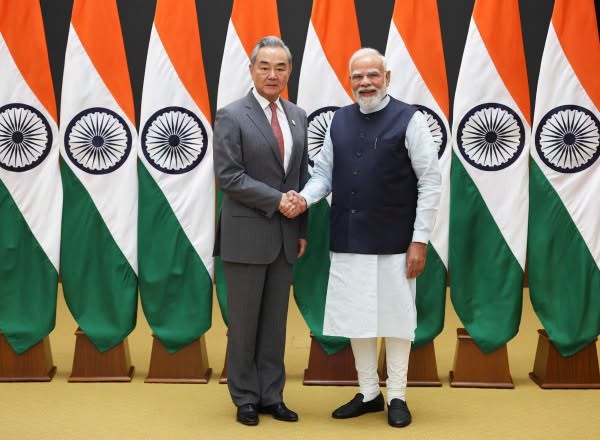
DHARAMSALA, 24 June: Indian Prime Minister Narendra Modi met Chinese Foreign Minister Wang Yi in New Delhi on Tuesday, reaffirming the steady improvement in India-China relations and accepting Chinese President Xi Jinping’s invitation to attend the Shanghai Cooperation Organisation (SCO) summit later this month.
The meeting came after Wang held separate talks with National Security Advisor Ajit Doval and External Affairs Minister S. Jaishankar, as both countries continued efforts to stabilise relations following years of tensions along the Indo-Tibetan border.
Following the meeting, Modi said India-China relations had made “steady progress” since his meeting with Xi on the sidelines of the BRICS summit in Kazan last year. “Stable, predictable, constructive ties between India and China will contribute significantly to regional as well as global peace and prosperity,” Modi said, adding that he looked forward to meeting Xi again during the SCO summit in Tianjin.
According to Indian officials, Modi also underscored that peace and tranquillity along the border remain essential to the development of bilateral ties.
Earlier in the day, Doval said relations had shown an “upward trend” over the past nine months as peace and tranquillity had returned along the Line of Actual Control (LAC). Wang echoed the emphasis on border stability, saying the two countries should “increase mutual trust through strategic communication, expand common interests through exchanges and cooperation, and properly resolve specific issues” along the border. Welcoming what he described as the restoration of stability along the frontier, Wang said bilateral relations were entering “an important opportunity for improvement and growth” and expressed China’s expectation of Modi’s visit to the SCO summit.
The latest diplomatic exchanges build on a series of confidence-building measures undertaken since Prime Minister Narendra Modi and Chinese President Xi Jinping agreed to stabilise and rebuild bilateral relations during their meeting on the sidelines of the BRICS summit in Kazan in October 2024. Since then, the two sides have implemented a disengagement agreement at the remaining friction points along the Indo-Tibetan border, resumed the Kailash Manasarovar pilgrimage, and gradually restored bilateral dialogue and other people-to-people exchanges.
India’s Ambassador to China, Vikram Doraiswami, also paid an official visit to Tibet in June to review arrangements for the resumed pilgrimage, a trip widely viewed as another indication of improving diplomatic engagement between New Delhi and Beijing.
Although Tibet did not feature in the public statements issued after Tuesday’s meeting, it remains an enduring strategic dimension of India-China relations. The unresolved boundary dispute largely follows the Indo-Tibetan frontier, while India continues to host the Dalai Lama, the Central Tibetan Administration, and the world’s largest Tibetan exile community. At the same time, Beijing continues to tightly control diplomatic access to Tibet, making official visits to the region politically significant.
Despite the renewed momentum, key differences remain unresolved, particularly over the boundary dispute and broader strategic competition in the Himalayas. Nevertheless, the meeting signals that both governments are seeking to prevent those differences from derailing wider cooperation on regional and multilateral issues.
While high-ranking Chinese officials travel abroad are usually greated by Tibetan communities and support groups with vocal protests with banners and slogans, China’s Foreign Minister Wang Yi’s recent visit to New Delhi for the National Security Advisors’ meeting marked a striking departure from this norm.
Except for a strong pre-visit condemnation issued by the Tibetan Youth Congress here in Dharamsala on 21 June 2026 — denouncing Beijing’s “Law on Promoting Ethnic Unity and Progress“ as a legal instrument designed to force Tibetans and other peoples under its occpation to abandon their languages, cultures, and identities under threat of state coercion — the actual visit passed without a single protest.