Statement of the Kashag on the 66th Tibetan Democracy Day
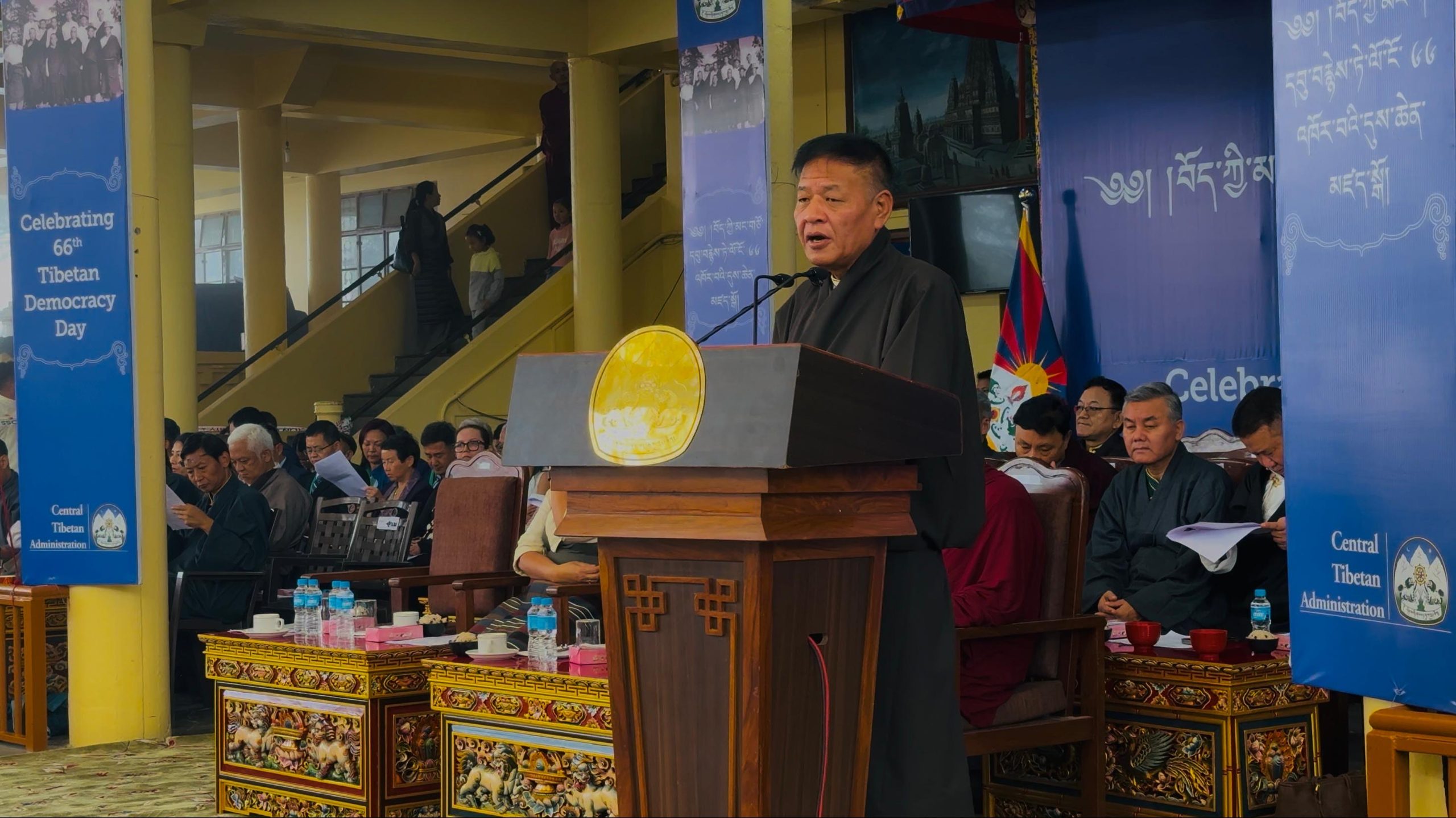
On the 66th anniversary of Tibetan democracy in exile, we offer our deepest gratitude to His Holiness the Dalai Lama. His Holiness’ visionary leadership established a democratic system and inspired Tibetans to embrace democracy. We also express our heartfelt appreciation to the older generation of Tibetans. Their dedication and support made His Holiness’ vision a lasting reality. We extend our greetings to our esteemed guests and community members present at this official celebration.
Sixty-six years ago, less than a year after His Holiness the Dalai Lama and the Tibetan people arrived in exile, His Holiness issued a historic directive at the holy site of Bodh Gaya. He urged Tibetans from all three traditional provinces to unite in joy and sorrow and elect representatives from their respective regions and religious traditions.
In accordance with his vision, the Commission of Tibetan People’s Deputies was established on September 2, 1960, marking the birth of modern Tibetan democracy. This milestone was quickly followed by the announcement of an outline of a future constitution of Tibet in 1961 and its formal promulgation in 1963. Throughout this transformative era, His Holiness continuously guided the democratic polity and administrative systems of the Central Tibetan Administration, the then Tibetan Government-in-Exile, through Biannual and Annual General Meetings, driving progressive structural reforms and modernising official appointment procedures. In 1991, the Charter of Tibetans-in-Exile was adopted and approved, fully establishing a democratic framework built on the three pillars of democracy and the three independent bodies. In 2001, through a constitutional amendment, the Kalon Tripa (Head of the Cabinet) was directly elected by the public. In 2011, His Holiness the Dalai Lama devolved all His political and administrative authority to the leadership elected by the people, thereby establishing the Central Tibetan Administration as the legitimate governing body and representative of all Tibetans—both in Tibet and in exile—with the full capacity to serve them.
From 1960 to 2011, His Holiness the Dalai Lama systematically guided Tibetans in exile toward democracy, aiming far beyond mere modernisation. His Holiness’ purpose was to build a genuine democratic society led by elected representatives, ensure transparent and accountable governance through the three traditional pillars of democracy, and secure the self-reliance and stability of the Central Tibetan Administration until the truth of the Tibetan cause is fully realised.
Among all global exile communities, the Central Tibetan Administration stands alone in realisation of a fully functioning democratic framework. With a complete system of governance and all institutional organs intact, demonstrating a profound capacity to govern society through the rule of law and operating in perfect alignment with the democratic will of its people, the Central Tibetan Administration has become an internationally admired model.
A robust separation of powers under the rule of law is central to democratic tradition. To uphold this principle, each organ of the Central Tibetan Administration must fulfil its mandate as defined by the Charter: The Tibetan Supreme Justice Commission must defend the Charter and protect fundamental rights; the Tibetan Parliament-in-Exile must enact legislation and maintain oversight of the executive; and the Kashag must take responsibility for political and administrative affairs. Drawing on experience, we must respect the boundaries of authority granted by the Charter to prevent internal disputes, ensure operational efficiency, and unite efforts in the spirit of the law to strengthen institutional capacity.
One of the most prominent international struggles today is the conflict between free democratic systems and authoritarian rule. The Chinese Communist Party, alongside other authoritarian states, actively promotes authoritarian governance to challenge and compete with democratic nations. Since the Tibetan freedom struggle has become a part of this global contest between freedom and authoritarianism, the practice of genuine democracy is our most powerful defiance against authoritarianism.
Reflecting on the past 66 years, we have learned that respecting democratic principles and upholding a democratic system remain the foundation of societal progress and our best defence against the adversary. Democracy is not merely rule by the people; fundamentally, it is the rule of law as determined by the people’s representatives. We must clearly understand that alongside the individual fundamental rights protected by the Charter, each of us also bears the duty and responsibility to safeguard society’s security and protect our common cause.
Differences of opinion are natural within a democratic society. However, in today’s age of social media, some individuals lose sight of the real adversary, misuse their freedom, and engage in disparagement within our own community by exploiting regional and sectarian divisions and spreading rumours and disinformation—often for material benefit from the Chinese communist government. These individuals must be confronted without exception. Moving forward, whenever we undertake an initiative or make any statement, we must carefully consider its impact on the morale of Tibetans inside Tibet, ensuring we always weigh who stands to benefit—friend or foe—from any resulting divisions.
History demonstrates that in both global and Tibetan political struggles, unity leads to victory, while internal discord and a diminished capacity to confront the adversary inevitably fail. We Tibetans must employ sharp insight and wisdom to counter any rhetoric that undermines our collective struggle or seeks to dismantle our internal unity.
Over recent weeks, the 17th Kashag has convened repeated cabinet meetings to thoroughly discuss and finalise its executive vision paper, Securing Tibet’s Future, along with foundational documents outlining the Kashag’s overall political, social welfare, and administrative positions and working approaches. These documents will be progressively explained to staff and the public to ensure that everyone across the administration moves forward with unified thinking and coordinated action.
Since the occupation of Tibet, the Chinese Communist government has continuously pursued policies aimed at eradicating the Tibetan people. This genocidal campaign, which has intensified blatantly over the past decade, has been thoroughly documented in successive reports by the United Nations and other international bodies citing severe violations of international law. On our part, it is not enough merely to declare opposition and protest; we must expose and confront these malicious policies based on a well- informed understanding. We therefore urge all Tibetans to join the Central Tibetan Administration in these vital efforts.
The Chinese Communist government’s so-called “Law on Promoting Ethnic Unity and Progress,” which took effect on July 1, demands a firm and appropriate response. The Kashag’s previous statements have already exposed the malicious intent underlying this legislation. This includes severe restrictions on the Tibetan language; the falsification of history and identity; forced cultural assimilation at the grassroots level; the Sinicisation of Tibetan Buddhism; enforced ethnic integration; pervasive technological surveillance; political and social coercion; the political vetting of Tibetan cadres; the violation of regional autonomy rights; and the assertion of extraterritorial jurisdiction targeting organisations and individuals worldwide. Given the critical importance of this issue, these points will soon be detailed through video presentations to ensure a thorough understanding among the general public.
As the Chinese communist government systematically targets Tibetan culture and language to eradicate our identity, Tibetans both inside Tibet and in exile must strive to speak Tibetan, read the Tibetan script, and introduce the compassionate teachings of Tibetan Buddhism in our households. We must preserve our customs and rituals, observe traditional festivals, integrate traditional attires and arts in our day-to-day life, and actively participate in institutional initiatives that sustain our language and heritage. This cultural movement cannot be driven by any external force; parents must take up the responsibility of being their children’s primary educators.
Since 2009, 157 Tibetans inside Tibet and 11 Tibetans in exile—including the late Lobga Rangzen— have self-immolated for the cause of Tibet. Hundreds of political prisoners, including the 11th Panchen Lama, Tenzin Gedhun Yeshi Trinley Phuntsok (Gedhun Choekyi Nyima), remain imprisoned in Tibet. Tibetans who peacefully advocate for the protection of their environment, language, and culture continue to face arbitrary detention, interrogation, property confiscation, and various forms of humiliation. This systemic abuse stands as clear evidence that the Chinese Communist government operates with complete disregard for the international community, actively trampling upon basic human decency and inherent rights.
This extraordinary and precious system of Tibetan democracy—born from the profound compassionate blessing and visionary leadership of His Holiness the Dalai Lama and sustained with unwavering resilience to this day—serves as an indispensable cornerstone for the enduring strength of our exile community and the relentless, righteous pursuit of the cause of Tibet. To advance its fuller realisation and ensure its vibrant, continued progress, we call upon all Tibetans to stand united with unwavering dedication in cherishing and safeguarding this democratic system.
In conclusion, we pray that His Holiness the Dalai Lama, supreme leader of Tibet and guardian of world peace and the happiness of all beings, live for a hundred aeons. May the truth of the Tibetan cause prevail soon.
The Kashag
Central Tibetan Administration September 02, 2026