China Cannot Choose the Next Dalai Lama
By Khedroob Thondup
By any reasonable religious, moral, or democratic standard, the Chinese government has no legitimate right to select the next Dalai Lama.
The question is not whether Beijing possesses the power to name its own candidate. It undoubtedly does. The real question is whether a government that officially embraces atheism and maintains strict control over religious institutions can credibly claim authority over one of Tibetan Buddhism’s most sacred spiritual traditions. The answer is no.
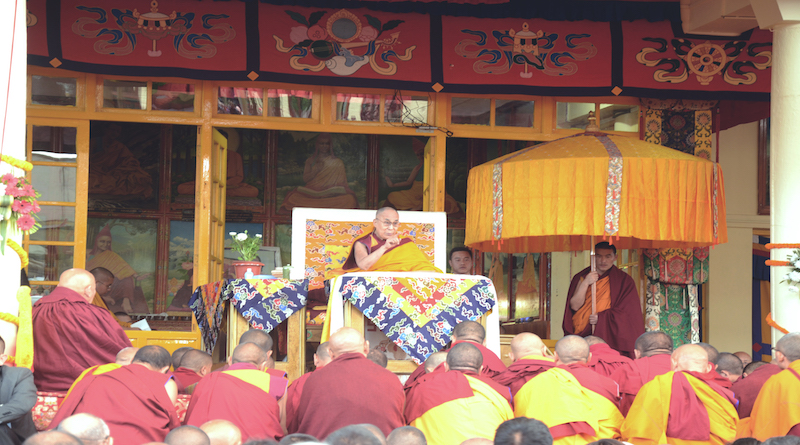
For centuries, the institution of the Dalai Lama has been rooted in Tibetan Buddhist beliefs, customs, and religious authorities. The recognition of a Dalai Lama is not a political appointment, nor is it meant to be an act of state administration. It is fundamentally a spiritual process tied to a religious community’s understanding of its faith.
If governments are permitted to determine the leaders of religions they do not practise and whose beliefs they do not share, then religious freedom becomes meaningless. No democratic nation would accept a foreign government choosing the Pope of the Roman Catholic Church, the Archbishop of Canterbury, or the chief rabbi of a religious community. The same principle should apply to Tibetan Buddhism.
Beijing argues that it has legal authority over the succession process because Tibet falls within the People’s Republic of China’s jurisdiction. Yet political jurisdiction and spiritual legitimacy are not the same thing. Governments can regulate territory. They cannot manufacture religious belief.
History repeatedly shows that religious authority cannot simply be decreed from above. Faith communities ultimately decide whom they regard as their legitimate leaders. A government may confer titles, issue certificates, and organise ceremonies, but it cannot compel genuine spiritual recognition.
That is the central weakness in any attempt by China to designate a future Dalai Lama. Even if the Chinese government announces its own candidate, legitimacy will depend on acceptance by Tibetan Buddhists themselves. The title “Dalai Lama” carries meaning only because millions of believers attach spiritual significance to it.
Recognition cannot be imposed.
The likely result of a state-selected Dalai Lama would not be resolution but division. Many Tibetans inside and outside Tibet would almost certainly continue looking to religious authorities they regard as authentic. Buddhist communities across Asia, Europe, and North America would face the same choice. Governments can influence administrative structures, but they cannot dictate sincere belief.
The international community should therefore view the issue through the lens of religious freedom rather than geopolitics alone. Regardless of one’s position on Tibet’s political status, the principle at stake is universal: religious communities should have the right to determine their own spiritual leadership without coercion by the state.
This is not an anti-China principle. It is a pro-freedom principle.
A government’s legitimacy derives from political authority. A religious leader’s legitimacy derives from the faith of believers. Confusing the two weakens both government and religion.
Ultimately, the future of the Dalai Lama institution will not be decided in government offices or party meetings. It will be decided by whether Tibetan Buddhists and the wider Buddhist world accept the person presented to them as the reincarnation of the Dalai Lama. If they do not, no amount of official endorsement will change that reality.
Political power can appoint a candidate. It cannot command faith. And when it comes to the next Dalai Lama, faith is the only source of legitimacy that truly matters.
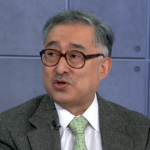
Khedroob Thondup is a former Tibetan diplomat and parliamentarian and nephew of the 14th Dalai Lama. He is also the editor of the book, ‘Dalai Lama, My Son and Tibet in Turmoil.’
The views expressed in this article are those of the author and should not be attributed to Tibet Express.