CTA Celebrates 75th Anniversary of Dalai Lama’s Assumption of Leadership
By Tenzin Chokyi

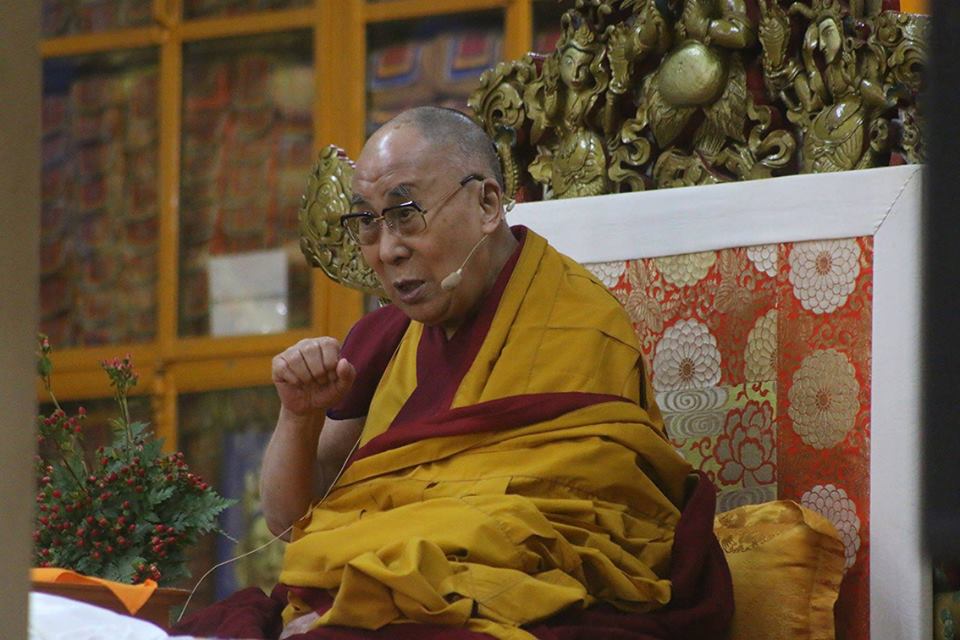
DHARAMSALA 17 Nov: The Central Tibetan Administration (CTA), also known as the Tibetan Government-in-Exile, today celebrated the 75th anniversary of the 14th Dalai Lama’s assumption of both political and spiritual leadership over Tibet at the age of 15 on 17 November 1950. The celebration took place at the courtyard of Tsuglag-Khang, the main temple in McLeod Ganj.
This transfer of authority from the interim leadership of the Gaden Phodrang government to the young Dalai Lama occurred against the backdrop of China’s colonial occupation of Tibet, at a time when Chinese military forces had already laid siege to eastern Tibet and taken control of Chamdo—the last major line of defence.
The Dalai Lama, who is now 90 and devolved his political authority in 2011, presided over the official ceremony in the presence of the Czech Ambassador to India; Sikyong Penpa Tsering, the political head of the CTA; Speaker Khenpo Sonam Tenphel and the representatives of the three pillars of the Tibetan democracy, as well as the members of Tibetan Parliament-in-exile and officials of the CTA and a group of alumni from Tibetan schools in India representing over 15 countries, who honoured him with a gratitude award for his lifelong service to Tibet.
Eliska Zigova commended the Dalai Lama’s extraordinary foresight at such a young age. She noted that even in his early twenties, he was already thinking beyond immediate survival, focusing on education, culture, and the long-term future of his people.
Reflecting on her recent visit in April to the Tibetan Homes Foundation School in Mussoorie, Zigova said, “Today, we see the fruits of his vision in the alumni and current students of these schools. Not only are they well educated and well cared for, but all of them also speak fluent Tibetan. This is the third generation, and it is truly amazing.”

She further highlighted the significance of the connection between the first freely elected leadership of the Czech Republic and the Dalai Lama, noting that November 17 is also considered an important day for the Czech people, marking their peaceful revolution (Velvet Revolution) that ended 40 years of communist rule in Czechoslovakia in 1989. Following these events, the country’s first president, Václav Havel, invited the Dalai Lama to visit, recognising not only his spiritual leadership but also his commitment to non-violence.
“Thus, these two leaders—President Václav Havel’s political leadership and His Holiness the 14th Dalai Lama—represent our important connection,” added Zigova.
Today, the Tibetan government-in-exile, formally established in 1960 under the leadership of the 14th Dalai Lama, is in its 15th year under democratically elected leadership, following the Dalai Lama’s complete devolution of all political authority, previously held by the Gaden Phodrang government .
The Middle Way Policy, envisioned by the Dalai Lama to seek genuine autonomy for the Tibetan people under the Chinese Communist Party, was established as the official policy in 1997.
According to the Tibetan government-in-exile, this followed “a preliminary opinion poll in which more than 64% of the total opinion letters received expressed that there was no need to hold a referendum, and that they would support the Middle Way approach or whatever decision His Holiness the Dalai Lama takes from time to time in accordance with changing political situations in China and the world at large”.
Since then, the policy has been unequivocally carried forward by successive leaderships within the evolving Tibetan democratic polity.
Sikyong Penpa Tsering, the elected political head of the Tibetan democratic administration in exile, has stated on various occasions that negotiations with the Chinese counterparts are conducted by the elected leadership and its cabinet. However, if and when the opportunity for dialogue arises, the Gaden Phodrang, the private office of the Dalai Lama—now functioning as an institutional body—will determine the composition of the delegation.
The prospect of a formal dialogue currently appears out of reach. Sikyong Penpa Tsering has noted that, although the current administration is engaged in back-channel dialogue with China, it is difficult to expect meaningful progress at this time.
Meanwhile, the Tibetan democratic system continues its regular processes, with the 2025–2026 general elections for both Sikyong and Parliament scheduled next year. The administration functions actively as a democracy, even as its central political challenge remains unresolved.