RTWA NY&NJ Demands Apology from Central Body, Calls for Dharamsala Executives’ Reinstatement
By Tenzin Chokyi
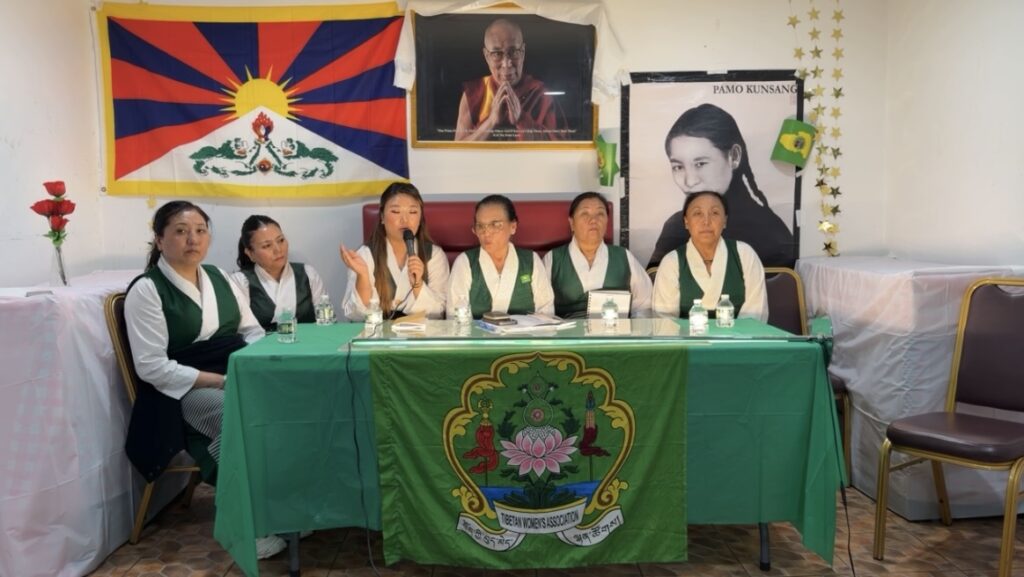
DHARAMSALA, 4 Nov: The Regional Tibetan Women’s Association of New York and New Jersey (RTWA NY&NJ) has publicly rebuked its central executive body, the Dharamsala-based Central Tibetan Women’s Association (CTWA), for releasing an open letter welcoming Chinese President Xi Jinping at a press conference ahead of his visit to India for the BRICS summit in September.
RTWA NY&NJ said the open letter and the CTWA’s public welcome for Xi prompted widespread public disappointment, severe community ridicule, and significant operational hurdles for regional chapters.
This public reprimand represents the second major wave of internal pushback within the organisation. Earlier, executive members of the Dharamsala Regional Chapter collectively announced their resignations on 13 October after the central leadership declined to address their formal objections.
In a Facebook livestream broadcast on 1 November, the New York and New Jersey chapter demanded a public apology from the central leadership for honouring a leader held responsible for the ongoing repression and suffering of the Tibetan people. The chapter expressed strong disagreement with the central executive’s acceptance of the Dharamsala regional board’s collective resignation without addressing the underlying concerns. They called for the former Dharamsala executive members to be reinstated immediately.
Furthermore, the regional chapter insisted that no platform representing the broader Tibetan women’s community should ever be used for such political declarations without prior consultation and consensus among regional bodies.
Karma Choezom, president of the New York and New Jersey chapter, described the public statement as a last resort following repeated, unsuccessful internal attempts to resolve the dispute. She revealed that an appeal letter submitted to the central body on 12 September, following full consensus among standing committee members, has yet to receive a formal response. She emphasised that a public apology is essential to restore community trust and alleviate the functional difficulties regional chapters currently face on the ground.
Choezom noted that public ridicule and disappointment have severely impaired local operations, including community outreach campaigns and fundraising drives. She stated that any decision taken by the central leadership carries weight for the regional chapters, adding that the central executive had truly let down their fellow Tibetans.
While confirming that a formal written response from the central body remains pending, Choezom noted that CTWA President Tsering Dolma defended her stance in an interview. In the interview, Dolma argued that dissenting chapters represent only a minority voice and asserted that welcoming the Chinese head of state aligns with the Middle Way Approach of the Central Tibetan Administration.
Choezom firmly rejected the claim that opposition is limited to a minority. She stated that all six Western regional chapters of the organisation—including Minnesota, New York and New Jersey, Belgium, Italy, Canada, and Switzerland—unanimously rejected the decision during internal consultations.
Both the New York and New Jersey chapter and the Dharamsala regional executives have repeatedly reaffirmed their commitment to the Middle Way Policy while raising their objections. This explicit reaffirmation comes at a delicate political juncture in exile politics, where publicly opposing a central decision framed under the Middle Way often carries the implicit accusation of leaning toward Rangzen. In conservative sections of exile society, such a charge is frequently translated as undermining societal unity and going against the wishes of the Dalai Lama.
In an account provided to Tibet Express, former executive members of the Dharamsala Regional Chapter revealed that, during internal deliberations, the Central President accused regional members of failing to uphold their commitment to the Middle Way Policy. The former members alleged that the President suggested their opposition signalled a tilt toward the Rangzen position, warning that such a shift could undermine the organisation’s established institutional alignment with the official political stance.
The Dharamsala chapter president told Tibet Express that the CTWA President removed her from the CTWA and RTWA’s WhatsApp groups after she shared a video of the RTWA NY&NJ’s press conference. The chapter provided screenshots supporting its account. Calls to the CTWA president seeking comment went unanswered.
The former executive members maintained that their opposition to the welcome statement should not be interpreted as a rejection of the Middle Way Approach. They stressed that the policy does not entail accepting current political conditions in occupied Tibet or endorsing the Chinese leadership responsible for maintaining them.