US Delegation Sees No Specific Chinese Response to Tibet-China Dialogue Push
By Tenzin Chokyi
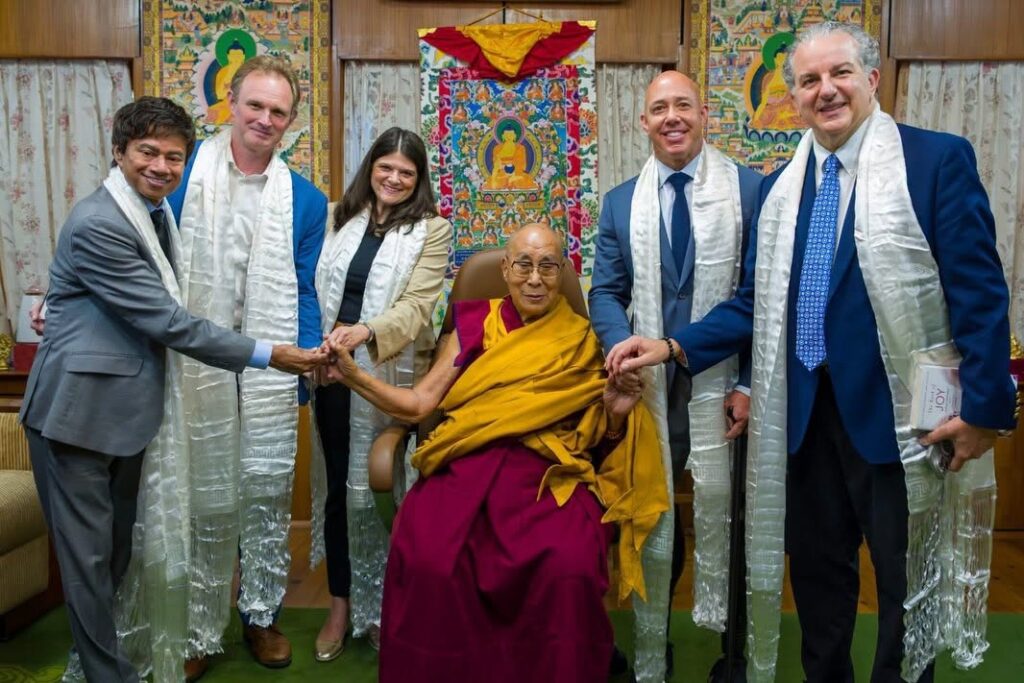
DHARAMSALA, 30 Sept: A bipartisan US congressional delegation has seen no specific response from Beijing to Washington’s efforts to encourage dialogue between the Chinese government and representatives of the Tibetan people, Congressman Brian Mast said Wednesday.
Speaking to reporters following the delegation’s meeting with His Holiness the 14th Dalai Lama, Mast said he had seen no specific response from the Chinese government to the US push for dialogue, including through the 2024 Resolve Tibet Act.
“I have seen no response from the Chinese government specifically,” Mast said.
However, he did not dismiss the impact of the US push for dialogue, saying it would have an effect and that there would be a response from the Chinese government, but added, “Do we see it immediately? No, we do not.”
The Resolve Tibet Act directs US policymakers to promote substantive dialogue, without preconditions, between Beijing and the Dalai Lama or his representatives and democratically elected Tibetan leaders toward a negotiated agreement on Tibet. China opposed the legislation when it was enacted and has rejected the US position on Tibet, describing it as “gross interference in China’s domestic affairs.”
Mast said that while he had not seen a specific response from Beijing to the Act or the broader US push for dialogue, the delegation’s presence in Dharamsala and its meeting with the Dalai Lama could itself draw a response from the Chinese government.
“Just the presence, being here with His Holiness, is something that they despise,” Mast said. “They will do anything to suppress the Tibetan people.”
The remarks came amid questions about the recent meeting between US President Donald Trump and Chinese President Xi Jinping and its implications for US–Tibet relations. Mast said he viewed the meeting positively, stressing that communication between the two countries was important even when it did not produce immediate results.
“Every time that world leaders get together, there is a positive outcome in part that there has been communication,” he said. “It doesn’t always mean that there is an immediate, positive, tangible thing that you are taking away. But every time that we speak, we understand each other more.”
Asked whether the US was a “friend” of China, Mast said the two countries had a relationship as “two of the world’s largest superpowers,” while acknowledging significant differences between Washington and Beijing, including over intellectual property, espionage, rights and freedoms.
“But China does not conduct friendly activities with the United States of America,” he said. “There are very big differences, and I think we can easily focus more on the acts that are counter to friendship than the acts that are synonymous with friendship.”
The delegation’s visit comes amid continued US congressional support for dialogue on Tibet and continued congressipnal engagement with the Dalai Lama in Dharamsala.