
EU Lawmakers Renew Calls for China to Repeal “Ethnic Unity” Law
By Tenzin Chokyi
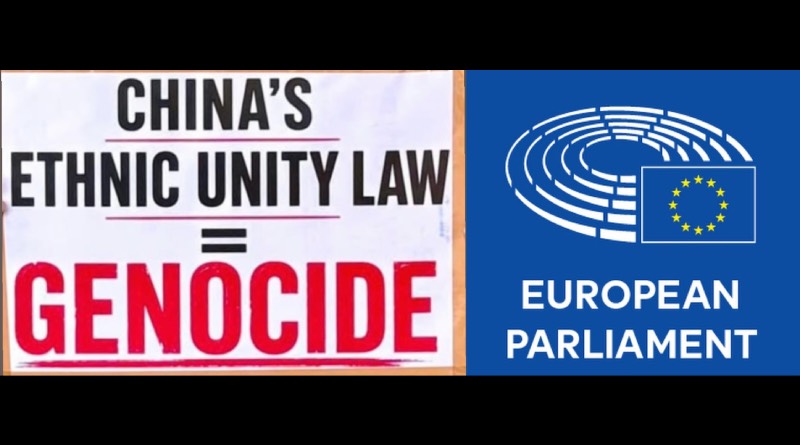
DHARAMSALA, 16 July: European lawmakers have intensified their opposition to China’s “Law on Promoting Ethnic Unity and Progress”, the Central Tibetan Administration (CTA) said in a report on 10 July, with Members of the European Parliament (MEPs), European Union officials and national parliamentarians warning that the legislation threatens the cultural, religious and linguistic rights of Tibetans and other affected communities.
The criticism comes days after the law entered into force on 1 July and builds on the European Parliament’s resolution adopted on 30 April, which overwhelmingly called on China to repeal the legislation, describing it as a tool of forced assimilation targeting Tibetans, Uyghurs, Southern Mongolians and other communities.
During the parliamentary debate preceding the resolution, lawmakers from across the political spectrum argued that the law undermines “minority rights” under the guise of promoting ethnic unity. Danuše Nerudová of the European People’s Party (EPP) described it as “a law for assimilation and ethnic erasure,” while Hannes Heide, Co-Chair of the Inter-Parliamentary Group for Tibet, said the legislation reflects the continued repression of Tibetan culture and religion. Renew Europe lawmaker Dainius Žalimas called on the European Union to consider targeted sanctions against those responsible for drafting and implementing the law if Beijing refuses to repeal it.
Representing the European Commission, Commissioner Hadja Lahbib reiterated the EU’s concerns over restrictions on freedom of religion, the preservation of Tibetan culture and identity, and the right of Tibetan Buddhists to choose their religious leaders without state interference. Similar concerns have also been echoed by national lawmakers, including Dutch MP Jan Paternotte, French Senator Jacqueline Eustache-Brinio and Belgian parliamentarian Els Van Hoof. On the day the law took effect, Tibetan associations and supporters staged a protest outside the European Parliament in Brussels, joined by several MEPs expressing solidarity with the Tibetan people.
The legislation has also prompted a continued response from the CTA, the Tibetan government-in-exile. Ahead of the law’s implementation, Sikyong Penpa Tsering argued that it conflicts with China’s Law on Regional National Autonomy, which forms a key legal basis for the CTA’s 2008 Memorandum on Genuine Autonomy for the Tibetan People under the Middle Way Approach. While acknowledging that the new legislation necessitates a reassessment of the memorandum’s legal foundations, he said the cabinet sees no need to change its Middle Way policy and will continue pursuing genuine autonomy for Tibet through dialogue with the Chinese government.
More recently, the Kashag (Cabinet) said it has already begun formulating “a comprehensive strategy” to address the implications of the law. In a statement issued on 6 July during celebrations marking the 91st birthday of the Dalai Lama, the Kashag said that “as these plans are finalised, specific measures will be implemented in a phased and systematic manner.”
Meanwhile, Chinese state media has continued to push back against the criticism through a series of opinion pieces. In commentaries published on 7 and 10 July, the state-run China Daily dismissed concerns raised by the European Union and the United States as “ideological prejudice,” arguing that the Law on Promoting Ethnic Unity and Progress strengthens “ethnic equality,” promotes development in minority regions and safeguards “national unity.”
The opinion pieces rejected allegations of forced assimilation, portraying the legislation as a legal framework that protects “minority” languages, cultures and traditions while countering what they described as “separatist activities”. They also argued that Western politicians had misrepresented the situation in Tibet and other ethnic minority regions without understanding conditions on the ground.