
Legislating Assimilation: How China’s Ethnic Unity and Progress Law Forecloses the Middle Way
By Khedroob Thondup
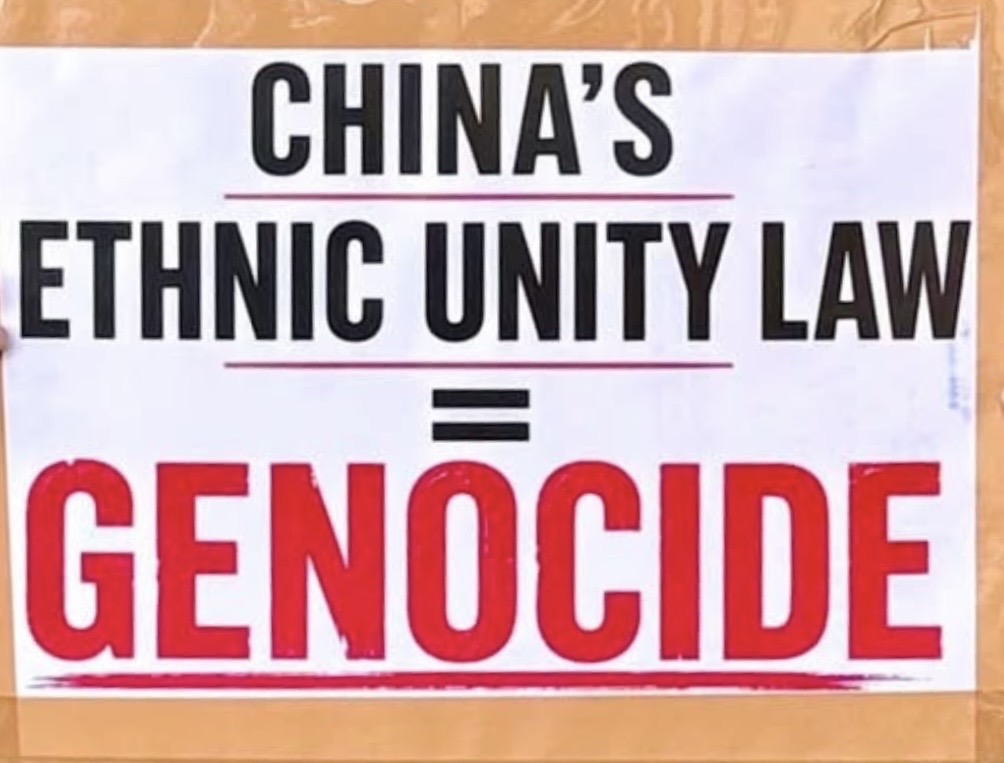
China’s new “Ethnic Unity and Progress Law” is not a benign framework for harmony but a legal codification of assimilation, directly undermining the viability of the Middle Way Approach by criminalising cultural distinctiveness and foreclosing genuine autonomy for Tibet. It signals Beijing’s intent to replace negotiated coexistence with enforced homogeneity, making the pursuit of autonomy increasingly precarious.
The Law’s Core Features.
Mandarin prioritisation: The law mandates Mandarin in education, media, and public life, eroding Tibetan language and identity. Criminalisation of “separatism”. Any advocacy for autonomy or cultural preservation can be construed as separatism, carrying legal liability. Transnational reach: Article 63 extends jurisdiction beyond China’s borders, targeting diaspora activists and foreign lawmakers. Assimilationist ideology: It enshrines the “community of the Chinese nation” as the overriding identity, sidelining ethnic pluralism.
Clash with the Middle Way Approach.
The Middle Way Approach, seeks genuine autonomy within China, not independence. It emphasises: Preservation of Tibetan culture, language, and religion. Local governance over education, environment, and cultural affairs. Coexistence under Chinese sovereignty.
The new law directly contradicts these principles: Cultural autonomy denied: By mandating Mandarin and “unity,” the law nullifies Tibetan self-determination in education and culture. Dialogue foreclosed: Beijing’s framing of autonomy demands as “separatism” makes negotiations politically toxic. Legal repression: Tibetans advocating autonomy risk prosecution under the law’s anti-separatism clauses.

Long-Term Implications.
Erosion of viability: The Middle Way’s promise of coexistence is undermined by Beijing’s refusal to recognise cultural pluralism. Diaspora vulnerability: Tibetan activists abroad face transnational repression, shrinking the space for advocacy. International pressure: The US and EU have condemned the law, urging renewed dialogue with the Dalai Lama. Yet Beijing’s legal codification of assimilation makes concessions unlikely.
Risks and Trade-offs. Risk of extinction of Tibetan identity: The law accelerates assimilation, threatening Tibet’s cultural survival.
Trade-off between autonomy and survival: Tibetans may be forced to choose between cultural preservation and political safety. Global consequences: The law exemplifies China’s “lawfare” strategy, weaponising domestic law to silence dissent internationally.
Conclusion:
The Ethnic Unity and Progress Law represents a legal death knell for the Middle Way Approach. By criminalising cultural distinctiveness and autonomy demands, Beijing has closed the door on compromise. For Tibetans, the struggle now shifts from negotiating autonomy to preserving identity under intensifying repression. The law’s transnational scope also warns the world: Tibet’s fate is not isolated, but part of a broader authoritarian project to redefine sovereignty and silence dissent globally.

Khedroob Thondup is a former Tibetan diplomat and parliamentarian, and nephew of the Dalai Lama. He is also the editor of the books Dalai Lama, My Son and Tibet in Turmoil.
The views expressed in this article are those of the author and should not be attributed to Tibet Express.