Xi’s Bargain in Delhi — Borders for Reincarnation
By Khedroob Thondup
When Xi Jinping arrives in India for the BRICS summit, the choreography of diplomacy will mask a deeper negotiation. Behind the handshakes and communiqués lies a potential bargain of historic consequence: Beijing’s willingness to settle the long‑festering Sino‑Indian border dispute in exchange for New Delhi’s silence on the Dalai Lama’s reincarnation.
The Border Card. For decades, the Himalayan frontier has been a scar on Sino‑Indian relations. Skirmishes in Ladakh, tense patrols in Arunachal Pradesh, and the shadow of 1962 have kept the two Asian giants locked in mistrust. A “complete settlement” — demarcation, disengagement, and recognition — would be a monumental concession from Beijing. It would free India from the constant drain of military vigilance and allow both nations to redirect resources toward economic growth.
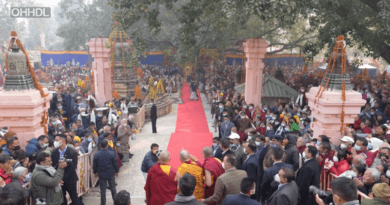
The Reincarnation Question. Yet the price Xi may demand is not territorial but spiritual. Beijing insists that the succession of the Dalai Lama is a matter of Chinese sovereignty, not Tibetan tradition. India, by hosting the Dalai Lama and the Tibetan exile community, has implicitly challenged that claim. For Xi, ensuring India’s non‑interference in the reincarnation process is about more than religion — it is about legitimacy. A pliant India would weaken the exile community’s moral authority and bolster Beijing’s narrative of control over Tibet.
Why Now? Xi’s timing is deliberate. The BRICS summit offers a stage where India seeks recognition as a global power. By dangling the prospect of border peace, Xi appeals to India’s strategic ambitions. At the same time, Beijing calculates that New Delhi, wary of confrontation and eager for economic stability, may be tempted to trade silence on Tibet for security along its northern frontier.
The Risks. But such a bargain carries profound risks. For India, acquiescence would mean abandoning moral leadership on an issue that resonates globally. It would signal that spiritual freedom can be bartered for geopolitical convenience. For Tibetans, it would deepen the exile community’s isolation and embolden Beijing’s efforts to manufacture a compliant Dalai Lama.
The Stakes. Xi’s offer, if it comes, will test India’s dual identity: a nation that seeks pragmatic security while also claiming to be the world’s largest democracy with a moral voice. The border settlement may promise peace, but the silence on reincarnation could echo as complicity.
In Delhi, the question will not be whether Xi can strike a bargain, but whether India can afford the cost of accepting it.
Khedroob Thondup is a former Tibetan diplomat and parliamentarian, and nephew of the Dalai Lama. He is also the editor of the books Dalai Lama, My Son and Tibet in Turmoil.
The views expressed in this article are those of the author and should not be attributed to Tibet Express.