Beijing’s Bid to Control Faith
By Khedroob Thondup
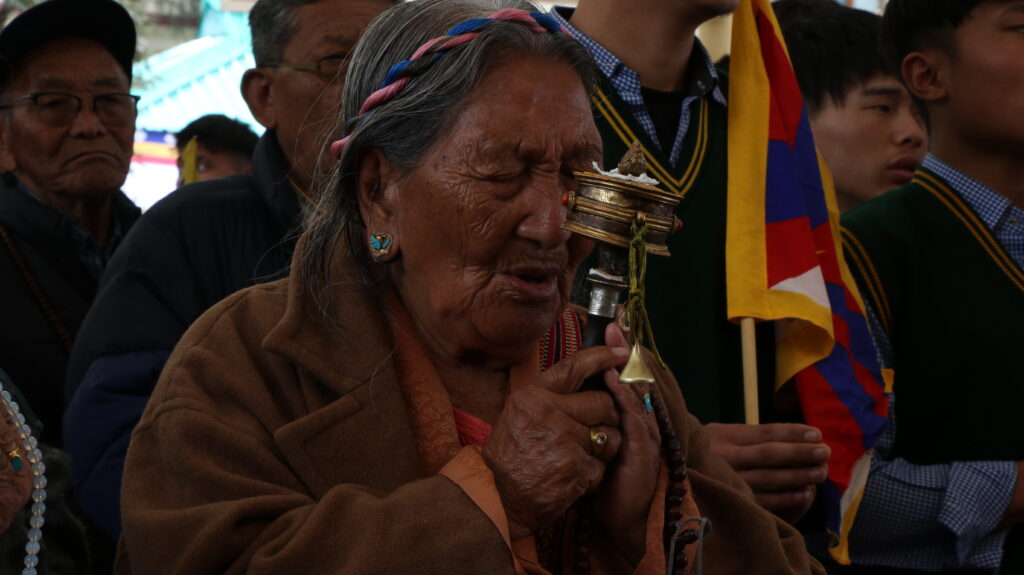
The Chinese Communist Party (CCP) has long seen religion not as a matter of conscience but as a potential rival to state authority. Its current campaign to rebrand Tibetan Buddhism as “Chinese Buddhism” is part of a broader project: the domestication of all faith traditions under the Party’s ideological umbrella.
The Mechanics of Control.
Sinicization of religion: The CCP insists that all religions must adapt to “Chinese characteristics,” meaning they must align with Party doctrine and national identity. This is not cultural integration but political subordination. Patriotic religious associations: Every faith is required to operate under state-run associations that monitor clergy, doctrine, and practice. Independent religious authority is forbidden. Surveillance and suppression: Monasteries, churches, and mosques are monitored, with clergy forced to undergo political training. Sermons are censored, and religious gatherings outside state control are criminalized.
Why Tibetan Buddhism Is Targeted.
Tibetan Buddhism represents more than a spiritual tradition; it embodies a cultural identity and historical memory that resists assimilation. By labeling it “Chinese Buddhism,” Beijing attempts to erase its distinct lineage and tether it to the state’s narrative of national unity. This linguistic shift is not benign—it is a calculated move to delegitimize Tibetan identity and sever ties with the Dalai Lama, who remains a powerful symbol of spiritual independence.
The Larger Pattern.
Christianity: Crosses removed from churches, pastors detained, and scripture rewritten to reflect Party values. Islam: Mosques demolished, Uyghur imams silenced, Qur’anic study restricted. Folk religions: Local rituals rebranded as “cultural heritage” rather than living faith, stripping them of spiritual legitimacy.
The Why.
The CCP fears any allegiance that competes with loyalty to the Party. Religion offers moral authority, community, and transnational connections—all of which challenge the state’s monopoly on truth. By redefining Tibetan Buddhism as “Chinese Buddhism,” Beijing seeks to neutralize its power, absorb its identity, and present it as a domesticated faith loyal to the nation rather than to its own traditions.
Conclusion.
This is not about theology—it is about sovereignty. Beijing’s project is to ensure that no pulpit, monastery, or altar speaks with authority beyond the Party. The renaming of Tibetan Buddhism is a symptom of a deeper ambition: to make belief itself a state-controlled resource.
Khedroob Thondup is a former Tibetan diplomat and parliamentarian, and nephew of the Dalai Lama. He is also the editor of the books Dalai Lama, My Son and Tibet in Turmoil.
The views expressed in this article are those of the author and should not be attributed to Tibet Express.