
Why Tibet Is of Existential Importance to China
By Karma L. Pangring
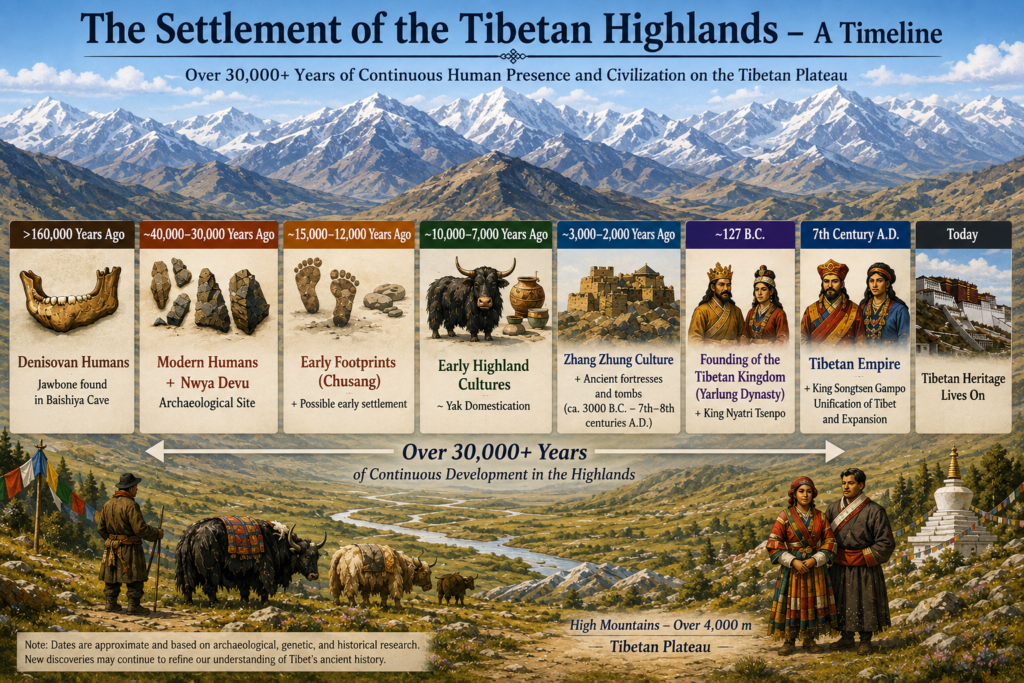
From the perspective of the Chinese leadership, losing control over Tibet would be of existential significance. On closer examination, it becomes clear that without Tibet, the People’s Republic would lose far more than just a region. It would lose a crucial pillar of its economic, strategic, and cultural stability.
Tibet possesses vast reserves of lithium, rare earth elements, and other strategic minerals that are indispensable for the technological age. At the same time, the Tibetan Plateau is the source of Asia’s major rivers, providing water for around two billion people. Whoever controls Tibet, therefore, holds a geopolitical asset of extraordinary importance.
Yet Tibet’s value extends far beyond natural resources and water. The Tibetan Plateau is among the world’s oldest permanently inhabited high-altitude regions, with archaeological evidence dating back tens of thousands of years. From this long history emerged the Shangshung culture, the Bön tradition, and later Tibetan Buddhism. Together, they form a unique cultural and spiritual heritage of global significance. During Chinese rule, particularly throughout the Cultural Revolution, thousands of monasteries, temples, and historical cultural sites in Tibet were destroyed or severely damaged. Nevertheless, a significant part of this millennia-old heritage has survived and continues to shape Tibet’s identity today.
There is a historical irony in this. The country that once invented the compass and was one of the great civilizations of human history now appears to be searching for its own cultural identity. Decades of communist ideology, the devastation of the Cultural Revolution, and the subsequent rapid embrace of a consumer-driven economic model have displaced many traditional values and customs. At the same time, China promotes Tibetan culture and its spiritual appeal as a showcase for tourism.
It is also striking that whenever Tibet receives international attention through protests, media coverage, or other developments, Chinese state media and official representatives regularly revive the narrative of a “backward” or “feudal” Tibet. Rather than addressing present day concerns, references to the past are used to justify continued control over Tibet.
Tibet reminds the world that an ancient civilization can preserve its identity despite oppression and destruction. For this reason, Tibet is of great importance to China not only strategically and economically, but also culturally.
The history of Tibet cannot be reduced to a modern administrative unit. It is the result of an independent development spanning thousands of years, the traces of which remain visible today. For that very reason, attempts to incorporate Tibet into a single, unified Chinese historical narrative pose a threat to this unique historical and cultural heritage. Anyone who wishes to understand Tibet must consider its history, its culture, and its geographical significance as a whole.
Karma Lodroe Pangring is a Tibetan refugee who, in 1973, was among the last group to arrive in the Canton of Glarus under the Swiss humanitarian resettlement programme organised by the Swiss Red Cross and approved by the Swiss government, which admitted around 1,000 Tibetan refugees to Switzerland. He has lived in Switzerland for more than 53 years and is a former President of the Tibetan Community in Switzerland and Liechtenstein (TCSL).
The views expressed in this article are those of the author and should not be attributed to Tibet Express.