Waiting for Silence: Xi Jinping’s Calculated Non‑Policy on Tibet
By Khedroob Thondup
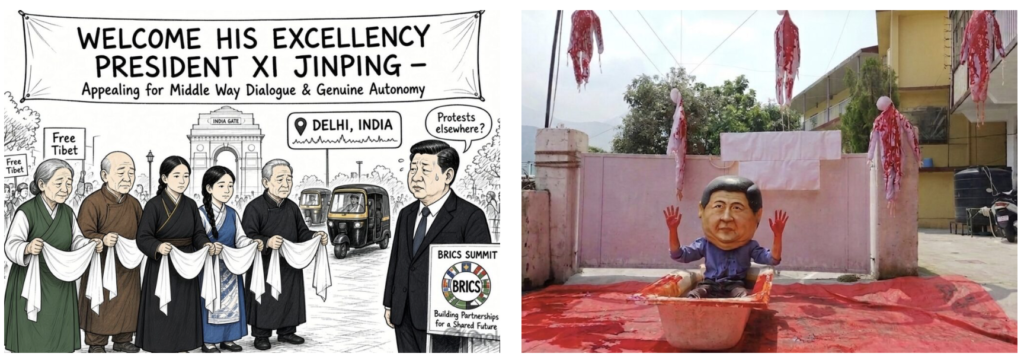
The Strategy of Inaction. Xi Jinping’s government has perfected the art of strategic silence on Tibet. Beijing’s refusal to engage with the Dalai Lama or the Central Tibetan Administration (CTA) is not indecision—it is deliberate policy. The Chinese leadership believes that time itself will resolve the “Tibet question.” Their calculus is stark: once the Dalai Lama passes away, the spiritual and political force that sustains Tibetan resistance will dissipate, leaving Beijing free to impose its chosen successor and declare the issue closed.
Why Xi Will Not Negotiate. Legitimacy denial: Any dialogue with the Dalai Lama would confer political authority on him, undermining Beijing’s narrative that he is a “separatist.” CTA rejection: The exile government is dismissed as illegitimate, ensuring that no institutional channel for negotiation exists. Succession control: Xi’s government intends to appoint the next Dalai Lama through state mechanisms, reinforcing its claim to manage religious authority.
The Waiting Game. Beijing’s Tibet policy rests on three assumptions: Exile fragmentation: Without the Dalai Lama’s unifying leadership, the diaspora will weaken. State appointment: A government‑endorsed Dalai Lama will delegitimize the exile‑recognized successor.
Global fatigue: International attention will fade once His Holiness is gone.
Risks Xi Ignores. Yet this strategy is riddled with vulnerabilities: Religious legitimacy crisis: Tibetan Buddhists worldwide may reject a state‑appointed Dalai Lama, undermining Beijing’s authority. International backlash: Far from fading, global solidarity could intensify around the succession dispute. Cultural erosion: Heavy‑handed control risks deepening resentment and alienation among Tibetans.
Lessons from History. The refusal to grant genuine autonomy is not new. Past dialogues collapsed because Beijing never intended compromise. Each round of talks was theater, designed to project openness while ensuring no substantive concessions. The lesson is clear: Tibetans cannot expect negotiations to deliver autonomy under Xi’s rule.
A Call for Strategy. If Beijing’s policy is to wait out the Dalai Lama, Tibetans and their allies must prepare for the succession crisis. Unity in exile, clarity of religious legitimacy, and sustained international advocacy will be essential. The passing of His Holiness will not end the Tibetan issue—it may instead ignite renewed resistance and moral solidarity across the world.
Khedroob Thondup is a former Tibetan diplomat and parliamentarian, and nephew of the 14th Dalai Lama. He is also the editor of the book: Dalai Lama, My Son and Tibet in Turmoil.
The views expressed in this article are those of the author and should not be attributed to Tibet Express.