Dialogue Appeal, Protest Plans Mark Tibetan Response to Xi’s Expected Visit to India
By Tenzin Chokyi
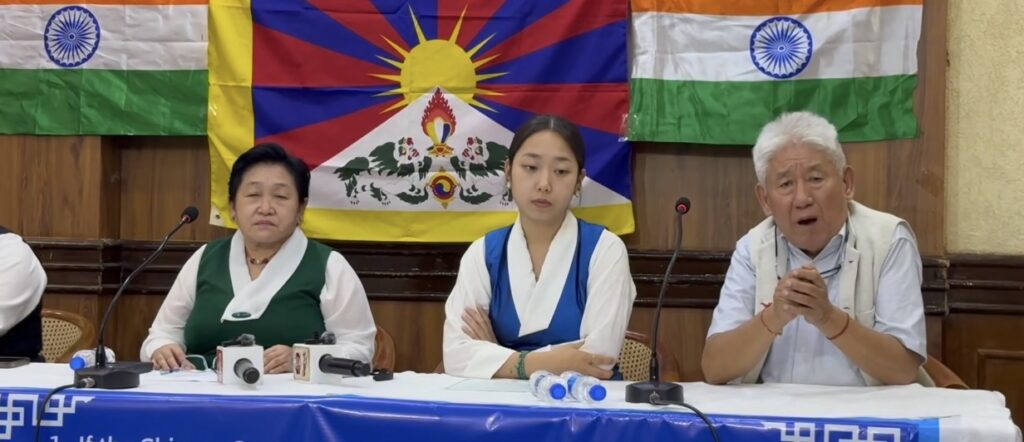
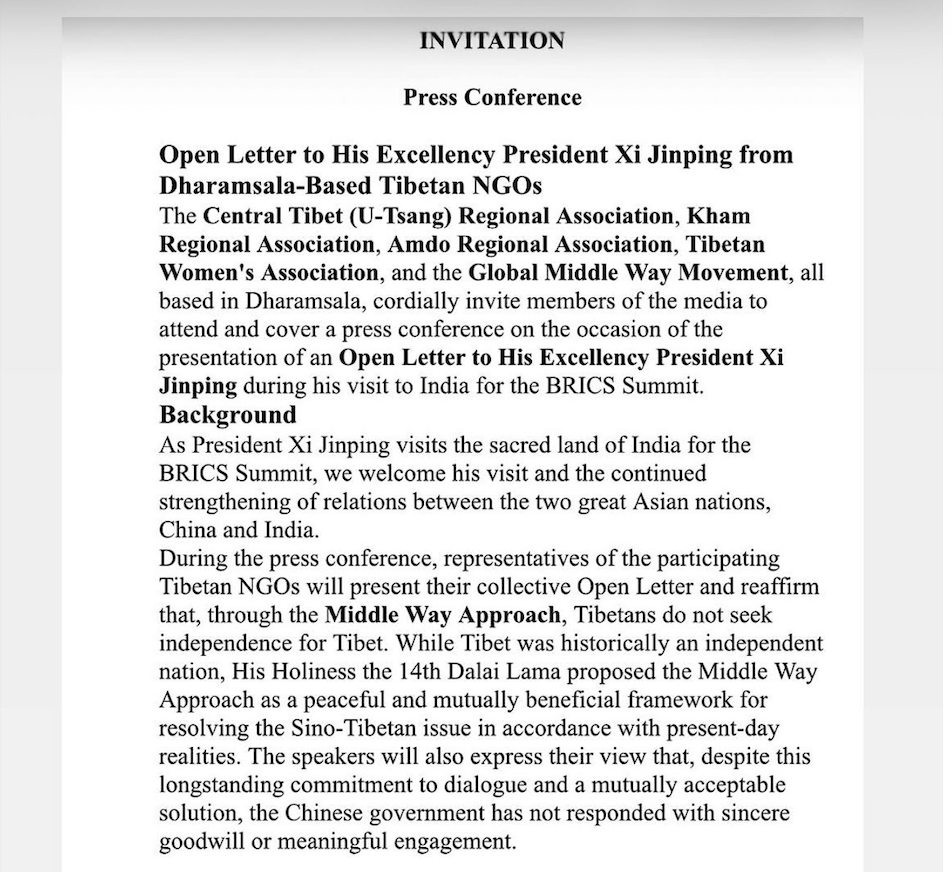
DHARAMSALA, 8 Sept: Five Dharamsala-based Tibetan organisations said in an open letter on Tuesday that “we welcome” President Xi Jinping’s expected visit to India for the 18th BRICS Summit on September 12–13 and called for renewed dialogue between Chinese leadership and the representatives of His Holiness the Dalai Lama and the Central Tibetan Administration, without preconditions.
Addressed to “His Excellency President Xi Jinping,” the letter urged Beijing to resume meaningful dialogue on the Tibet issue under the Middle Way Approach and to use the visit as an opportunity to open a “new chapter” in Sino-Tibetan relations.
The groups said that if China wants to avoid the secession of Tibet, dialogue based on genuine autonomy under the Middle Way Policy remains the only alternative. They added that Tibetans and Han Chinese can coexist in peace, mutual respect and dignity, and said their appeal was not directed against China or the Han Chinese people.
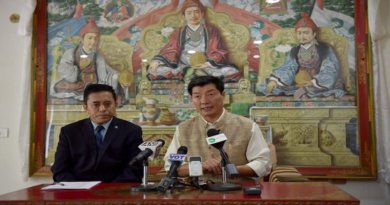
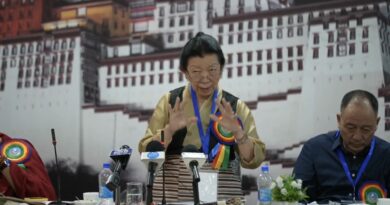
The letter was jointly issued by the Central Tibet (U-Tsang) Regional Association, Dhotoe Regional Association, Dhomay Regional Association, the Central Tibetan Women’s Association and the GTPM for Middle Way Approach. The groups held a joint press conference at the Press Club of India in New Delhi on Tuesday.
They said the Middle Way Approach does not seek Tibetan independence, but aims to secure genuine autonomy and preserve Tibetans’ language, culture, religion and identity within the framework of the People’s Republic of China. They also urged Beijing to view renewed dialogue as a sign of political confidence, wisdom and courage rather than weakness.
The organisations called on the Chinese government to reconsider policies they said were eroding the identity of Tibetans and other “minority nationalities,” including the recently enacted law on “Promoting Ethnic Unity and Progress.”
The appeal comes as Xi is expected to visit India for the September 12–13 BRICS Summit. The organisations welcomed the prospect of stronger China-India relations and said the visit could create space for progress on Tibet.
The Middle Way Approach remains the formal political framework of the Tibetan leadership, but advocacy for full independence remains active in exile politics. That divide was underscored by longtime independence activist Pawo Lobga Rangzen, who self-immolated outside the United Nations headquarters in New York to call for a free and independent Tibet.
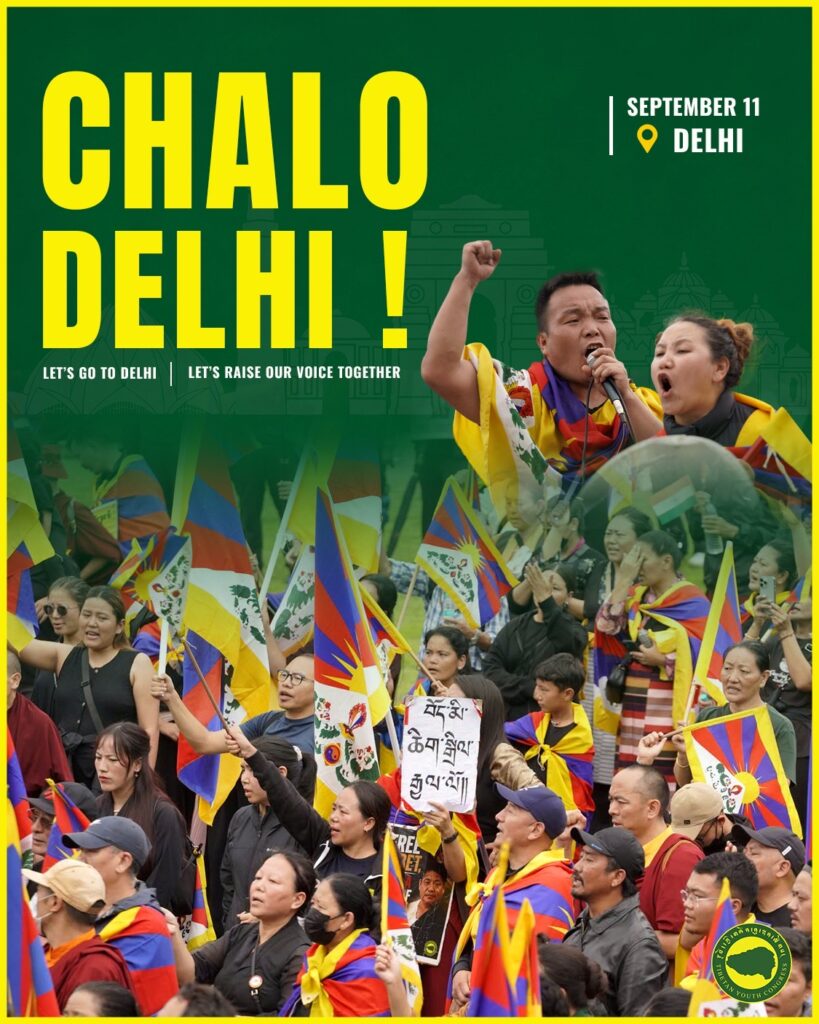
By contrast, the Central Tibetan Youth Congress and the Regional Tibetan Youth Congress of Dharamsala have announced protests in Delhi during the visit. According to sources, as many as 100 activists from Tibetan Youth Congress chapters across India, including northeast India, are converging for the planned demonstration in the Indian capital.
It stirred quite an uproar online. Speaking about the development, a foreigner well-versed in Tibetan issues said her first thought was, “His Excellency…? Why humiliate themselves (NGO’s) and the Tibetan freedom struggle like this?”