US Bars Federal Agencies From Using China’s DeepSeek AI Over Security Concerns
By Tenzin Chokyi
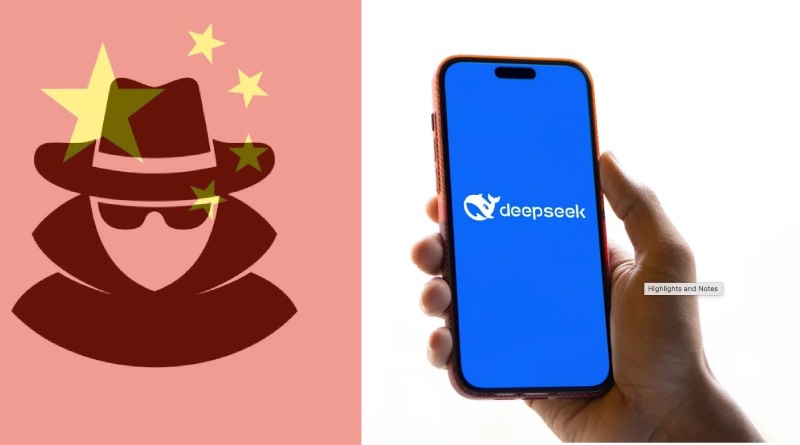
DHARAMSALA, 20 Oct: The US has ordered civilian federal agencies to stop using artificial intelligence tools developed by the Chinese startup DeepSeek, citing concerns that the tools could expose sensitive government information to Chinese authorities.
The directive, issued by the Department of Homeland Security (DHS) on Monday, requires agencies to remove DeepSeek products and third-party tools developed using its technology from government IT systems. It also prohibits agencies from purchasing or acquiring these tools.
The DHS warned that using DeepSeek’s AI models could result in sensitive data being transferred to China, citing concerns over the location of the company’s servers and the legal powers Chinese authorities hold to access private-sector infrastructure.
The concerns come amid growing evidence of AI being used in surveillance operations targeting Tibetan exile institutions and other communities viewed as threats by Beijing.
A September 2026 threat-intelligence report by the US AI company Anthropic documented a China-based, government-aligned operation that used its Claude AI models to compile dossiers on Tibetan Buddhist civil society members, the Central Tibetan Administration (CTA) and advocacy groups, including the International Campaign for Tibet and Students for a Free Tibet. The operation gathered personal information and mapped religious venues, according to the report.
Anthropic said the activity appeared to be aligned with the priorities of Chinese state religious affairs and united front agencies. The findings provide a recent example of how AI can be exploited to facilitate surveillance of Tibetan institutions and individuals, although the operation involved Claude rather than DeepSeek.
DeepSeek attracted global attention in January 2025 after releasing a high-performance, low-cost AI model that challenged assumptions about the resources required to compete with leading US technology companies. Its rise has since become part of the wider technological rivalry between Washington and Beijing.
Washington has also accused Chinese AI companies of appropriating capabilities developed by American competitors; these allegations form part of broader tensions over technology and intellectual property.
For Tibetans in exile, the developments raise broader questions about the use of increasingly powerful AI systems to monitor religious communities, collect personal information and track political activity. While the US directive targets security risks within federal systems, the recent Anthropic findings illustrate how AI-enabled surveillance can also affect communities beyond the reach of the governments deploying such operations.
Despite their technological rivalry, the US and China agreed in September to establish a communication channel for AI-related incidents. The issue is expected to feature in a meeting between the two countries’ leaders next month in the Chinese city of Shenzhen, according to Agence France-Presse.