China’s No. 4 Leader Visits Tibet, Calls to “Stabilise Tibet”, Enforce Ethnic Unity Law
By Tenzin Chokyi
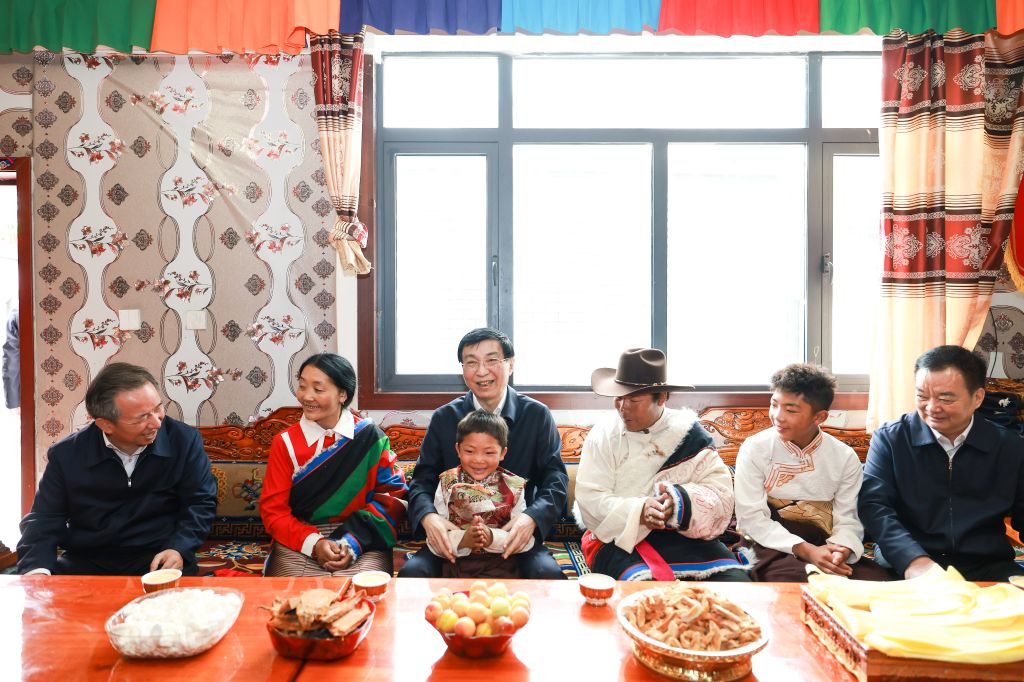
DHARAMSALA, 23 July: Despite widespread international criticism and opposition from Tibetans, China is pressing ahead with the implementation of its new ethnic unity law, with senior Communist Party official Wang Huning calling for its full enforcement and the further alignment of Tibetan Buddhism with China’s socialist system during a visit to occupied Tibet this week.
Wang, a member of the Politburo Standing Committee of the Chinese Communist Party and chairman of the Chinese People’s Political Consultative Conference, made the remarks during a four-day tour of Tibet that concluded on Wednesday. He visited Lhasa and Ngari Prefecture, which borders India and Nepal.
“To govern Tibet is foremost to stabilise Tibet,” Wang said, calling for efforts to consolidate a “political and social environment of unity and stability.” He also called for the full implementation of China’s “Ethnic Unity and Progress Promotion Law”, which came into effect on 1 July.
The law has faced criticism from the United States, the European Union and Tibetan representatives, who have warned that it could further institutionalise assimilationist policies and expand Beijing’s authority to act against activities it considers harmful to “ethnic unity” or supportive of “separatism”.
During his visit, Wang, China’s fourth-ranking leader, also called for continued efforts to “guide Tibetan Buddhism to adapt to socialist society” in line with China’s policy of promoting the “Sinicisation of religion.” He further urged authorities to strengthen the legal management of temples and monasteries and to carry out publicity and education campaigns to promote a “unified national identity.”
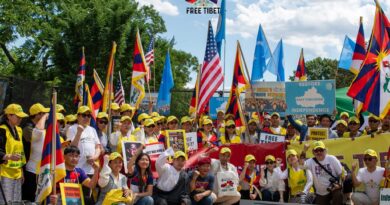
Wang’s remarks come amid heightened concerns over the expansion of Beijing’s policies on “ethnic unity” and religious control in occupied Tibet. The new law came into force shortly after mounting international criticism of China’s policies and renewed Tibetan activism abroad, including the self-immolation of a Tibetan near the United Nations headquarters in New York earlier this month.
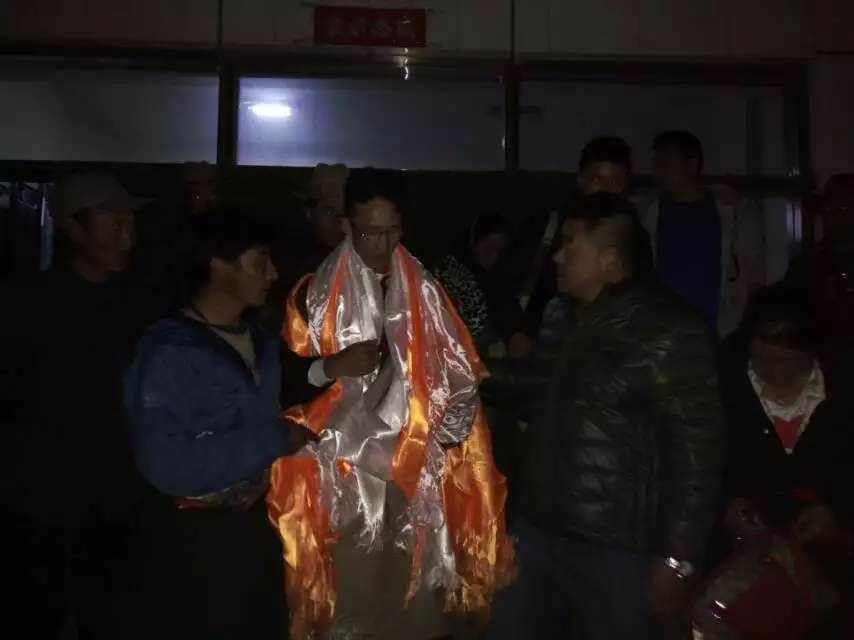
During his visit, Wang toured a Tibetan Buddhist monastery and examined a historical text related to the Buddhist canon dating to the Ming dynasty. Chinese state media presented the visit as part of a broader narrative linking Tibet and Tibetan Buddhism to China’s historical and political authority.
The visit also underscored Wang’s role in shaping the Chinese Communist Party’s ideological, ethnic and religious policies. As a member of the party’s top leadership, he oversees key areas related to ideology and united front work, including ethnic and religious affairs.
Wang’s visit to occupied Tibet comes as Beijing continues to place “political stability”, “ethnic unity” and the state management of religion at the centre of its policies in the region. Despite sustained opposition from Tibetans and growing international criticism, Chinese authorities have continued to advance the new law and policies aimed at reshaping Tibetan religious and cultural life within the framework of the Chinese state.