Chinese Authorities Reportedly Target Over 200 Monks’ Homes at Historic Dza Sershul Monastery
By Tenzin Chokyi
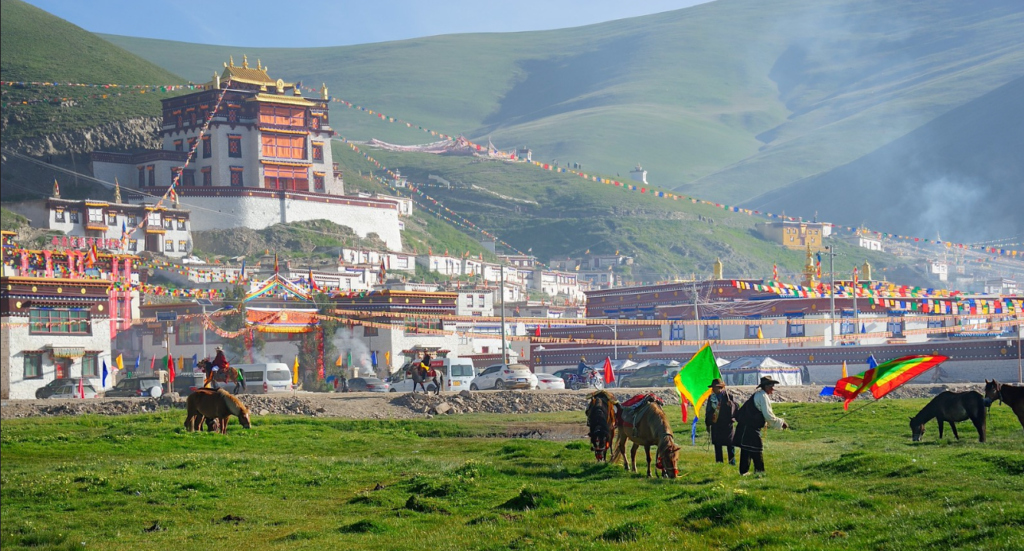
DHARAMSALA, 27 Oct: Chinese authorities have reportedly launched a demolition drive targeting more than 200 residential quarters belonging to monks at the historic Dza Sershul Monastery in Sershul County within the Kardze region of Kham, eastern Tibet.
Information received by the Central Tibetan Administration (CTA) and reports attributed to Radio Free Asia (RFA) highlight growing concerns over the destruction. The operation is believed to have begun on either 25 or 26 October, though the exact scale and status of the demolitions remain difficult to verify independently.
In tandem with the reported physical destruction, local officials have imposed severe restrictions on internet access and communication channels throughout the area. Authorities have also been conducting compulsory public meetings with residents.
The deliberate suppression of information flow has created an information blackout, making it exceptionally challenging to assess the immediate safety of the monastic community or confirm whether the demolitions are ongoing.
Founded in 1760, Dza Sershul Monastery is a premier centre of learning for the Gelug school of Tibetan Buddhism in the Dzachuka region. The monastery complex houses six specialised colleges dedicated to Sutra and Tantra studies, supports an estimated 500 to 1,200 monks, and holds deep cultural significance through its Tibetan medical hospital, elderly care home, and sacred relics, including a 19-metre-tall gilded copper statue of Maitreya Buddha.
This latest action follows a long history of state-imposed restrictions aimed at curbing traditional monastic life and cultural education in the region. In July 2018, Chinese authorities forcibly expelled over 200 novice monks under the age of 18 from Dza Sershul Monastery, transferring them to government-run schools as part of a broader crackdown on underage monastics.
Rights groups have consistently warned that such policies systematically erode the transmission of Tibetan religious, linguistic and cultural heritage to younger generations.
Compounding these concerns, tensions in Sershul County have escalated repeatedly in recent years due to political suppression and resource exploitation. In November 2019, four monks from nearby Dza Wonpo Ganden Shedup Monastery were detained alongside local laymen after distributing leaflets advocating human rights and Tibetan independence.
More recently, in November 2025, authorities arrested around 80 Tibetans following local protests against gold-mining operations at Serkhog, a traditional grazing area, with reports alleging violent interrogations and enforced disappearances.
If fully confirmed, the destruction of more than 200 residences at Dza Sershul Monastery marks a severe blow to one of eastern Tibet’s primary spiritual and educational hubs. Human rights monitors emphasize that such demolitions highlight a continued pattern of dismantling traditional monastic infrastructure, while heavy surveillance and digital blockades continue to conceal the full extent of political repression inside occupied Tibet.