Doval, Wang Yi set for Beijing talks as India, China seek to ease tensions
By Tenzin Chokyi
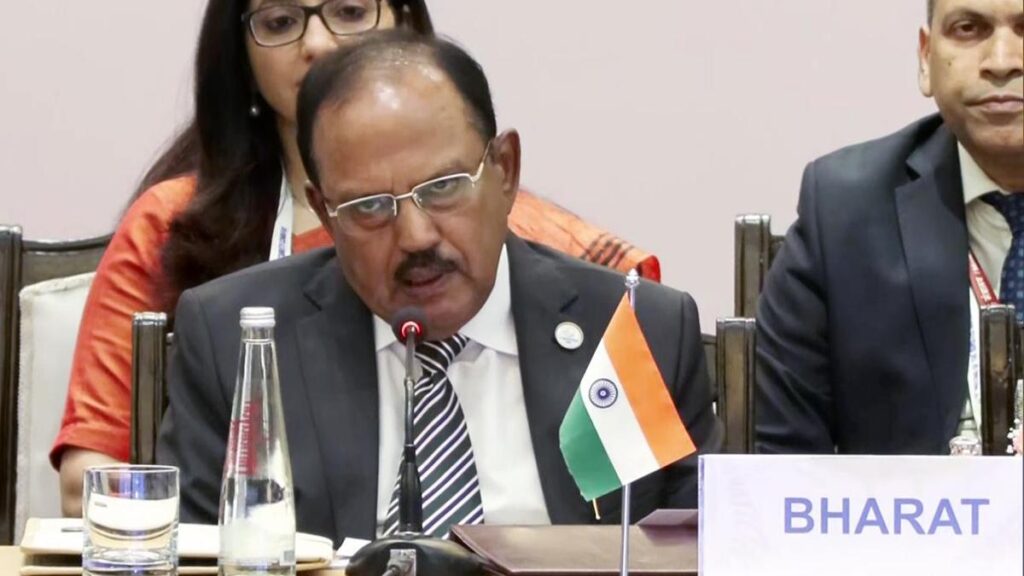
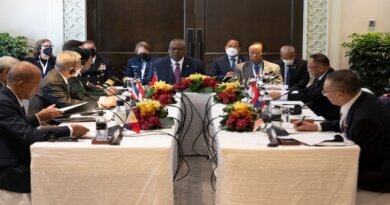
DHARAMSALA, 24 August: India’s National Security Adviser Ajit Doval and Chinese Foreign Minister Wang Yi are set to hold the 25th round of talks under the Special Representatives mechanism in Beijing on Tuesday, according to media reports, as New Delhi and Beijing seek to stabilise bilateral ties ahead of Chinese President Xi Jinping’s expected visit to New Delhi for the BRICS Summit in September.
The negotiations arrive amid renewed urgency on the ground, following reports of fresh face-offs between Indian and Chinese troops in July along the Line of Actual Control (LAC) in the remote Taksing area of Arunachal Pradesh’s Upper Subansiri district. While Beijing has characterised the overall frontier as “generally stable,” New Delhi maintains that peace along the border remains a prerequisite for normalising broader relations.
Beyond managing military standoffs, the talks carry deep geopolitical resonance for the Tibetan freedom movement. The disputed frontier stretching from Ladakh in the west to Arunachal Pradesh in the east only emerged when China occupied Tibet, creating a shared boundary between India and China for the first time in history. For Tibetans, these border tensions are a direct consequence of Beijing’s colonial occupation and ongoing consolidation of control over their homeland.
The Beijing talks also coincide with a sharp rise in Tibetan political mobilisation. Protests across exile communities escalated following the 2 July self-immolation of Tibetan independence activist Pawo Lobga Rangzen outside the UN headquarters in New York. His action occurred just one day after Beijing implemented its new Law on Promoting Ethnic Unity and Progress, a measure exile groups warn is designed further to assimilate Tibetan identity, language, and culture.
Meanwhile, the Central Tibetan Administration (CTA) has maintained its presence across political channels. Sikyong Penpa Tsering recently attended a New Delhi reception honouring West Bengal Finance Minister Dr Swapan Dasgupta, where he interacted with Union Ministers Nirmala Sitharaman and Hardeep Singh Puri.
Yet for Tibetans, the diplomatic geometry remains fundamentally asymmetric. India and China possess an established high-level mechanism to negotiate their disputed frontier. In contrast, the Tibetan people, whose homeland forms much of the geographical setting of that dispute, have no comparable place in the process, leaving their political future outside the negotiating room.