Why India and China Can Never Agree on the Dalai Lama’s Reincarnation
By Khedroob Thondup
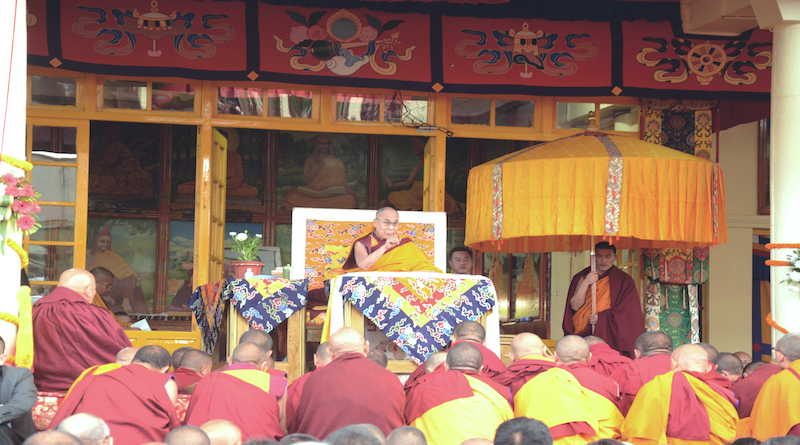
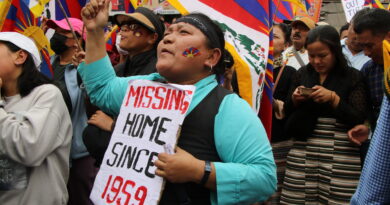
The question of the Dalai Lama’s reincarnation is not merely a spiritual matter; it is a geopolitical fault line that ensures India and China will never find common ground. At its core, the dispute is about legitimacy, sovereignty, and moral authority — three domains where New Delhi and Beijing are destined to clash.
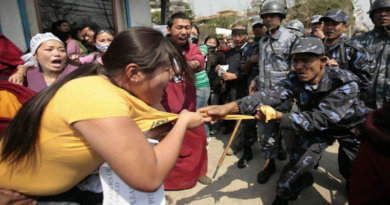
China’s Claim of Control. For Beijing, the reincarnation of the Dalai Lama is a matter of state sovereignty. By insisting that only the Chinese government can approve the next Dalai Lama, China seeks to fold Tibetan Buddhism into its narrative of national unity. This is not about religion but about power: controlling the succession means neutralizing Tibetan resistance and projecting authority over Tibet’s spiritual heart. Instrument of legitimacy: A state-appointed Dalai Lama would serve as a symbol of China’s claim that Tibet is inseparable from the Chinese nation. Tool of control: By managing the reincarnation process, Beijing aims to weaken the exile community and silence dissent.
India’s Moral Responsibility. India, however, cannot accept this narrative. Since 1959, it has sheltered the Dalai Lama and the Tibetan government-in-exile in Dharamsala. The Tibetan spiritual tradition has flourished on Indian soil, and the Dalai Lama himself has suggested that his reincarnation may occur outside Tibet — most plausibly in India. Custodian of exile: India has hosted the Tibetan community for decades, making it an inevitable stakeholder in the succession. Defender of freedom: To recognize a Chinese-appointed Dalai Lama would betray India’s democratic ethos and moral leadership.
Geopolitical leverage: India’s stance on the reincarnation is a bargaining chip in its broader rivalry with China.
The Irreconcilable Divide. The clash is structural. China views reincarnation as a matter of sovereignty; India views it as a matter of spiritual authenticity and moral duty. For Beijing, compromise would mean conceding legitimacy; for New Delhi, compromise would mean betraying its values and its Tibetan guests. China cannot allow India to validate a Dalai Lama born outside its control. India cannot allow China to dictate the terms of a spiritual tradition rooted in freedom.
Why Agreement Is Impossible. Diplomacy thrives on compromise, but reincarnation is not a negotiable commodity. It is a spiritual lineage that transcends borders. China’s insistence on control and India’s commitment to authenticity are mutually exclusive. Any attempt at agreement would collapse under the weight of these contradictions.
The reincarnation of the Dalai Lama is thus destined to remain a point of permanent discord. It is not simply about Tibet; it is about whether spiritual freedom can survive authoritarian power. And on that question, India and China will never agree.
Khedroob Thondup is a former Tibetan diplomat and parliamentarian, and nephew of the 14th Dalai Lama. He is also the editor of the book: Dalai Lama, My Son and Tibet in Turmoil.
The views expressed in this article are those of the author and should not be attributed to Tibet Express.