Minnesota Tibetans to Begin 400-Mile Peace March Honouring Pawo Lobga Rangzen
By Tenzin Chokyi
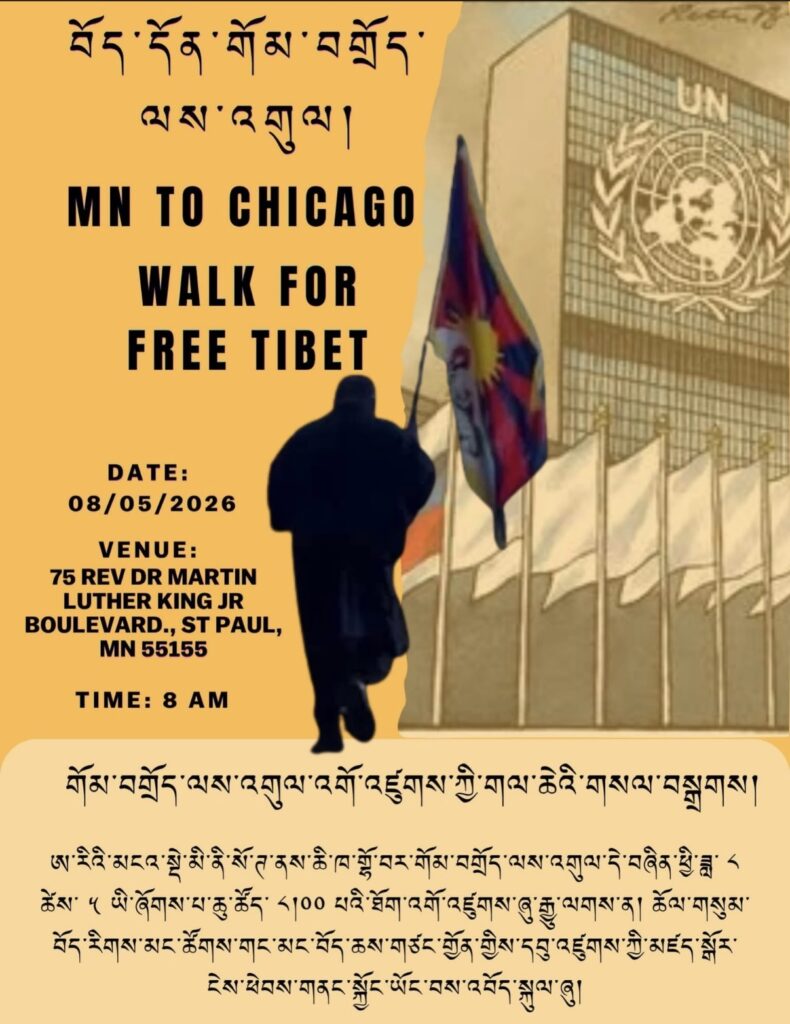
DHARAMSALA, 5 August: Four Tibetans, including an 82-year-old man, are set to begin a more than 400-mile peace march from the Minnesota State Capitol in St. Paul to the Chinese Consulate in Chicago on Wednesday in solidarity with Pawo Lobga Rangzen’s self-immolation for an independent Tibet after more than six decades of China’s colonial rule over Tibet.
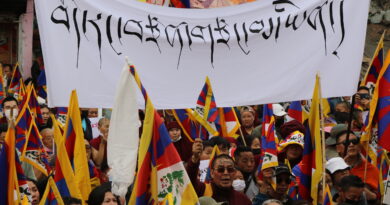
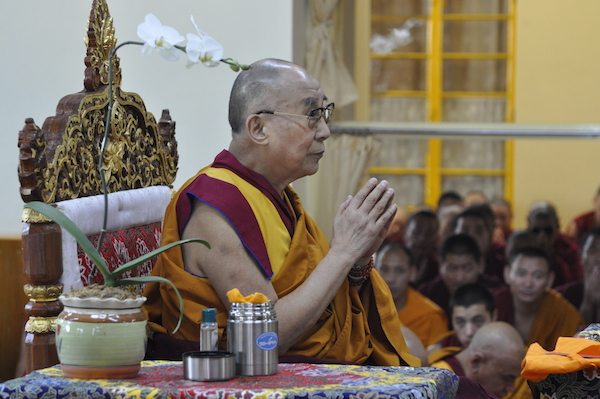
Organized under the banner “Peace Rally for Free Tibet,” the march will begin with a community send-off at the Minnesota State Capitol from 8:00 a.m. to 9:00 a.m. CDT on Wednesday. Tibetan Buddhist monks, community members, supporters, and elected leaders are expected to gather before the walkers set off.
The long-distance walk will be undertaken by 82-year-old Dorjee Gyalpo, Rabga, Lhathok Mayong Nyima, and Tenzin Norbu, who, in his 20s, is the youngest participant. They will be accompanied by Tashi and Sonam Paljor in a support vehicle. Along the route, Tibetans and supporters from across the U.S. Midwest are expected to join sections of the march in relay, transforming the 400-mile journey into a broader public demonstration calling for an end to China’s colonial occupation of Tibet.
The march is scheduled to conclude on 19 August, the 49th day following the death of Pawo Lobga Rangzen, who self-immolated outside the United Nations headquarters in New York on 2 July. In Tibetan Buddhist tradition, the 49th day marks the end of the Bardo, the intermediate state between death and rebirth, when the consciousness is believed to complete its transition and take on a new existence.
To mark the occasion, the walkers will carry Lobga Rangzen’s name and his call for a free and independent Tibet to the Chinese Consulate in Chicago. The march also seeks to draw attention to China’s policies in occupied Tibet, including restrictions on the Tibetan language, state control over religious institutions, the expansion of colonial boarding schools for Tibetan children, and the suppression of dissent both inside occupied Tibet and among Tibetans in exile.
On 2 July, Pawo Lobga Rangzen stood outside the United Nations headquarters carrying the Tibetan national flag and calling for Tibet’s independence before setting himself on fire. He was the first Tibetan to self-immolate in the United States and the 171st known Tibetan to do so in protest against China’s rule over occupied Tibet.
Since then, Tibetans across the world have organized protests, solidarity campaigns, prayer gatherings, and public demonstrations to honour his sacrifice and carry forward his final appeal for an independent Tibet. Many of these actions have also urged the international community, particularly the United Nations, to respond to his sacrifice and address China’s colonial occupation of Tibet.
The peace march organized by Tibetans in Minnesota forms part of this growing global campaign. Home to the second-largest Tibetan community in the United States after New York, Minnesota has long served as a center of Tibetan cultural preservation and advocacy. Beginning in St. Paul, the more than 400-mile march to the Chinese Consulate in Chicago reflects the community’s continued efforts to carry forward Pawo Lobga Rangzen’s final appeal for an independent Tibet and draw international attention to the situation in occupied Tibet.