EC Announces Final Results of 2026 Tibetan Parliamentary Election Amid Lower Turnout
By Tenzin Chokyi
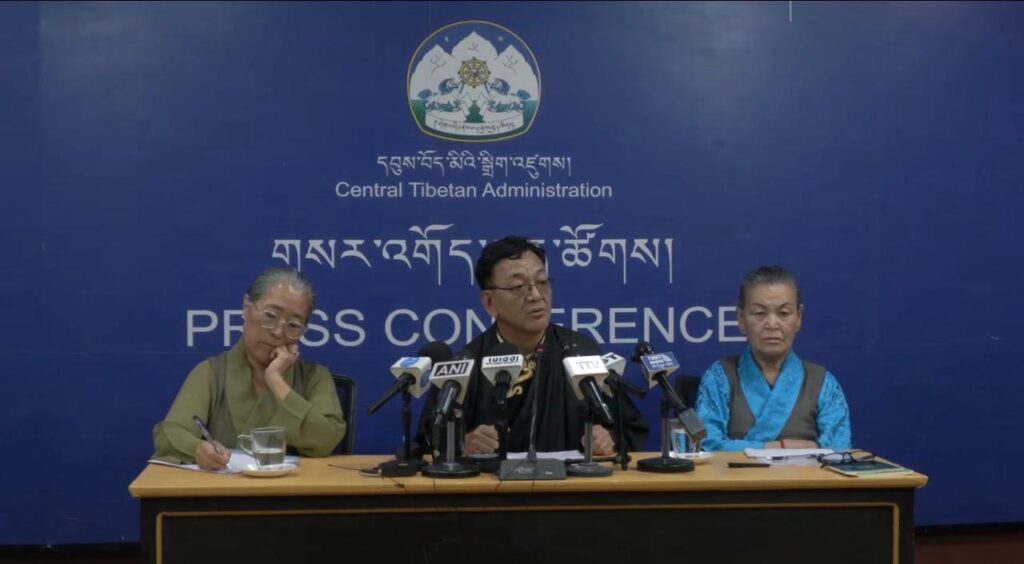
DHARAMSALA 13 May: The Election Commission of the Central Tibetan Administration (CTA) today announced the final results of the 2026 Tibetan General Election for the 18th Tibetan Parliament-in-Exile at the Lhakpa Tsering Memorial hall of the Department of Information and International Relations, CTA.
A total of 45 candidates have been elected to the 18th Tibetan Parliament-in-Exile, which will serve a five-year term until the next election in 2031. These include 10 representatives each from the three traditional provinces, two representatives from each of the five major religious traditions, two representatives each from the Europe & Africa and North & South America constituencies, and one representative from Australasia and Asia (excluding India, Nepal and Bhutan).
The composition of the newly elected parliament shows changes across several constituencies. Most religious constituencies remain unchanged, except for the Bon constituency, where a new representative has been elected. From Amdo, four new members have been elected: Tenzin Palmo, Lharong, Lhamo Kyab, and Ugyen Kyab. From Kham, five new members were elected: Gagya Gyaltsen Choekyi, Dawa Tsering, Ngawang Lodoe, Kunchok Rinchen, and Sangye Dorjee. From Utsang, the newly elected members are Lhamo Tsering Kongtsa, Lhakpa Tsering, and Gonpo Dhundup.
In the North and South America constituency, both elected representatives—Godruk Kelsang Phuntsok and Tseten Phuntsok—are new members. The Europe and Africa constituency also saw one new representative, Tenzin Yangkar. Similarly, Kalsang Tsering was elected as the new representative from Australasia Asia (excluding India, Nepal and Bhutan). In the religious constituencies, Bara Tsewang Tashi emerged as the new representative from the Bon tradition, while the remaining religious seats remained unchanged.
The final election recorded a voter turnout of 41,638 (45.21%), a decline of 9,502 voters compared to the preliminary election, which saw 51,140 voters (56.14%) out of 91,042 registered voters.
The Election Commission, which had earlier expected higher turnout in the final election—citing the return of Tibetans engaged in seasonal work outside their settlements—expressed disappointment over the lower participation, stating that it fell short of expectations. It added that it had taken all possible measures within its capacity to make voting more accessible.
Among the reasons cited for the lower turnout were growing voter disillusionment with Tibetan politics and the election process due to various controversies, as well as the greater importance generally attached to the Sikyong election. Since the Sikyong race had effectively been decided in the preliminary election, the final election attracted comparatively less public interest and engagement.
Reflecting on the overall 2026 Tibetan General Election, the Election Commission expressed grave concern over the growing influence of social media within the Tibetan community, noting that it has increasingly enabled the rapid spread of unverified opinions. The EC warned that such content risks deepening divisions within the community, and that baseless allegations against the Commission in particular could undermine its legitimacy.