Chinese Restrictions Tightened at Choktrul Dorje Ten Rinpoche’s Monastery During Saga Dawa
By Tenzin Chokyi
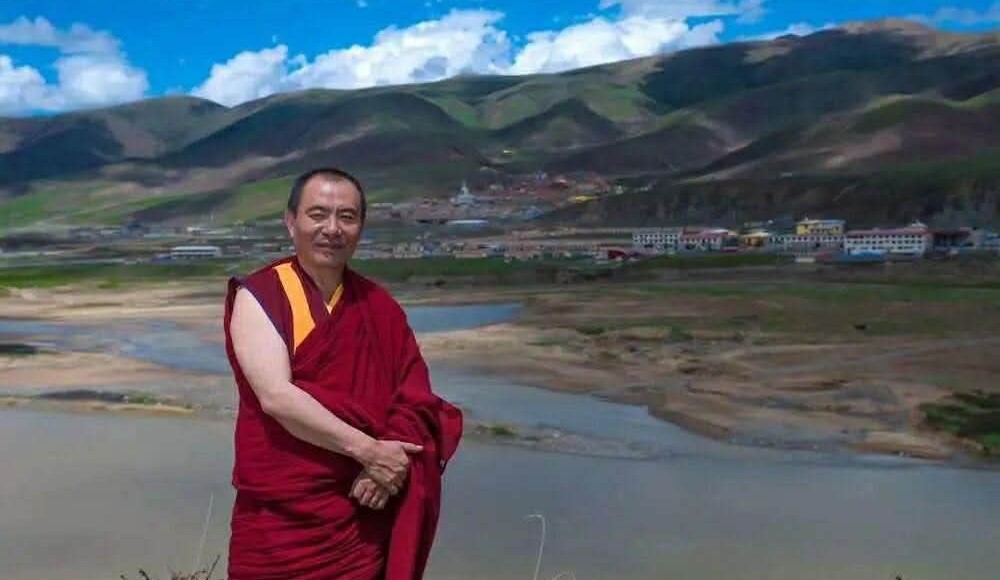
DHARAMSALA, 20 May: Months after arbitrary detention of Tibetan spiritual leader and educator Choktrul Dorje Ten Rinpoche, Chinese authorities have tightened restrictions at his monastery in occupied Tibet as Saga Dawa, the holiest month in the Tibetan Buddhist calendar, is underway, having begun on 17 May.
According to reports from other Tibetan exile media outlets, Chinese government security personnel are said to have arrived at Ösel Thegchok Monastery in the early days of the ongoing Saga Dawa period and imposed restrictions barring anyone other than local monks from residing there. Rules have also been put in place prohibiting the sharing or dissemination of any information related to Choktrul Dorje Ten Rinpoche to the outside world. It is stated that anyone found leaking such information will be penalized by the relevant security authorities.
Sources have further revealed that following the detention of the Tibetan spiritual leader in early December 2025, stringent restrictions have been imposed across the monastery and the wider community. In particular, during major religious occasions, security personnel conduct regular searches and closely monitor whether individual residents have any contact with outsiders. Such measures are reported to have become routine, resulting in growing difficulties for residents and disrupting the normalcy of daily life.
The continued restrictions come despite an urgent appeal issued by Amnesty International on 20 April 2026, calling on Chinese authorities to clarify the fate and whereabouts of the Tibetan religious leader. He was reportedly detained on or around 4 December 2025 in Chikdril (Chinese: Jiuzhi) County, in Golog (Guoluo) Tibetan Autonomous Prefecture—an area Tibetans identify as part of the traditional province of Amdo. His monastery is also located in the same county.
The most recent information on his whereabouts emerged in January, when individuals monitoring the case received informal indications that he was ‘under investigation’. However, there has been no official confirmation, and it remains unclear whether he has had access to legal counsel of his choosing or any contact with his family.
Observers and human rights organizations point to temporal proximity between his detention and the subsequent forced closure of the Dorje Ten National Vocational and Technical High School, which he founded in 2010 and which was, at the time, one of the few remaining privately run Tibetan educational institutions in the region.
They say these developments reflect a broader strategy aimed at weakening the institutional and individual foundations of Tibetan language and culture, as the closure of such institutions reduces spaces where Tibetan-language education and cultural transmission take place. This, they argue, contributes to the consolidation of a singular, state-defined Chinese identity, which they link to wider assimilation-oriented policies
Choktrul Dorje Ten Rinpoche, abbot of Ösel Thegchok Monastery, is a prominent Tibetan educator who has worked to expand access to education in the region. He began this work in 1997 with the founding of Nyenpo Yurtse Hope Primary School, which provided free education, food, and accommodation to children from nomadic and low-income families. In 2010, he established the Dorje Ten National Vocational and Technical School, which trained thousands of Tibetan students in both vocational skills and formal education.