TCCR Marks 25 Years of Peacebuilding and Conflict Transformation
By Tenzin Chokyi
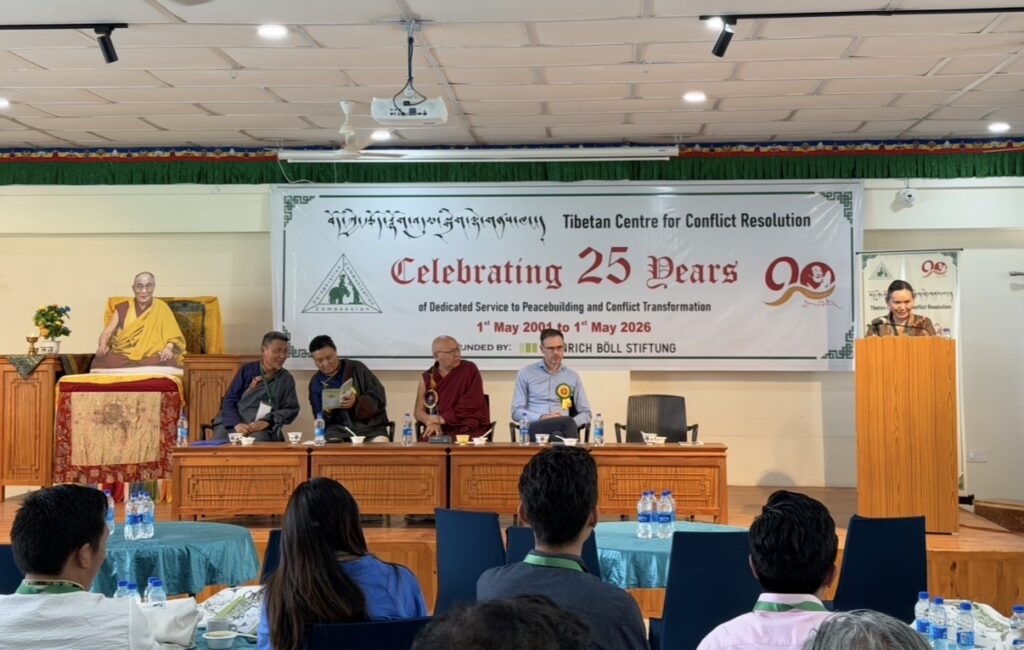
DHARAMSALA 15 May: The Tibetan Centre for Conflict Resolution (TCCR), a pioneering non-profit organization based in Dharamshala dedicated to non-violent conflict management, celebrated 25 years of service in peacebuilding and conflict transformation today at the Staff Mess Hall of the Central Tibetan Administration (CTA).
Founded in 2001 with just three members, the organization was initially trained and supported by Mrs. Else Hammerich and Mr. Bjarne Vestergaard of the Danish Centre for Conflict Resolution. Over the years, TCCR has grown into a dedicated team of trainers and facilitators working with both governmental and non-governmental organizations within and beyond the Tibetan community. Through its work, the organization has promoted democratic values and strengthened skills in non-violent conflict transformation by blending modern conflict resolution approaches with Buddhist principles of non-violence.
The celebratory event at the CTA Staff Mess Hall brought together distinguished guests and partner organizations. Chief Guest Geshe Lhakdor, the Vice Chairman of TCCR, Special Guest Palden Dhundup, the Secretary of the Department of Home, CTA, and Guest of Honour Jochen Luckscheiter, the Director of Heinrich Böll Foundation India, attended the ceremony alongside representatives from organizations including Waste Warriors Society, Dhauladhar Cleaners, Central University of Himachal Pradesh , and the Women Empowerment Desk of the CTA, among others.
Participants shared stories of their collaboration with TCCR and reflected on the organization’s impact at both personal and institutional levels in fostering inner peace, healthier relationships, and non-violent approaches to conflict through its unique training methodologies.
Mrs. Sonam Dechen, Associate Director of TCCR and one of its founding members, spoke about the organization’s journey and impact. She highlighted how “hope and courage” have guided TCCR through its early years, especially during a time when awareness about conflict resolution and even the understanding of conflict itself was limited within the Tibetan community.
She also reflected on the severe financial and legal challenges the organization faced in 2018, when difficulties in renewing TCCR’s legal registration for nearly two years significantly affected its functioning.
“We had to use our own resources to keep the organization running,” Sonam said. “There was a time when we could not even afford to pay salaries to our staff because of delays in securing the renewal, although our donors continued to support us. Since we ourselves were not in a position to fully fund the organization, it was an extremely challenging period. Hope and courage were definitely our guiding principles.”
Despite these hardships, Sonam noted that TCCR today is in high demand for its workshops and training programs. However, she emphasized that funding remains a continuing challenge, often determining the extent to which the organization can carry out its programs and collaborations.
Ms. Nidhi Sharma from Waste Warriors Society reflected on the meaningful collaborations TCCR has built over the years beyond the Tibetan community and into the broader Indian development sector and civil society. She noted that TCCR’s understanding of conflict not as an obstacle, but as an opportunity for transformation, as well as its belief that peace extends beyond humans to all living beings, had deeply influenced their work.
“Gratitude is the only word that comes to my mind when I think of TCCR, not just for the work you do, but for the amazing human beings you are,” Nidhi added.
Over the past 25 years, TCCR has conducted more than 500 workshops and programmes reaching nearly 15,000 participants, working with community leaders, youth, educators, and civil society groups across Tibetan and Indian communities. Through its initiatives in conflict resolution, peacebuilding, intercultural dialogue, and community engagement, the organization has emerged as a significant platform for promoting non-violence, dialogue, and collaborative problem-solving.