Not Middle Way’s Failure, But China’s Greed and Arrogance, Says Tibetan Speaker at Dharamsala Conference
By Tenzin Chokyi
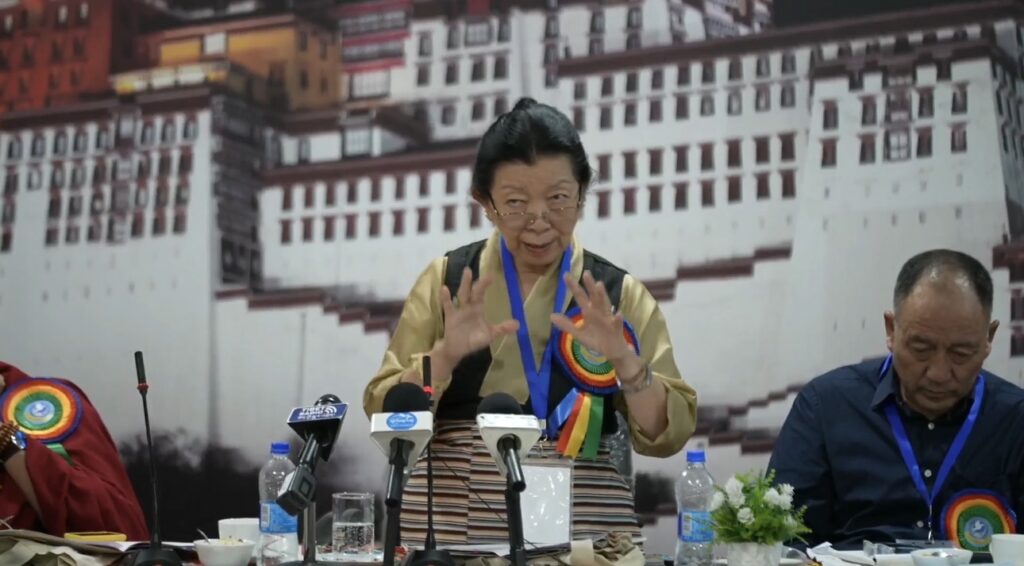
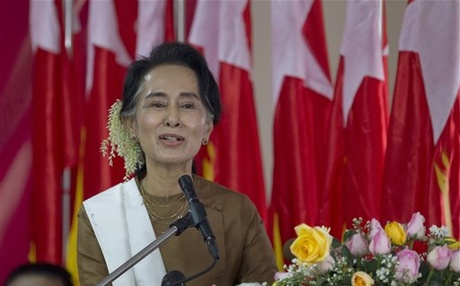
DHARAMSALA, 26 June: The Speaker of the Tibetan Parliament-in-Exile Dolma Tsering Teykhang, speaking in her personal capacity, said China’s newly adopted law “Promoting Ethnic Unity and Progress” does not warrant revising the Middle Way Approach, arguing that the policy has already defined the minimum political objective Tibetans are prepared to accept.
Speaking during a question-and-answer session at the inaugural of the four-day international conference on Sino-Tibetan Relations: Democracy, Dialogue and the Middle Way Approach, Teykhang said the Middle Way Approach had already established its bottom line and therefore left no room for further concessions.
Instead, she argued, the focus should be on whether the law “Promoting Ethnic Unity and Progress” itself is compatible with the Chinese Constitution and international law. Rejecting the law’s characterization of Tibetans as an “ethnic minority,” she said Tibetans are “the people of an independent nation, equal to China.” She further questioned whether policies that weaken Tibetan language, culture and identity could genuinely be described as promoting unity.
“It is not the failure of the Middle Way Approach,” she said. “It is China’s greed and arrogance.”
Teykhang added that if the Middle Way Approach were ever to be reviewed, it should be through the Tibetan community’s democratic process rather than in reaction to a single legislative development.
With China’s Law “Promoting Ethnic Unity and Progress”, adopted in March and set to come into effect on 1 July—just days away—Teykhang was asked what the legislation would mean for Tibetans living under Chinese rule and how the exile community should respond if it proved unable to prevent it from taking effect.
She said the Central Tibetan Administration (CTA) and Tibetan civil society organisations would continue advocating internationally to increase pressure on China. Asked how hopeful she was that those efforts could stop the law from taking effect, Teykhang declined to estimate the likelihood, citing the limitations of the CTA as an exile institution. She nevertheless expressed confidence in Tibetans inside Tibet, saying that oppressed people develop the strength to endure and resist.
While Teykhang maintained that the legislation did not warrant revising the Middle Way Approach, Tenzin Shinye, Vice President of the Centre for the Middle Way Initiative (CMWI), which organised the conference, said any review of the Middle Way Approach must emerge through democratic consensus, noting that the policy itself was adopted through a democratic process.
Shinye said the gathering was intended to examine the contemporary realities facing Tibetans under Chinese rule in relation to the policy.
She added that China’s new Law fundamentally contradicts the vision of genuine autonomy envisaged under the Middle Way Approach and expressed her unequivocal opposition to the legislation.
Organised by the Centre for the Middle Way Initiative, the conference runs from 26 to 29 June in Dharamsala and features speakers including Sikyong Penpa Tsering, Prof. Kaveri Gill, Dr. Teng Biao, Prof. Shao Jiang, Tibetan MP Bari Dawa Tsering, and Tashi Tsering of the Human Rights Network for Tibet and Taiwan, among others.
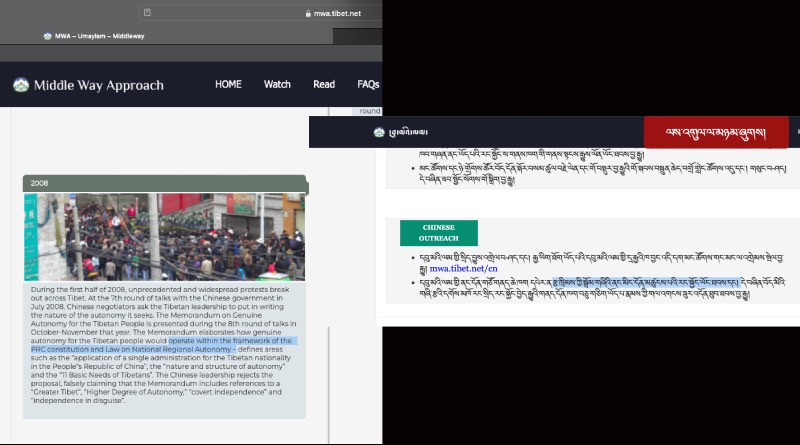
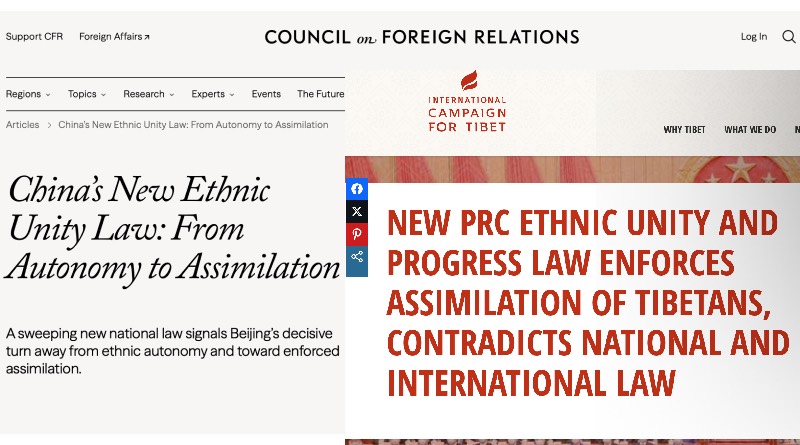
The new law, widely seen as Xi Jinping’s campaign to forge a unified national consciousness directly challenges the Middle Way Approach, which is based on Chinese constitutional provisions that guarantee genuine autonomy to minority nationalities. By placing national unity above distinct ethnic and regional rights, the legislation undermines the very constitutional basis on which the Middle Way Approach depends.
.