Taiwan Will Never Choose Beijing: Tibet’s Lesson in Lost Freedom
By Khedroob Thondup
Taiwan is already an independent country in practice—democratic, self‑governing, and globally integrated. The question is not whether Taiwan wants independence, but why it will never willingly surrender it to Beijing. The answer lies in Tibet’s tragic example: once promised autonomy, Tibet instead became a cautionary tale of repression, assimilation, and broken promises under the Chinese Communist Party (CCP).
Taiwan’s Democratic Identity. Taiwan’s independence is not a legal abstraction; it is lived reality. Democracy: Free elections, vibrant civil society, and a robust press distinguish Taiwan from authoritarian China. Global economy: Taiwan is a hub of technology and trade, especially in semiconductors, making it indispensable to global supply chains. National identity: Generations born after martial law see themselves as Taiwanese, not Chinese. This identity is reinforced by language, culture, and democratic values. For Taiwan, independence is not negotiable—it is the foundation of its existence.
Tibet’s Broken Promises. Tibet offers a stark warning of what happens when Beijing promises autonomy. 1951 Agreement: China pledged to respect Tibet’s political system and religion. Within years, those promises were shattered.
Cultural repression: Monasteries destroyed, language marginalized, and religious practice tightly controlled. Political control: Genuine autonomy replaced by Party rule, surveillance, and suppression of dissent. Tibet’s fate demonstrates that Beijing’s assurances are not worth the paper they are written on. Autonomy under the CCP means assimilation and subjugation.
Why Taiwan Will Never Accept Beijing’s Rule. Democratic contrast: Taiwan’s democracy is incompatible with CCP authoritarianism. Trust deficit: Tibet’s experience proves Beijing cannot be trusted to honor autonomy agreements. Strategic autonomy: Taiwan’s control of its economy and defense ensures it can resist coercion. National will: Polls consistently show Taiwanese reject unification, even under “one country, two systems.”
Conclusion: Taiwan’s independence is not a bargaining position—it is a reality rooted in democracy, identity, and hard‑won freedom. Tibet’s experience shows what happens when nations trust Beijing’s promises: autonomy becomes occupation, culture becomes propaganda, and freedom becomes repression. Taiwan has learned that lesson well. It will never willingly trade its independence for Beijing’s embrace, because to do so would mean the end of everything that makes Taiwan free.
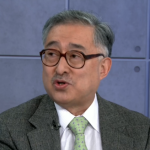
Khedroob Thondup is a former Tibetan diplomat and parliamentarian and nephew of the 14th Dalai Lama. He is also the editor of the book, ‘Dalai Lama, My Son and Tibet in Turmoil.’
The views expressed in this article are those of the author and should not be attributed to Tibet Express.