DeepZang’s explicit turn towards Ethnic Integration raises concerns over China’s Digital Colonialism in Tibet
By Tenzin Chokyi
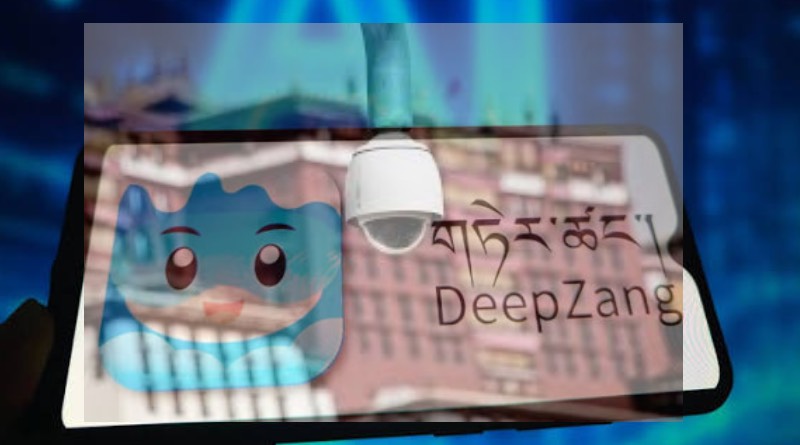
DHARAMSALA, 9 Oct: China’s development of DeepZang, a Tibetan-language artificial intelligence model, has taken an explicitly political turn, with its founder pledging to advance the technology to promote state-directed ethnic integration. The announcement has brought into sharper focus concerns over how artificial intelligence could extend Chinese colonial control over Tibet into the digital sphere.
Speaking at a seminar on 5 October in Hohhot, in Southern Mongolia under Chinese rule, DeepZang founder Tenzin Norbu said the model would be further developed to promote “ethnic interaction and integration,” according to the South China Morning Post (SCMP), citing Chinese state media. The statement explicitly links the model’s development to Beijing’s ethnic integration agenda. While the technology was initially presented primarily in terms of its technical capabilities, the pledge has brought its political implications into the open.
When DeepZang was launched in Lhasa on 15 March 2026, Chinese state media promoted it as the world’s first Tibetan large language model, reportedly securing certification from the World Record Certification Agency. Its initial rollout emphasised its potential to serve as a “digital voice” for Tibetan speakers, highlighting its open-source framework, real-time translation and speech-to-text capabilities across three major Tibetan dialects. This presentation framed the model as a technological advance for Tibetan-language users, while giving little prominence to the broader political context in which it was being developed.
The claim to a world first also overlooks earlier Tibetan-led work in the field. DeepZang’s launch came nearly three years after Monlam AI was unveiled in 2023 by the Monlam Tibetan IT Research Centre in Dharamsala. By presenting DeepZang as the first of its kind, Chinese state media have attempted to marginalise the achievements of Tibetan developers in exile and write their contributions to Tibetan-language technology out of the narrative. This claim to technological primacy reflects a broader struggle over who controls the Tibetan language and its digital future.
The political implications extend beyond the model itself. China’s Law on “Promoting Ethnic Unity and Progress”, which took effect on 1 July 2026, has been condemned by Tibetan representatives as an instrument of cultural assimilation. DeepZang’s stated alignment with ethnic integration comes against this backdrop, raising concerns that the technology could reinforce the same assimilation agenda through digital systems. Reportedly trained on nearly 70 million Tibetan texts and more than 30,500 hours of audio, the model is also expected to be integrated into education, healthcare and local governance.
This expansion comes amid the rapid growth of generative AI use across China. According to figures from the China Internet Network Information Centre cited by SCMP, the country’s generative AI user base surpassed 700 million in June 2026, up from 602 million at the end of 2025. Although these figures are not specific to DeepZang, they illustrate the scale of the digital infrastructure through which AI technologies are becoming embedded in everyday life.