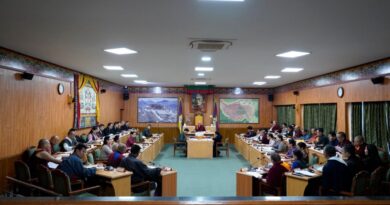
Delhi and the Gaden Phodrang: The Next Best Thing to Recognition
By Khedroob Thondup
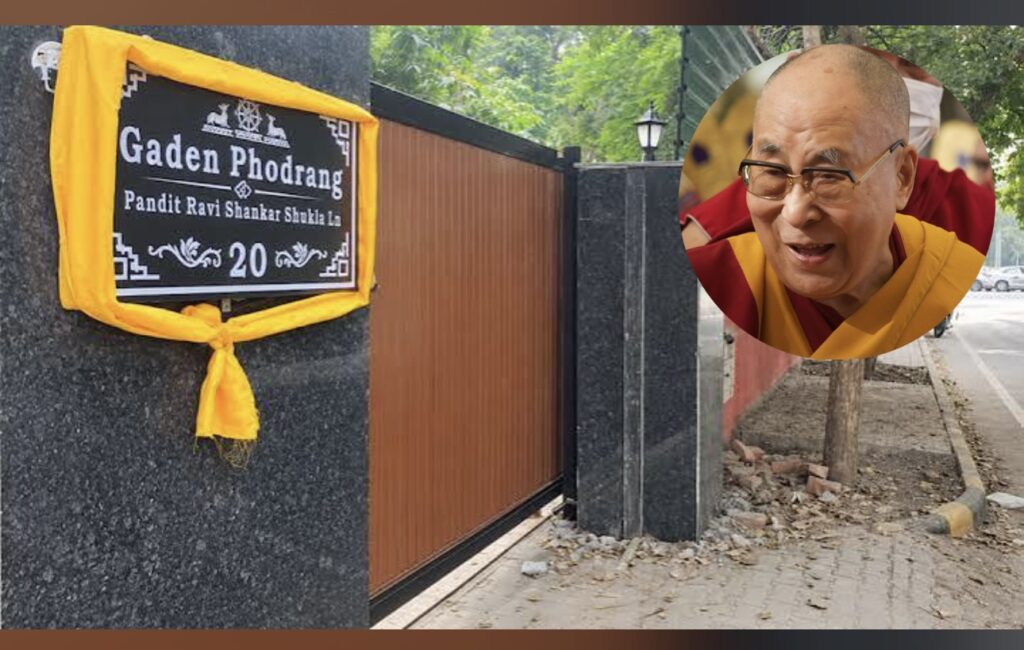
For more than six decades, India has been the principal sanctuary of the Tibetan freedom movement and the home of His Holiness the 14th Dalai Lama. Since 1959, Tibetan refugees have rebuilt their lives on Indian soil, while the Central Tibetan Administration and the institutions of Tibetan civilisation have flourished in exile. Yet one important reality remains unchanged: although India has generously hosted the Tibetan people and their leadership, it has stopped short of granting formal recognition to the Tibetan government-in-exile or to the Gaden Phodrang institution as a political entity.
That is why allowing the Gaden Phodrang, the Office of His Holiness the Dalai Lama, to establish a formal office in New Delhi would be such a historic step. While it would not constitute diplomatic recognition in the traditional sense, it would amount to the next best thing.
The Gaden Phodrang is not merely an administrative office. Historically, it has been the central institution associated with the Dalai Lama’s leadership of Tibet. Today, it serves as the principal vehicle through which the Dalai Lama’s activities, international engagements, humanitarian work, and global advocacy are coordinated. The institution embodies continuity with centuries of Tibetan political and spiritual history and represents a source of legitimacy that transcends ordinary exile politics.
A Delhi office would effectively acknowledge that the Gaden Phodrang occupies a unique position deserving direct representation in India’s capital. Such recognition would carry both symbolic and practical significance.
First, it would reflect India’s confidence in the enduring value of the Dalai Lama’s contribution to Indian society. Few foreign leaders have done more to enrich India’s cultural and intellectual life. Through the revival of Nalanda Buddhist traditions, promotion of nonviolence, and advocacy of interfaith harmony, the Dalai Lama has become an integral part of India’s soft-power identity. Providing his office with a presence in New Delhi would be an affirmation that India views this contribution not as a temporary exile arrangement but as an enduring partnership.
Second, a Delhi office would acknowledge the reality that the Tibetan issue remains a matter of international importance. Despite repeated declarations that Tibet belongs solely to history, Tibet continues to be relevant to discussions of human rights, religious freedom, environmental stewardship, and the preservation of ancient cultures. An officially functioning Gaden Phodrang office in the Indian capital would provide a recognised channel for engagement with diplomats, scholars, parliamentarians, and civil society organisations from around the world.
Third, such a move would send an important message regarding the future of the Dalai Lama institution itself. The question of succession has become one of the central issues in contemporary Tibet policy. The Chinese government has repeatedly asserted authority over the identification of future Tibetan Buddhist leaders, including any successor to the current Dalai Lama. Tibetans overwhelmingly reject that claim, maintaining that only legitimate Tibetan religious authorities possess the authority to determine reincarnation according to Tibetan Buddhist tradition.
By allowing a Gaden Phodrang office in Delhi, India would reinforce the principle that the institution of the Dalai Lama possesses an independent and authentic voice. It would demonstrate respect for the Tibetan people’s right to preserve their religious and cultural heritage free from external political interference.
Critics would argue that such a move risks provoking Beijing and complicating India’s already challenging relationship with China. This concern deserves consideration. However, permitting the Gaden Phodrang to maintain an office in New Delhi would not alter India’s official position on Tibet. It would not recognise Tibetan independence, establish diplomatic relations with a Tibetan state, or challenge existing international arrangements.
Instead, it would acknowledge an undeniable reality: the Dalai Lama and the Tibetan community have lived in India for nearly seven decades and have become part of the country’s social, cultural, and spiritual landscape. Providing a representative office in the national capital would align administrative reality with historical reality.
For Tibetans, the symbolism would be profound. It would signal that their national institutions are not fading into irrelevance with the passage of time. For India, it would showcase confidence in its democratic values and civilizational heritage. For the world, it would affirm that moral authority and cultural legitimacy continue to matter in international affairs.
Formal recognition of Tibet remains politically unattainable for most governments. Yet history is often shaped by incremental acts of acknowledgement rather than dramatic declarations. Allowing the Gaden Phodrang to establish an office in New Delhi would be one such act. It would stop short of recognition, but only just. In diplomatic terms, it would be a powerful statement. Historically, it would be a milestone. And for millions of Tibetans and supporters around the world, it would represent the clearest affirmation yet that the institution of the Dalai Lama remains a respected and enduring presence on the global stage.
Khedroob Thondup is a former Tibetan diplomat and parliamentarian, and the 14th Dalai Lama’s nephew. He also edited the book ‘Dalai Lama, My Son and Tibet in Turmoil.’
The views expressed in this article are those of the author and should not be attributed to Tibet Express.