How Washington Sold Out Tibet After Nixon’s China Gamble
By Khedroob Thondup
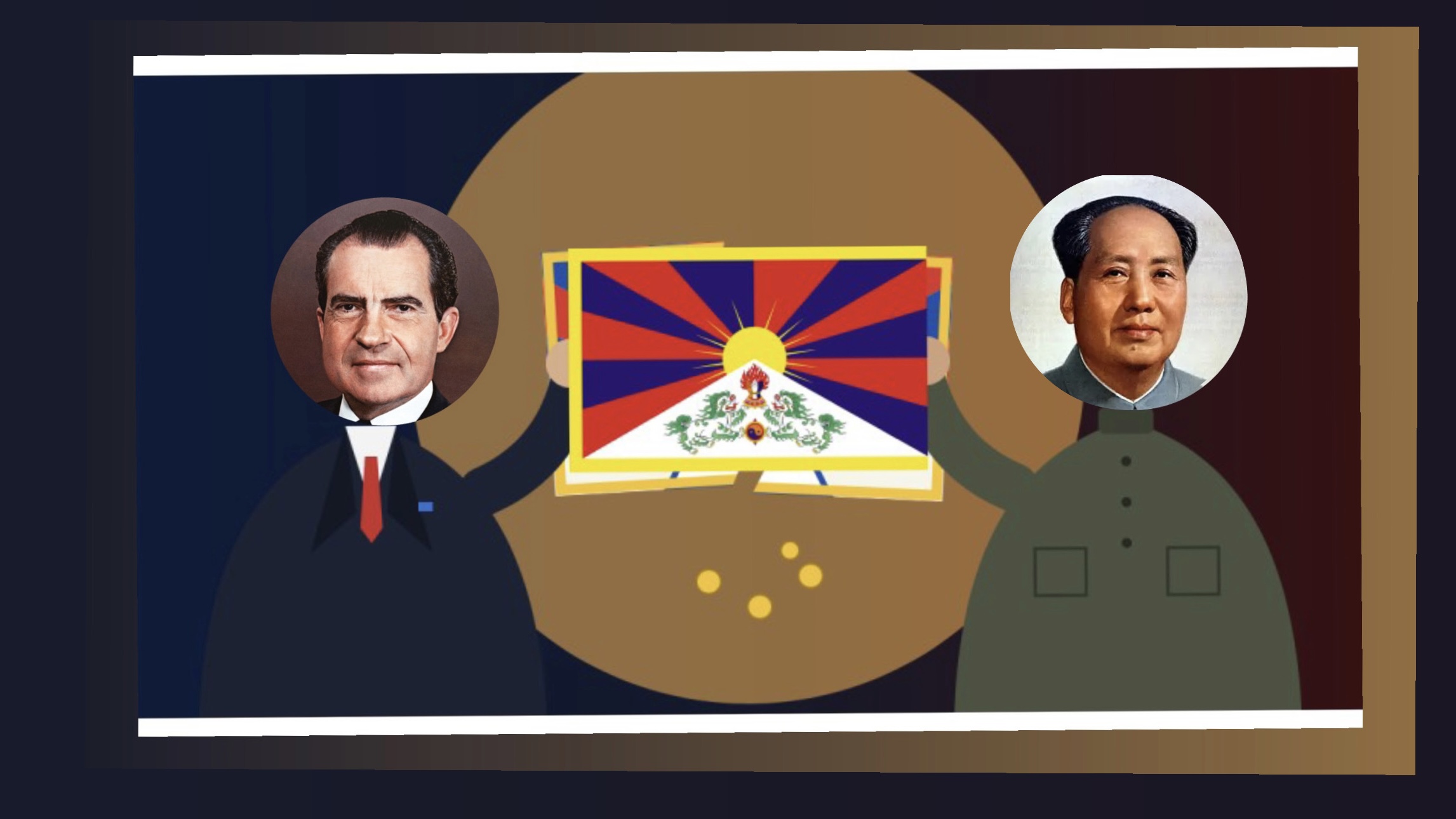
When Richard Nixon stepped off the plane in Beijing in 1972, the world hailed it as a masterstroke of diplomacy. The United States, locked in Cold War rivalry with the Soviet Union, had opened a new channel with Mao Zedong’s China. Yet for Tibetans, that handshake marked the beginning of a long betrayal. Tibet was quietly sacrificed on the altar of geopolitics, and successive U.S. administrations have continued the pattern—choosing silence over principle, accommodation over advocacy.
The Nixon Pivot and Tibet’s Disappearance. Nixon’s visit was framed as a strategic realignment: counterbalance Moscow by engaging Beijing. But the cost was immediate. Tibet, which had been a subject of international concern after China’s invasion in 1950 and the Dalai Lama’s flight in 1959, vanished from Washington’s agenda. The U.S. had once covertly supported Tibetan resistance through the CIA, but Nixon’s rapprochement required erasing Tibet from the conversation. In effect, Tibet was traded for détente.
The Logic of Placation. Since Nixon, every administration—Republican and Democrat alike—has largely avoided pressing Beijing on Tibet. The reasoning is consistent: Economic entanglement: As trade with China expanded, Tibet became an inconvenient topic that could jeopardise deals. Geostrategic calculus: Washington prioritised cooperation with Beijing on arms control, North Korea, and global stability over Tibetan autonomy. Diplomatic choreography: Raising Tibet was seen as a provocation that would derail broader U.S.–China relations. The result: Tibet was relegated to symbolic gestures—occasional meetings with the Dalai Lama, congressional resolutions, or human rights reports—while substantive pressure on Beijing was absent.
The Consequences of Silence. This policy of omission has emboldened Beijing. By refusing to challenge China’s narrative, Washington has allowed: Cultural erasure: Beijing’s policies of Sinicization, language suppression, and religious control to proceed unchecked. Environmental exploitation: Dam-building and mining projects on the plateau that threaten Asia’s water security. Diplomatic isolation: The Central Tibetan Administration remains unrecognised, leaving Tibetans without a legitimate international platform.
Why Tibet Still Matters. Tibet is not a relic of Cold War bargaining—it is a living issue with global implications. Its rivers sustain nearly two billion people. Its culture represents one of the world’s great spiritual traditions. Its political fate is a test of whether small nations can survive in the shadow of great powers. By sidelining Tibet, Washington signals that principles of freedom and self-determination are negotiable.
A Call for Reversal. If the U.S. is serious about values-based foreign policy, Tibet must return to the agenda. That means: Elevating Tibet in diplomacy: Making it a standing issue in U.S.–China talks, not a footnote. Supporting Tibetan institutions: Strengthening the CTA and Tibetan civil society in exile. Framing Tibet globally: Positioning Tibet as an environmental and human rights concern that transcends borders.
Conclusion: Nixon’s gamble may have reshaped the Cold War, but it condemned Tibet to diplomatic invisibility. The U.S. sold out Tibet in 1972, and every administration since has chosen expedience over justice. It is time to break that cycle. Tibet is not a bargaining chip—it is a nation, a culture, and a people whose survival demands more than silence.
Khedroob Thondup is a former Tibetan diplomat and parliamentarian and nephew of the 14th Dalai Lama. He is also the editor of the book, ‘Dalai Lama, My Son and Tibet in Turmoil.’
The views expressed in this article are those of the author and should not be attributed to Tibet Express.