The 10th Panchen Lama’s Final Warning: When Development Costs More Than It Delivers
By Khedroob Thondup
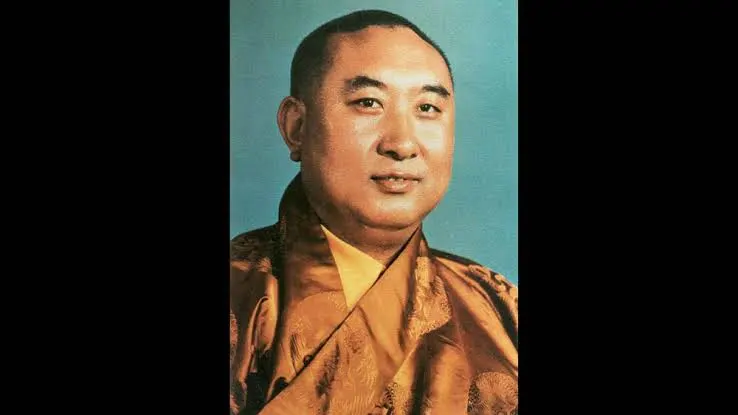
On January 23, 1989, in Shigatse, Tibet, the 10th Panchen Lama, Choekyi Gyaltsen, delivered what would become his final major public address. Five days later, he was dead. In that speech, he offered one of the most remarkable and courageous assessments ever made by a senior Tibetan leader who had worked within the People’s Republic of China. Reflecting on decades of Chinese Communist Party rule in Tibet, he acknowledged that development had occurred, yet concluded that “the price paid for this development has been greater than the gains.”
This statement remains powerful because it challenged a narrative that continues to dominate official discussions of Tibet: that economic development alone can justify political control and cultural transformation.
The Panchen Lama was not an outsider criticizing China from exile. He was one of the highest-ranking religious figures in Tibetan Buddhism and had spent much of his life attempting to work with Chinese authorities. He had held senior positions within the Chinese political system and repeatedly advocated cooperation. His criticism therefore carried unusual weight. As early as 1962, he had submitted his famous “70,000 Character Petition,” documenting suffering and hardship experienced by Tibetans under Communist policies.
By 1989, the context of his remarks was impossible to ignore. Tibet had witnessed decades of political campaigns, collectivization, religious repression, and the destruction of monasteries, particularly during the Cultural Revolution. While infrastructure, education, and state investment had expanded under Chinese rule, many Tibetans viewed these gains as inseparable from severe losses: constraints on religious freedom, erosion of traditional institutions, demographic anxieties, and limits on genuine self-governance.
The Panchen Lama’s statement recognized a truth that economic statistics often fail to capture. Development is not merely a matter of roads built, buildings constructed, or income generated. Development must also be measured in terms of human dignity, cultural survival, social stability, and freedom of belief. A society can become wealthier while simultaneously losing elements that its people consider essential to their identity.
His words were especially significant because they implicitly rejected the idea that material progress can compensate for all other forms of loss. Governments often argue that prosperity legitimizes political authority. The Panchen Lama challenged that assumption. His message suggested that development should serve people rather than require them to surrender their culture, religion, or historical memory.
The timing of the speech made it even more striking. Tibet had experienced significant unrest between 1987 and 1989, reflecting deep dissatisfaction among many Tibetans. Against this backdrop, the Panchen Lama chose not to offer unconditional praise for state achievements. Instead, he delivered a balanced but unmistakably critical verdict: gains existed, but the costs had been too high.
What makes the speech enduring is not simply its criticism of Chinese policy. It raises a broader question relevant far beyond Tibet: How should societies measure progress?
If progress is judged solely by economic indicators, almost any sacrifice can be justified. If, however, progress includes cultural continuity, religious freedom, social trust, and the right of communities to preserve their identity, then development must be evaluated more carefully. The Panchen Lama argued, in effect, that Tibet’s experience demonstrated the danger of pursuing modernization without sufficient regard for the people being modernized.
More than three decades later, his assessment remains one of the most concise and compelling critiques of Chinese rule in Tibet. He did not deny that development occurred. Rather, he questioned whether the benefits outweighed the costs. Coming from a figure who had sought accommodation rather than confrontation, this judgment was especially difficult to dismiss.
The lasting significance of the Panchen Lama’s final speech lies in this simple but profound proposition: development is not a success when a people believe they have paid more for it than they received in return.
Khedroob Thondup is a former Tibetan diplomat and parliamentarian and nephew of the 14th Dalai Lama. He is also the editor of the book, ‘Dalai Lama, My Son and Tibet in Turmoil.’
The views expressed in this article are those of the author and should not be attributed to Tibet Express.