Xi to Host Trump, Putin for Unprecedented Trilateral Talks
By Tenzin Chokyi
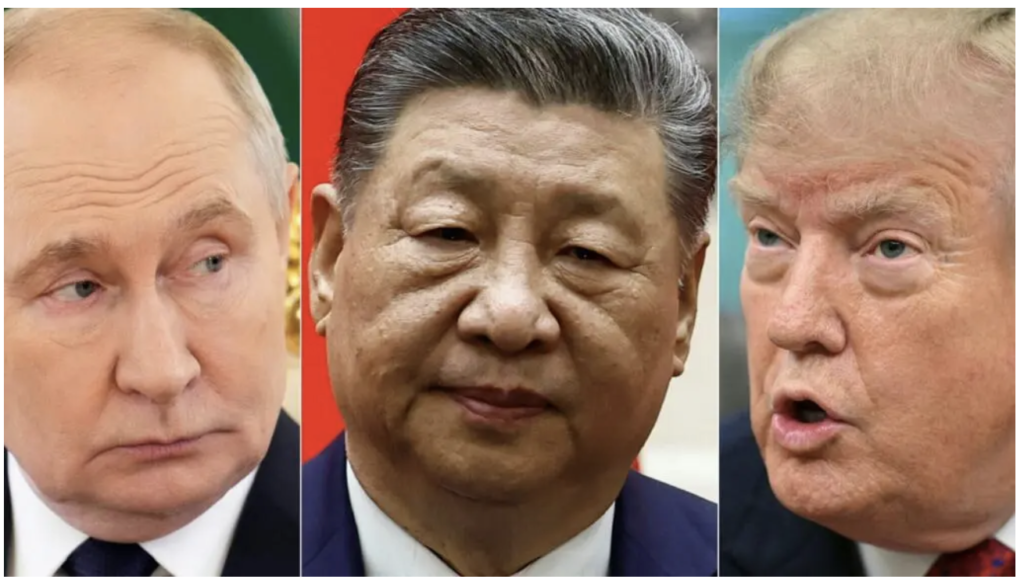
DHARAMSALA, 17 Nov: Chinese President Xi Jinping, US President Donald Trump and Russian President Vladimir Putin are set to hold an unprecedented trilateral meeting on Thursday in Shenzhen, China, amid growing geopolitical tensions and fierce competition over international security, trade and technology.
The meeting, bringing together the leaders of three major global powers, will take place on the sidelines of the 2026 Asia-Pacific Economic Cooperation (APEC) summit, hosted by China. China’s Foreign Ministry spokesperson Mao Ning described the gathering on Monday as having “groundbreaking significance,” saying the three leaders would exchange views on “safeguarding world peace” and promoting strategic stability among major powers.
The proposed meeting marks the first face-to-face trilateral gathering of the three countries’ heads of state. Reuters and CNBC say discussions are expected to cover nuclear non-proliferation, the conflict in West Asia (Middle East), trade relations, and possibly the war in Ukraine.
However, the three governments are approaching the talks with sharply diverging priorities. Beijing remains reluctant to join formal trilateral arms-control negotiations, Washington is pressing for trade and security concessions, and Moscow is seeking to break its diplomatic isolation over Ukraine.
The broader APEC summit brings together 21 member economies to discuss regional economic cooperation, trade, investment and technological development. This year’s discussions also unfold amid intensifying global competition over emerging technologies, particularly artificial intelligence (AI), digital transformation and advanced semiconductors, areas in which China and the United States are actively seeking to secure strategic dominance.
For Beijing, hosting both Trump and Putin carries immediate diplomatic weight regardless of policy outcomes. Peter Alexander, managing director at Z-Ben Advisors, told CNBC that the ability to bring the two leaders to the table in China delivers considerable political benefits for Xi, even before substantive discussions begin.
Against this backdrop of transactional, great-power diplomacy, the gathering has drawn comparisons to past superpower summits, raising pressing questions about how unresolved political conflicts and the rights of smaller nations are treated when global order is negotiated exclusively among major powers.
For Tibetans, such high-stakes diplomacy carries concrete risks given Tibet’s unresolved political status and ongoing repression under Chinese rule. While Beijing remains the occupying power against which Tibetans continue their freedom struggle, the United States has long provided vital legislative and diplomatic backing for the Tibetan cause, including measures supporting dialogue and religious freedom.
Historically, however, from Washington’s 1994 decoupling of China’s trade status from human rights to the postponement of high-level meetings with the Dalai Lama ahead of major bilateral summits, diplomatic pressure on Tibet has risked being sidelined in favour of geopolitical expediency. This happens whenever Washington prioritises transactional breakthroughs with Beijing on trade tariffs, technology or third-party conflicts.