
Tibetan, Chinese Democracy Advocates Adopt Joint Declaration at Dharamsala Forum
By Tenzin Chokyi
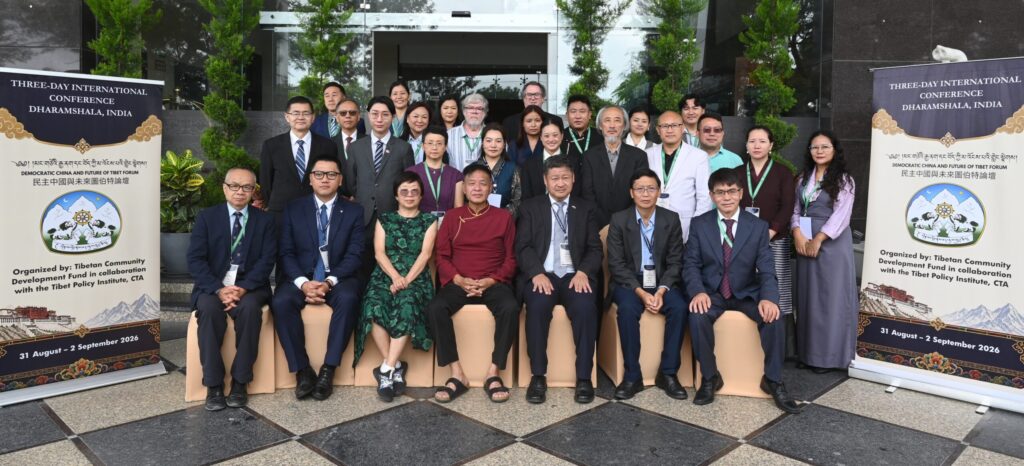
DHARAMSALA, 3 Sept: Tibetan and Chinese scholars, activists and policy experts concluded a three-day forum here on Wednesday with a joint declaration calling for nonviolence, democratic reform and continued dialogue toward a peaceful resolution of the Sino-Tibetan conflict.
The “Democratic China and Future Tibet Forum,” organised by the Office of Tibet Administration in North America and the Tibet Policy Institute, brought together participants from India, the United States, Canada, the United Kingdom, Germany, the Netherlands, Australia, Japan, Taiwan and Southern Mongolia.
The participants agreed to make nonviolence a common principle in addressing the Tibet-China conflict, drawing on the long-standing advocacy of the 14th Dalai Lama and Chinese democracy advocate Liu Xiaobo.
The declaration also called for closer engagement between Tibetans in exile and the Chinese democracy movement, including exchanges on democratic governance and the Tibetan exile community’s democratic experience.
On Tibet, participants highlighted what the declaration describes as Tibet’s historical independence and called for greater efforts to explain the Middle Way Approach to Chinese people. The approach seeks genuine autonomy for Tibetans within the framework of the Chinese constitution rather than independence.
The declaration also rejected any role for Beijing in the Dalai Lama’s reincarnation, stating that the search and recognition of his successor fall under Tibetan Buddhist traditions and the authority of the Dalai Lama and the Ganden Phodrang Trust.
Participants further called for the immediate repeal of China’s Law on “The Promotion of Ethnic Unity and Progress,” arguing that the legislation threatens the languages, cultures and religious identities of Tibetans, Uyghurs, Southern Mongolians and other marginalised groups.
The declaration said the forum would serve as a foundation for continued academic and policy dialogue between Tibetans and Chinese, with the aim of building greater understanding and cooperation toward a peaceful resolution of the conflict.