TWA Anniversary Overshadowed by Debate Over Outreach to Xi
By Tenzin Chokyi
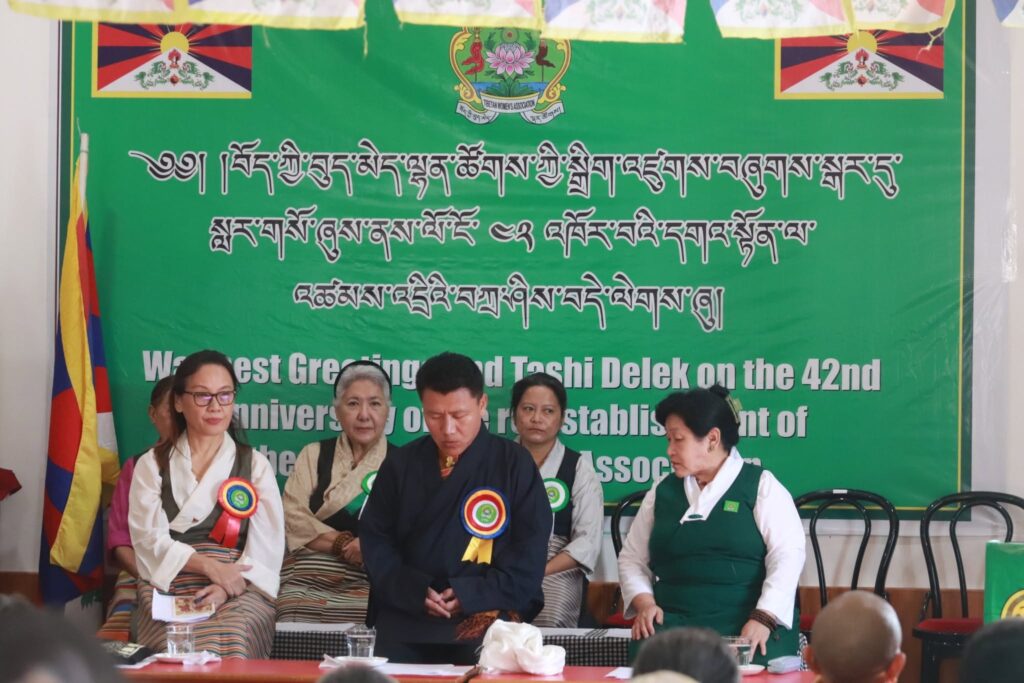
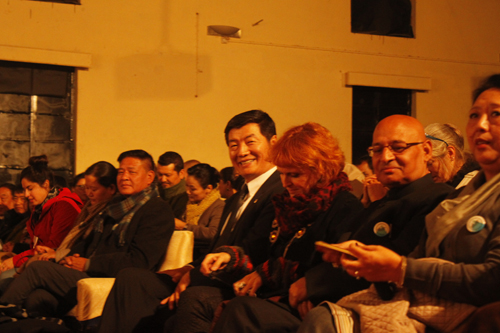
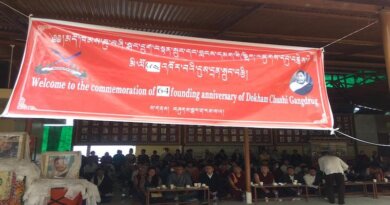
DHARAMSALA, 10 Sept: The Tibetan Women’s Association (TWA) marked 42 years since its formal re-establishment in exile on Thursday, with its anniversary programme unfolding amid a growing debate within the Tibetan community over how the Tibetan freedom movement should engage China and its leadership.
The debate follows a joint press conference held recently in New Delhi, where the TWA and four other Tibetan organisations issued an open letter to Chinese President Xi Jinping ahead of his expected visit to India for the BRICS Summit. The organisations welcomed Xi to India, addressed him as “Your Excellency,” and urged Beijing to use the visit to begin a new chapter of dialogue on the Tibet issue, guided by the Middle Way Approach.
The gesture, however, has drawn criticism over the political implications of such engagement. In a statement titled “Dictator Xi Jinping Is Not Welcome,” the Tibetan National Congress (TNC) condemned the decision to publicly welcome Xi and address him with “language of honour and deference” while Tibetans remain under China’s colonial rule.
The TNC argued that honouring the Chinese leader while condemning policies enacted under his government is politically incoherent. “For those living in the free world, to voluntarily honour and welcome Xi is not diplomacy but a deliberate political choice,” it said.
The political choice, it stated, “dishonours the courage, resistance, and sacrifice of Tibetans inside occupied Tibet who continue to resist his rule,” even as they are compelled to perform loyalty to Xi. It further said that the gesture was especially unacceptable following the recent sacrifice of Pawo Longa Rangzen and generations of Tibetan martyrs who have given their lives demanding freedom and independence.
Speaking to Tibet Express during Thursday’s commemoration, when asked how the TWA objects to and condemns Chinese policies in Tibet but welcomes Xi, who formulates and approves them, TWA President Tsering Dolma backtracked by saying that they had extended the welcome not just to Chinese President Xi, but to all other leaders of the BRICS.
She added that advocacy can take different forms. She said direct engagement with Chinese authorities is difficult because Tibetans are often viewed with suspicion by the Chinese leadership and face restrictions on accessing or meeting Chinese officials directly. She argued that press conferences, open letters and media outreach could therefore provide alternative channels through which Tibetan concerns reach the Chinese leadership.
She maintained that while Tibetan organisations may differ in their strategies and means, they can still work toward a shared objective. Efforts, she said, should focus on creating space for dialogue and drawing the “other side” toward engagement, given that “we are not in a position to take up arms to resist.”
She said the TWA condemns Chinese policies aimed at eroding Tibetan identity, including the new “ethnic unity law”. At the same time, she reaffirmed that the organisation would continue to pursue its political objectives through the Middle Way Approach, which seeks genuine autonomy for the Tibetan people within the framework of the People’s Republic of China.
Despite what she described as increasingly assimilationist policies, Dolma said she continues to place great hope in the Middle Way Approach, particularly in light of growing international support for the Tibetan freedom movement. She said such support would “steadily and slowly” continue to grow.
The disagreement over the outreach to Xi is not simply a dispute over diplomatic language or political tactics. It exposes a longstanding, fundamental divide over how the struggle itself is defined and what ultimate political outcome it demands. While rhetoric surrounding a “common goal” and “unity” remains central to public discourse in exile, what that common goal actually entails, as well as what unity should mean in practice, remains largely unaddressed. The tension between pursuing genuine autonomy through the Middle Way Approach and demanding total independence continues to sit at the heart of this unresolved divide.