First Woman Speaker Dolma Tsering Sworn In Alongside Deputy Speaker Khenpo Sonam Tenphel
By Tenzin Chokyi
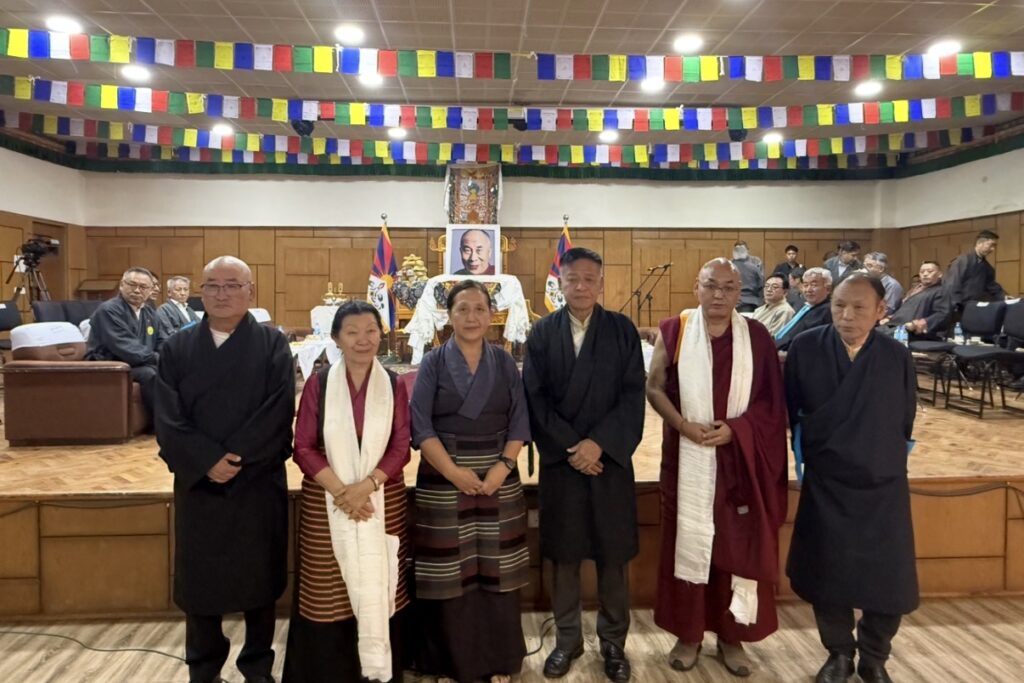
DHARAMSALA 1 June: The newly appointed Speaker Dolma Tsering and Deputy Speaker Khenpo Sonam Tenphel of the 18th Tibetan Parliament-in-Exile took their oath of office today, ushering in a new five-year term and a reversal of roles from the previous parliament, where Dolma Tsering served as Deputy Speaker and Khenpo Sonam Tenphel as Speaker.
During a swearing-in ceremony held at the Sikyong Hall of the Central Tibetan Administration (CTA) at 9:30 a.m. today, the two leaders took their oath of office before CTA Chief Justice Commissioner Yeshi Wangmo. The ceremony was attended by Sikyong Penpa Tsering, the political head of the Tibetan government-in-exile, members of the newly constituted 18th Tibetan Parliament-in-Exile, senior CTA dignitaries, and staff members.
The two leaders were elected to their respective positions through a secret ballot conducted by the newly constituted 18th Tibetan Parliament-in-Exile following the swearing-in of its members on Sunday.
Dolma Tsering secured 22 votes, defeating former Speaker Khenpo Sonam Tenphel, who received 20 votes, while three of the 45 ballots cast were declared invalid. In the election for Deputy Speaker, Khenpo Sonam Tenphel secured an identical result, receiving 22 votes against Karma Gelek’s 20, with three ballots again declared invalid.
Dolma Tsering’s election is widely seen as a historic milestone, making her the first woman to serve as Speaker of the Tibetan Parliament-in-Exile since the establishment of the Tibetan democratic system in exile. Her appointment places a woman at the helm of the Tibetan legislature for the first time and marks a notable development in women’s participation at the highest levels of Tibetan democratic governance.
Beyond its symbolic significance, the broader measure of the milestone will likely rest on whether women’s presence in positions of authority can influence decision-making and institutional culture, rather than simply diversify the faces occupying existing structures of power.
At the same time, women’s representation in the broader composition of the newly constituted 18th Tibetan Parliament-in-Exile remains limited, with a total of nine women members.
Under the parliamentary electoral system, each of the three traditional provinces—U-Tsang, Kham, and Amdo—is guaranteed two seats for women. In the 18th Parliament, U-Tsang and Amdo each elected one additional woman beyond the reserved quota, bringing their total number of female representatives to three each. Kham, meanwhile, returned only the two women elected through the reserved seats. Outside the provincial constituencies, one woman was elected from the Europe constituency, where no seats are reserved for female candidates and only two seats are contested.