Thousands rally in Dharamsala to mark 49th day since Pawo Lobga Rangzen’s self-immolation
By Tenzin Chokyi

DHARAMSALA, 20 August: The streets of Dharamsala turned into a sea of Tibetan flags on Thursday as thousands marched from the Dalai Lama Temple to the Kachari Police Ground. The event became one of the largest public rallies for a Free Tibet seen in the exile capital in recent years.
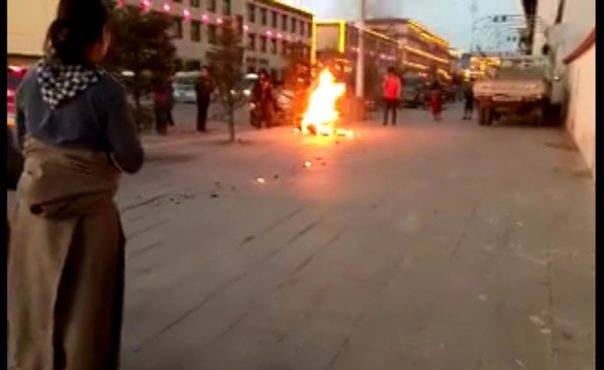
Chanting slogans for independence and a free Tibet, the crowd carried the message of Pawo (Martyr) Lobga Rangzen through the town, less than seven weeks after he set himself on fire outside the United Nations headquarters in New York on 2 July.
The rally followed a 49th-day prayer service at the temple, marking the final stage of consciousness’ transition to its next life in Tibetan Buddhist tradition. What began as a solemn religious observance quickly turned political as the crowd moved out of the temple gates and marched toward Kachari.
In a final video message, Lobga Rangzen—a prominent independence activist and president of the Tibetan National Congress chapter in New York and New Jersey—said that the loss of independence is the root cause of all Tibetan hardships, calling on exiles to carry the fight forward.
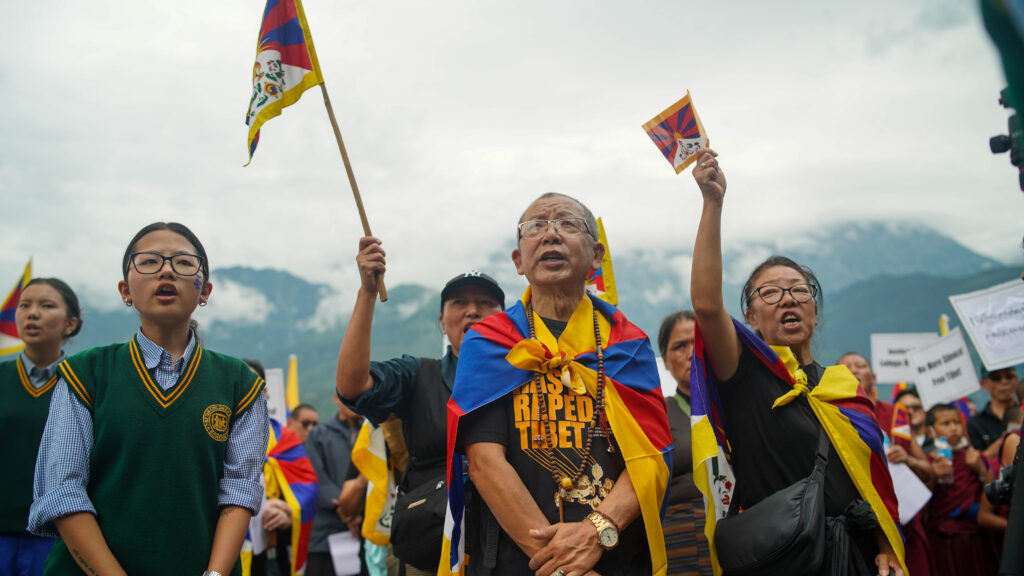
At the Police Ground, the Tibetan Youth Congress (TYC) invoked his message to reaffirm its stance on independence, arguing his sacrifice must not be reduced to a mere memorial. TYC Secretary Tashi Dhargyal criticised the social exclusion of independence advocates, who are often wrongfully portrayed as opposing the Dalai Lama. He emphasised that while the Dalai Lama formulated the Middle Way Policy, he never instructed Tibetans to adopt it as their sole political position
Dhargyal urged an end to factionalism, expressing regret that some groups abstained from the TYC hunger strike citing ideological differences
The gathering highlighted an ongoing tension: while Lobga Rangzen’s death united the community in grief, his political goal remains contested.
Speaking at the event, Sikyong (President) Penpa Tsering reaffirmed the Central Tibetan Administration’s (CTA) commitment to the Middle Way Approach, urging the public to act with long-term strategy rather than emotion alone. Adopted by the Parliament-in-Exile in 1997, the policy seeking genuine autonomy within China remains the official stance, even as decades of effort—including current back-channel contacts with Beijing—have yet to yield substantive progress.
Despite their differences over Tibet’s ultimate political future, the Kashag, the Parliament-in-Exile, and the TYC expressed firm, unified opposition to Beijing’s “Law on Promoting Ethnic Unity and Progress.”
For the TYC, that resistance was tied directly to the conclusion of its Dharamsala campaign. Marking the 49th day since Lobga Rangzen’s death, the local leg of the organization’s month-long chain hunger strike officially ended on Thursday, with Sikyong Penpa Tsering presenting traditional ceremonial scarves (khatas) to the participants in a gesture of solidarity. However, TYC leaders emphasised that the campaign itself is far from over: the global chain hunger strike will continue outside the UN headquarters in New York, returning to the very site where Lobga Rangzen self-immolated on 2 July.