
Larung Gar Faces Fresh Demolition Drive as China Tightens Control Over Tibetan Religious Institutions
By Tenzin Chokyi
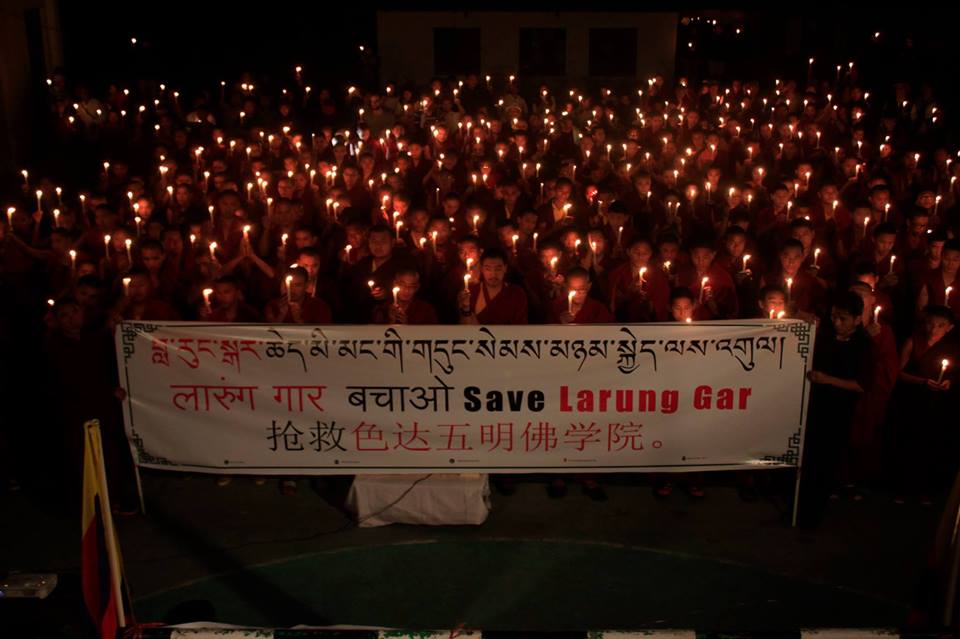
DHARAMSALA, 21 July: A fresh demolition campaign at Larung Gar Buddhist Academy in eastern Tibet has placed more than 1,000 monastic residences at risk, reviving concerns over a long-running effort by Chinese authorities to reduce the size of and tighten control over one of the world’s largest centres of Tibetan Buddhist learning.
At least 1,060 residences belonging to monks and nuns have reportedly been earmarked for demolition at the Serthar Larung Five Sciences Buddhist Academy, commonly known as Larung Gar. The latest campaign began around 13 July with six residences reportedly demolished by 15 July, according to information cited by the International Campaign for Tibet (ICT).
The demolitions are reportedly being carried out at night. The source of the information, who spoke anonymously due to concerns over possible reprisals, said the timing appeared intended to limit public documentation and outside scrutiny.
The latest campaign comes less than three weeks after China’s “Ethnic Unity and Progress Law” came into force on 1 July. Critics have raised concerns that the law could further institutionalise policies aimed at integrating Tibetans and other “ethnic minorities” into a homogenised Chinese national identity.
The immediate justification for the new demolitions remains unclear. However, the campaign
comes against the backdrop of decades of state intervention at Larung Gar, where authorities have repeatedly reduced the resident population, demolished monastic residences and imposed restrictions on the academy’s religious community.
Founded in 1980 by the Tibetan Buddhist master Khenpo Jigme Phuntsok, Larung Gar grew into a major centre for the study and practice of Tibetan Buddhism after the destruction and disruption of religious institutions during China’s Cultural Revolution. The academy attracted thousands of Tibetan and Chinese practitioners and became known for its large monastic community and its emphasis on Buddhist scholarship and meditation.
Its growth, however, was followed by successive campaigns of state intervention. In 2001, authorities carried out large-scale demolitions and forced the departure of thousands of monks and nuns. A further campaign in 2016 and 2017 saw nearly 5,000 residences demolished and thousands of residents evicted after authorities ordered the academy’s population to be reduced.
The measures drew international criticism. In 2017, six UN human rights experts said the developments at Larung Gar appeared to constitute “concerted attacks on tangible and intangible cultural heritage” and raised concerns over violations of cultural rights.
Restrictions on the academy have continued beyond the demolition of residences. Since 2019, authorities have reportedly limited the participation of Han Chinese Buddhist practitioners, while measures introduced in 2021 reportedly separated Chinese practitioners from Tibetan residents.
The latest demolitions therefore mark not an isolated redevelopment project, but another intervention in the long-term restructuring of Larung Gar. The academy’s physical landscape and resident population have been repeatedly altered since the first major demolition campaign more than two decades ago.
Access to the academy and the wider Serta area also remains tightly controlled. A Chinese traveller visiting the area earlier this year described restrictions on movement, the length of visitors’ stays and the operation of shuttle buses, characterising the area as one marked by “restrictions everywhere.”
With the new demolition campaign reportedly underway, the future of more than 1,000 monastic residences remains uncertain. The latest developments have renewed concerns over the fate of Tibetan Buddhist institutions as Beijing expands policies aimed at bringing religious practice further under state control.





Pingback: China Forces Monks and Nuns Out of Larung Gar After Demolishing Homes – Tibet